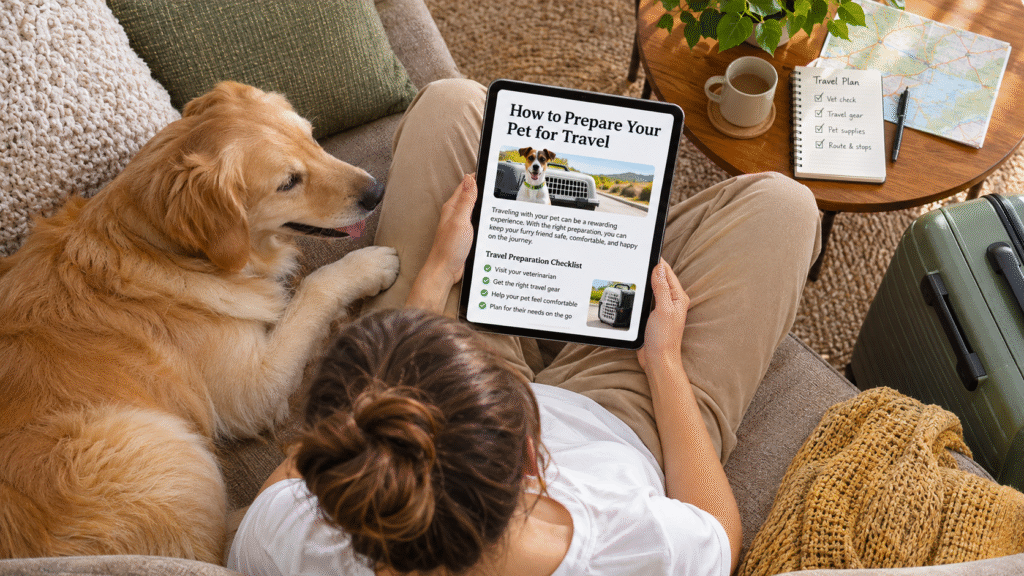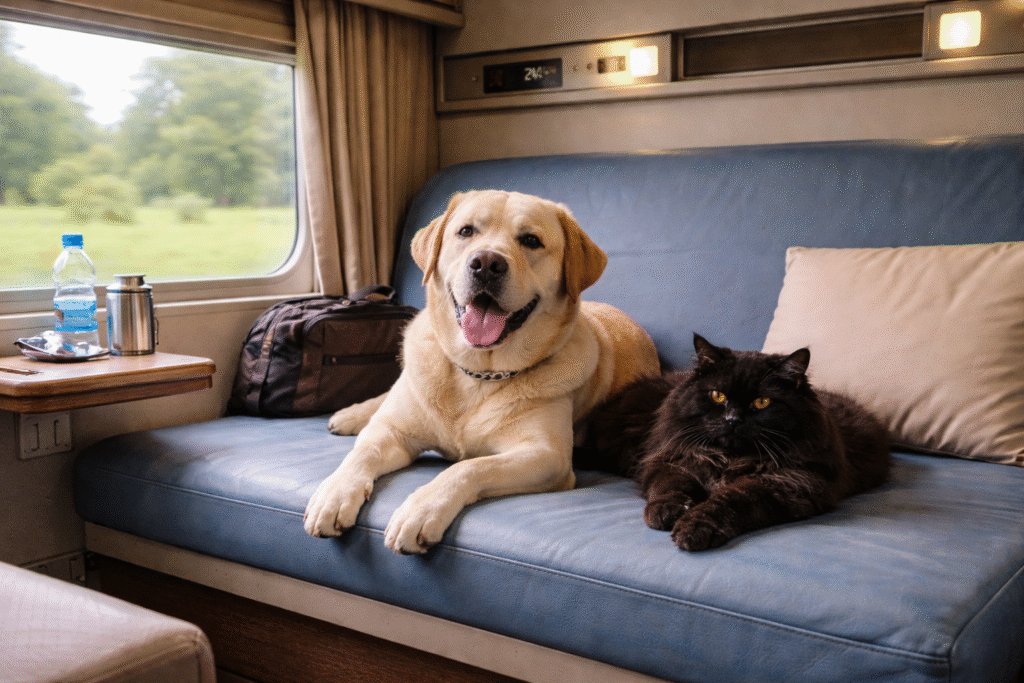
Travelling with pets by car gives you more control over stops, food, water, temperature, and breaks than most other forms of transport. But a comfortable road trip depends on more than putting your dog or cat in the car and driving. Prepare them for the journey, use a secure restraint, plan stops carefully, and know what you will do if they become anxious, sick, or overheated.
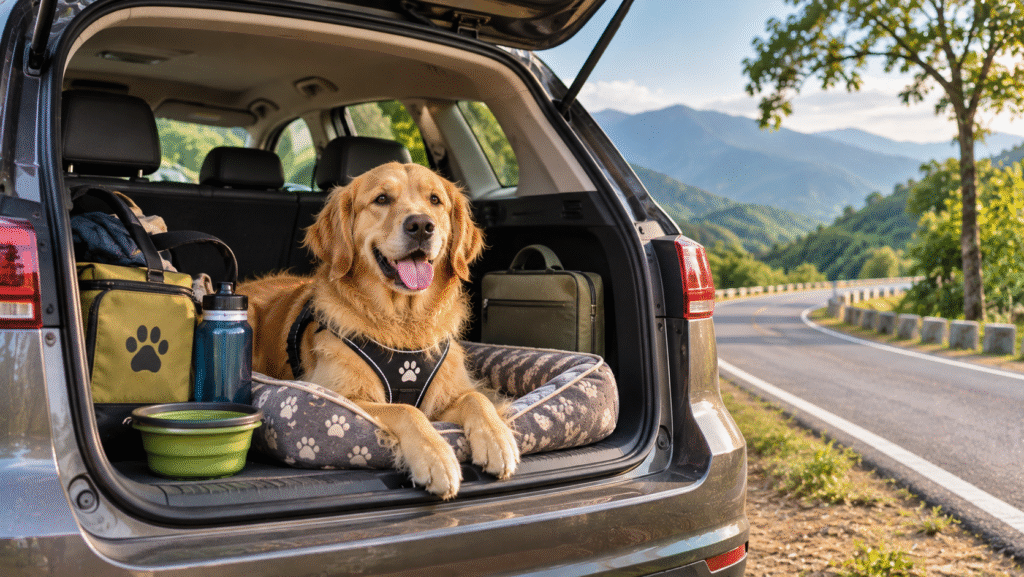
For many pet parents in India, travelling by car is the simplest way to take a dog or cat on holiday. You can choose your departure time, stop when your pet needs a break, carry their regular food and supplies, and adjust the journey around their comfort.
But pet travel by car in India also brings its own challenges. Long driving hours, heat, traffic, highway noise, crowded stops, motion sickness, and unfamiliar overnight stays can turn an easy-looking trip into a stressful one.
The best road trips start before you leave home.
Prepare your pet for the car, secure them properly, pack for the journey rather than just the destination, and plan enough flexibility into the route to respond to what your pet actually needs.
1. Get Your Pet Used to the Car Before a Long Trip
Do not make a six-hour road trip your pet’s first real car journey. If your dog or cat is not used to travelling, start with short sessions. Let them spend a few minutes in the stationary car first, then try a short drive around your neighbourhood. Increase the duration gradually as they become more comfortable.
Watch how your pet responds. Signs that they are struggling may include:
- Heavy panting
- Excessive drooling
- Repeated lip licking
- Whining or constant vocalising
- Restlessness
- Trembling
- Vomiting
- Trying to hide or escape
Do not assume every distressed pet simply needs more practice. Drooling, lip licking and vomiting can also indicate motion sickness, while some pets experience both nausea and anxiety. If your dog repeatedly becomes sick in the car, speak to your vet before a longer journey.
Read: Dog Motion Sickness During Car Travel: Prevention, Feeding and Warning Signs.
For cats, keep them inside their carrier during practice drives rather than allowing them to roam around the car. Travelling with a cat requires a slightly different setup.
See Travelling With a Cat by Car in India: Carrier, Litter, Food and Safety for carrier training, litter arrangements and escape prevention.
2. Secure Your Pet Properly in the Car
Your pet should not travel loose inside a moving vehicle. An unrestrained dog can distract the driver, move into the footwell or front seat, and be thrown inside the vehicle during sudden braking. A frightened cat can hide under a seat or escape as soon as a door opens.
For dogs, suitable options include a properly fitted car safety harness or a securely installed travel crate. For cats and other small pets, use a sturdy, well-ventilated carrier and secure it so it cannot slide or tip during the journey.
Do not clip a car tether directly to your dog’s collar. The restraint should connect to an appropriate harness.
Keep dogs out of the front passenger seat when airbags are present, and never let your dog sit on the driver’s lap. Veterinary guidance also recommends safely restraining dogs during car travel.
Not sure which setup is right for your dog? Read Dog Car Seat Belt vs Harness vs Crate: Which Is Safer? for the differences between each restraint system.
Keep the Leash Ready Before Opening the Door
At highway stops, fuel stations, and hotel parking areas, attach the leash before opening the car door. Even a dog that normally stays close to you can bolt in an unfamiliar place after being startled by traffic, another dog, a horn or a stranger approaching the car.
Cats should remain inside their carrier unless you are in a fully enclosed and secure space.
3. Plan Food, Water and Motion Sickness
Carry your pet’s regular food rather than relying on finding the same brand during the journey.
Avoid changing food or introducing unfamiliar treats on travel day.
For dogs prone to motion sickness, a heavy meal shortly before departure may make nausea worse. However, there is no single feeding schedule that suits every dog, so if your dog has a history of vomiting in the car, ask your vet how to time the pre-travel meal.
Carry enough drinking water for the journey and offer it during suitable stops.
For cats, plan feeding and litter needs around the length of the trip rather than repeatedly opening the carrier during roadside stops.
Keep medicines with you rather than buried under luggage, particularly if your pet needs medication at fixed times.
For a broader pre-trip check covering documents, food, safety equipment and seasonal preparation, see How to Prepare Your Dog for Travel.
4. Pack for the Journey, Not Just the Destination
Keep the things you may need on the road somewhere accessible.
Basic Travel Kit
Prepare a basic travel kit for the journey. Carry these:
- Leash and secure harness
- Current ID tag
- Regular food
- Drinking water
- Portable bowls
- Prescribed medication
- Waste bags
- Pet-safe wipes or paper towels
- Pee pads if needed
- A towel
- A familiar blanket or small bed
- A Basic pet first-aid kit
For cats, add a travel litter tray, familiar litter, scoop and waste bags for longer journeys.
Keep a recent photograph of your pet on your phone and carry vaccination or basic health records where you can reach them easily.
For a complete packing list, use our practical pet travel checklist before you leave.
Protect the Car Too
A washable seat cover, old bedsheet or waterproof layer can make muddy paws, shedding, urine accidents or motion sickness much easier to manage.
If you need something more durable than a bedsheet, see our guide to choosing a car seat cover for pet travel.
5. Plan Safe Rest Stops
Long drives become easier when stops are part of the route rather than something you improvise after your pet becomes restless. Your dog may need stops for:
- drinking water
- toileting
- a short walk
- stretching after being restrained
- settling if they become nauseous or uncomfortable
There is no fixed rule saying every pet must stop at exactly the same interval. Age, health, journey length, weather and normal toilet habits all matter. For many dogs, a break every few hours works well, but stop earlier if your dog needs it.
Choose a safe place away from fast-moving traffic. Avoid crowded dhabas, busy parking areas or places with loose dogs if your pet becomes easily overwhelmed. Do not allow your dog to wander around a highway stop off-leash.
For Senior Dogs
Older dogs may need more frequent toilet breaks, shorter driving stretches and extra help getting in and out of the vehicle.
If you are travelling with an older dog, see Travelling With a Senior Dog in India: Health, Mobility and Transport Choices for advice on stamina, ramps, medication and choosing a suitable journey.
6. Manage Heat and Temperature Carefully
Heat is one of the most important risks during road travel in India. Keep the car comfortably ventilated and avoid placing a carrier or resting area in direct sunlight for long periods.
Carry more drinking water than you expect to need, particularly during summer journeys.
Where possible, start long drives early enough to avoid the hottest part of the day.
Most importantly, never leave your pet alone inside a parked car in warm weather, even for a quick stop. A vehicle can become dangerously hot much faster than people expect, and parking in the shade or leaving the windows partly open does not make it reliably safe. If you are travelling alone and need to stop somewhere your pet cannot enter, plan ahead rather than leaving them in the car.
7. Understand Your Pet’s Road-Travel Triggers
Not every difficult car journey is caused by motion sickness. Some dogs react strongly to motorcycles, trucks, other dogs, cattle, horns or people approaching the vehicle. Cats may become distressed by continuous road noise, movement or unfamiliar surroundings.
If your pet reacts to things outside:
- Reduce their view where practical
- Keep them securely restrained
- Use familiar bedding
- Keep the car reasonably quiet
- Avoid unnecessarily crowded stops
- Give them time to settle after an intense part of the journey
Do not punish barking, whining or other signs of stress. If your dog becomes highly reactive during travel, plan routes and stops that give them more distance from known triggers instead of repeatedly putting them into situations they cannot manage.
8. Confirm Your Overnight Stay Before You Leave
Do not rely only on a booking-platform pet-friendly filter. Before paying for a stay, confirm directly with the property that your pet is allowed and ask about any restrictions that matter to you. Check:
- whether your dog or cat can stay inside the room
- pet fees
- size or number restrictions
- whether pets can use lawns or common areas
- whether pets may be left alone in the room
- whether the property requires a leash or carrier in common areas
Save written confirmation by email or WhatsApp when possible.
Before booking, use our guide to How to Check If a Hotel Is Pet-Friendly so you know what to ask beyond a simple “pets allowed” label.
Help Your Dog Settle After Arrival
After a long drive, your dog may need quiet time rather than another round of activity.
Bring familiar bedding, keep meals and toilet breaks close to the usual routine, and give your dog time to explore the room before expecting them to settle.
Do not immediately leave an anxious dog alone in an unfamiliar room.
If your dog struggles with corridor noises, unfamiliar rooms or being left alone, see How to Keep Your Dog Calm in a Hotel Room: 8 Ways to Help Them Settle.
9. Prepare for Common Road-Trip Problems
Road journeys rarely run exactly to schedule. Traffic, diversions, queues, weather and unexpected stops can add hours to the original plan. Carry enough food, water and medication to handle a delay. Also keep:
- Your regular vet’s contact details
- Details of a veterinary clinic near your destination
- A basic pet first-aid kit
- A charged phone and power bank
- Extra drinking water
- Towels and cleaning supplies
- A spare leash if possible
If your pet has a known medical condition, carry the relevant medical information with you.
If your pet has a health condition or you are planning a demanding journey, use our Vet Check Before Pet Travel guide to know what to discuss before departure.
10. Travelling With Pets by Car: Quick Checklist
Before starting the car, check that:
- Your pet is safely restrained
- ID details are current
- Leash and harness are within reach
- Food, water and bowls are accessible
- Medicines are packed
- Vaccination or health records are available
- Clean-up supplies are easy to reach
- The route includes suitable breaks
- Your overnight stay has confirmed its pet policy
- You know where to find veterinary help at your destination
For cats, also check that the carrier is fully closed and secured before any car door opens.
For dogs, attach the leash before opening the car at stops.
Final Thoughts
Travelling with pets by car in India works best when you build the journey around their needs rather than expecting them to adapt to your driving plan. Prepare them for the vehicle before a long trip, use a secure restraint, carry familiar food and water, plan safe breaks, and leave enough flexibility to stop if something is not going well.
You do not need a perfect road trip.
You need a journey your pet can manage safely and comfortably from the time you leave home until you reach your destination.