Preparing your dog for travel in India comes down to five things: the right documents, basic safety preparation, sensible packing, grooming essentials, and seasonal gear suited to your destination. Covering all of these in advance means far fewer surprises once you’re on the road.
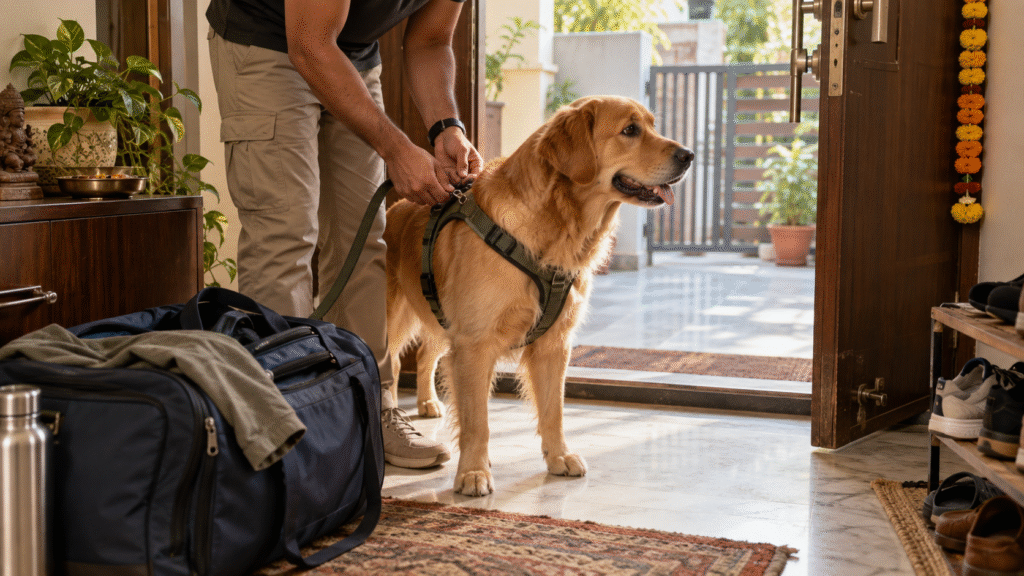
Whether it’s a weekend road trip, a train journey, or a longer holiday, knowing how to prepare your dog for travel makes a real difference to how smoothly things go. Pet policies, documentation requirements, and transport rules can vary depending on how and where you travel. This guide covers what to sort out before you leave, including documents, safety, packing, grooming, and seasonal essentials, so that you don’t forget anything in the last-minute rush.
Planning a short break with your pet? See our guide to pet-friendly staycations near Delhi for a weekend getaway.
How to Prepare Your Dog for Travel in India: The Essentials
Most pet-travel problems begin with the same gaps: missing paperwork, overlooked safety steps, an incomplete packing list, or being unprepared for your destination’s climate. Covering these in advance means you’re less likely to scramble at a hotel reception desk, a railway counter, or a checkpoint wondering what you should have carried.
Planning a trip anywhere in India with your pet? Read: 50 Smart Tips for Travelling With Pets in India.
1. Documents You’ll Need
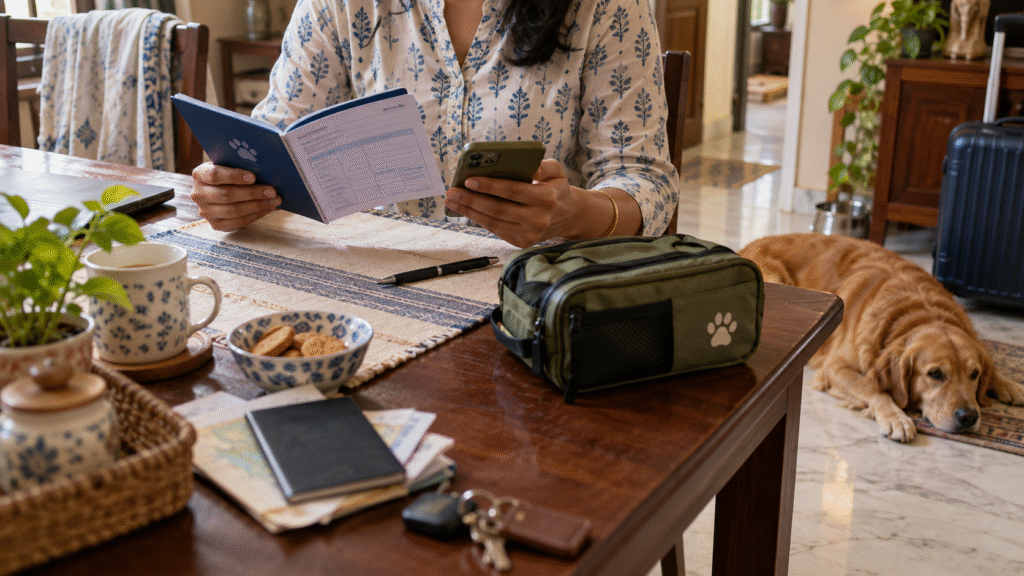
Documentation is easy to overlook when preparing a dog for travel in India, especially because some documents may not be requested until check-in or booking.
- Vaccination certificate. Carry your dog’s full vaccination record, with the rabies vaccination clearly dated. This is the most commonly requested document, whether at a hotel check-in, a boarding facility, or while booking pet travel on Indian Railways.
- Deworming record. If your dog’s vaccination paperwork does not include it, keep a separate record of recent deworming along with the other health documents.
- Health/fitness certificate from your vet. A recent certificate confirming your dog is fit to travel is useful for longer trips, train travel, or if you’re visiting a region with a different climate or altitude.
- Microchip details. If your dog is microchipped, keep the chip number written down separately from your phone, in case you need it for identification purposes during travel.
- ID proof for specific bookings. Certain services, including IRCTC’s online pet booking system, require ID details as part of the booking process; keep a valid ID ready before you start.
- A recent, clear photo of your dog. Useful for identification if your dog goes missing en route, and easy to share quickly with hotel staff or local authorities if needed.
- Pet insurance details, if applicable. If your dog is insured, carry policy details and the insurer’s contact number.
- Printed emergency contact list. Include your regular vet, a vet near your destination, and any pet helpline relevant to your travel route, so you don’t have to search for numbers in a stressful moment.
Keep important documents together in an easily accessible folder or pouch. Carrying physical copies alongside digital versions can also be useful if your phone battery dies, connectivity is poor, or a counter asks to see the paperwork quickly.
Not sure which papers you actually need? Read our complete guide to Documents Required for Pet Travel in India before you start packing.
2. Safety Basics Before You Travel
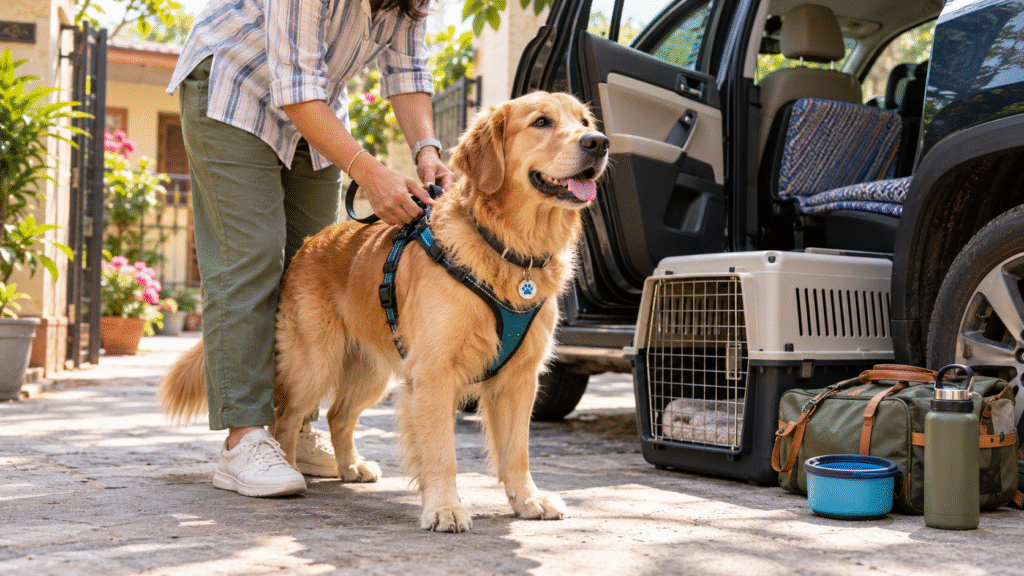
Safety preparation isn’t just about the journey itself; it starts before you leave home.
- Schedule a pre-travel vet check-up. A quick check a week or so before departure confirms your dog is healthy and up to date on preventive care, and gives you time to address anything that comes up.
- Apply flea and tick prevention. This matters even more if your destination involves forests, hill stations, or grassy areas, where exposure risk is higher than at home.
- Update your dog’s ID tag. Make sure the tag includes a current phone number, ideally one that’s reachable even while you’re travelling, in case your dog gets separated from you.
- Consider a GPS tracker or smart tag. A GPS-enabled collar attachment is a useful backup to a standard ID tag, particularly for unfamiliar destinations or crowded tourist spots.
- Check your carrier or crate. Make sure it is sturdy, well-ventilated, appropriately sized, and suitable for your mode of transport. Airlines have their own size and construction requirements.
- Carry a muzzle if required. Requirements can differ by mode of travel, operator, route, or dog, so check the applicable rules before departure.
- Do a short trial trip beforehand. If your dog isn’t used to travelling, a brief practice drive a few days earlier helps gauge their comfort level before committing to a long journey.
- Have a motion sickness plan. If your dog has a history of car sickness, talk to your vet about timing meals around travel or whether medication is appropriate.
- Research pet policies at your destination in advance. Hotels, homestays, religious sites, hill stations, and wildlife sanctuaries all have different (and sometimes strict) pet rules. Confirming these before you travel reduces the risk of arriving somewhere that cannot accommodate your dog.
- Identify a vet near your destination. Knowing the nearest vet or animal hospital before you arrive means you’re not searching for one in an emergency.
- Check pet-friendly rest stops along your route. On long road journeys, identify places where you can safely stop for water, toilet breaks, and a short walk away from heavy traffic.
If your trip involves a long journey, changing weather, or a new destination, use our Vet Check Before Pet Travel guide to know what to confirm before departure.
3. Packing Basics
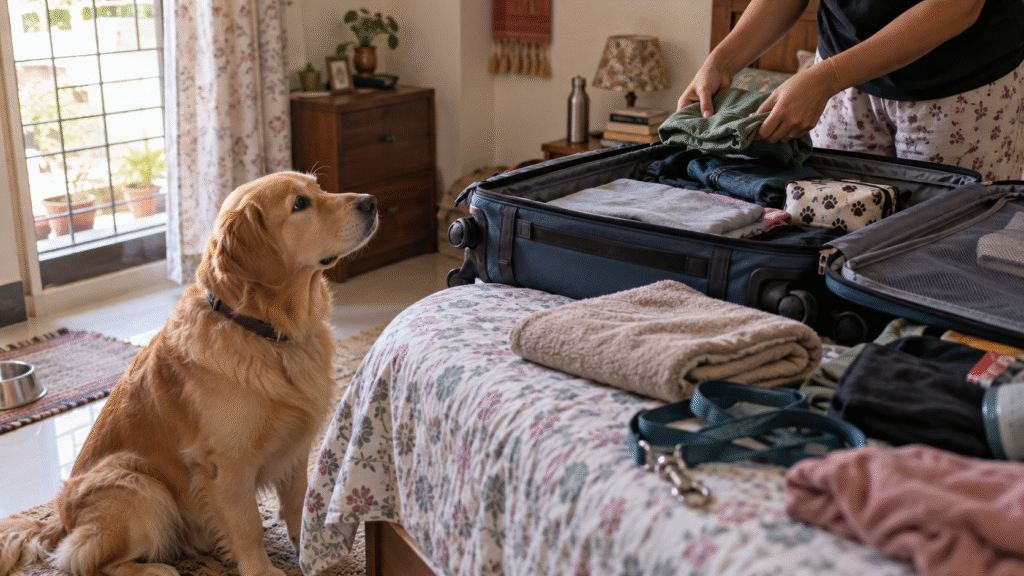
Once documents and safety steps are sorted, packing is largely about comfort and convenience on the road.
- Food and water. Carry enough of your dog’s regular food for the full trip; local brands may not match what your dog is used to.
- Collapsible, space-saving bowls. A compact, foldable bowl set is easier to pack and clean on the go than rigid bowls.
- A basic pet first-aid kit. Include antiseptic, bandages, a tick-removal tool, and any prescribed medication your dog takes regularly.
- Leash, harness, and a physical ID tag. Even if your dog is usually off-leash at home, a secure leash and harness are essential for unfamiliar environments.
- A comfort item from home. A familiar blanket, bed, or toy helps your dog settle into unfamiliar hotel rooms or long travel stretches.
- A chew toy or calming aid. For dogs that get anxious during travel, a familiar chew toy or vet-approved calming chew can help ease stress on longer journeys.
- Waste bags. Always carry more than you think you’ll need, especially for multi-day trips with limited access to disposal points.
- A quick clean-up towel or pet wipes. Useful for muddy paws, sudden rain, or minor motion sickness clean-ups without needing a full bath.
A small travel first-aid kit can save a lot of scrambling on the road. Use our Pet First-Aid Kit Checklist to pack the essentials.
4. Grooming Essentials
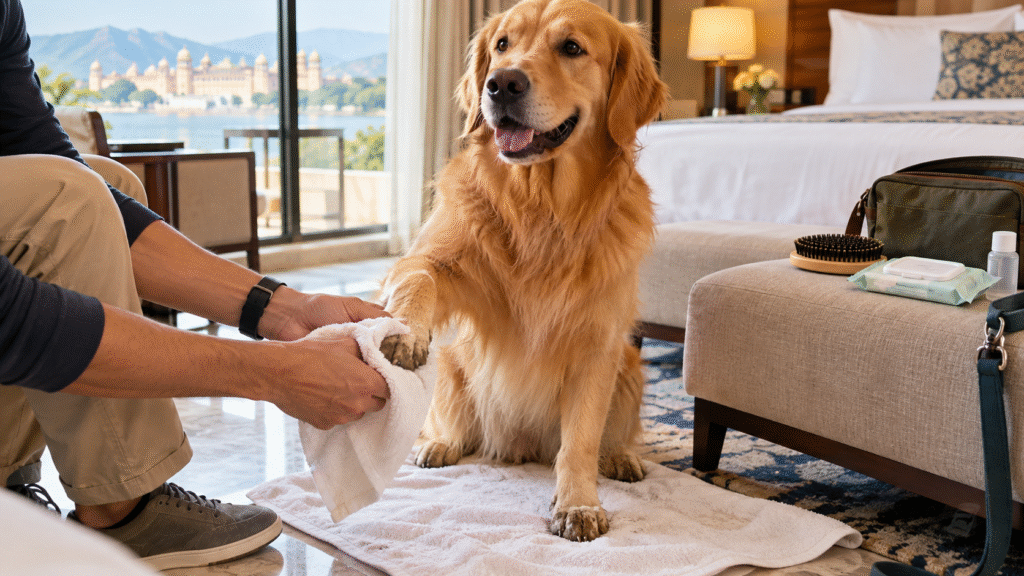
A few grooming items make it easier to keep your dog clean and comfortable throughout the trip, not just at the end of it.
- A travel-size shampoo or dry shampoo. Useful for a quick clean-up after a muddy trail, rain, or a dip in natural water, without needing a full bathing setup.
- A compact brush or comb. Helps manage shedding in the car and doubles as a quick tick/burr check tool after outdoor stops.
- Nail clippers. Worth packing for longer trips, especially if your dog is active on rough terrain that can cause nails to catch or split.
- Ear-cleaning wipes. Particularly useful for floppy-eared breeds or after any exposure to water, rain, or dusty environments.
- Paw balm. Helps protect paw pads from hot pavement in summer or rough, cold terrain in hill areas during winter.
- A deodorizing spray. Handles lingering “wet dog” or travel odor between full baths, especially useful for car interiors.
Read our pet grooming guide to check what to do before departure and what to carry for the journey.
5. Seasonal Accessories
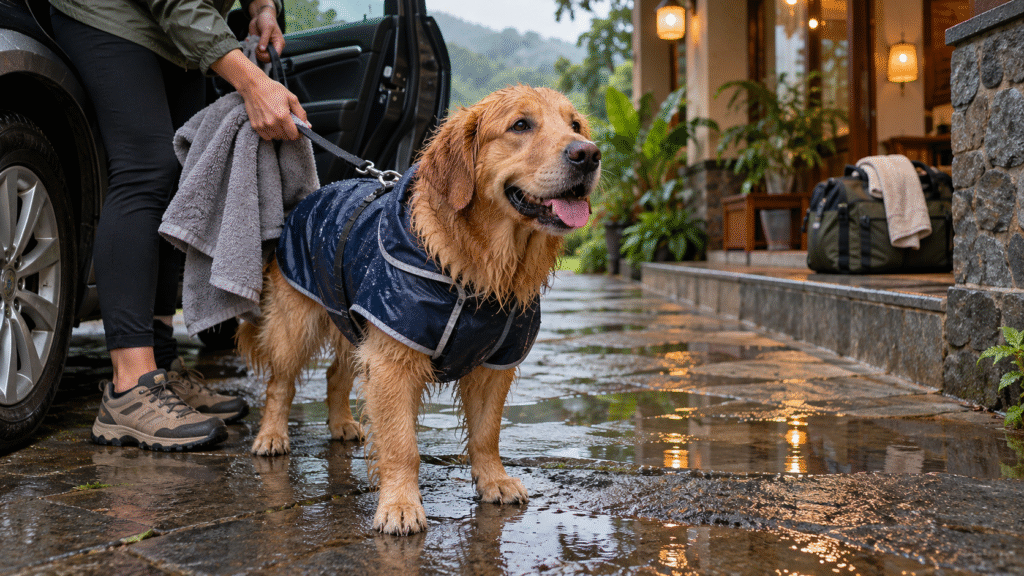
India’s weather varies sharply by season and destination, so your dog’s travel gear should change accordingly.
For hot, humid regions or summer travel:
- A cooling mat or cooling vest for car rides and rest stops
- A collapsible sun shade for the car window
- Extra drinking water
- A towel or cloth
For hill stations or winter travel:
- A warm jacket or sweater, especially for short-haired or small breeds
- Paw protection booties for icy or rough cold terrain
- An extra blanket for overnight stays in colder climates
For monsoon or rainy-season travel:
- A waterproof dog raincoat
- A quick-dry towel kept easily accessible in the car
- Water-resistant footwear/booties to protect paws from puddles and mud
Read: Pet Travel Accessories for Indian Weather: A Season-by-Season Buying Guide
Master Pre-Travel Checklist by Timeline
One week before:
- Vet check-up scheduled and completed if needed
- Vaccination and deworming records confirmed up to date
- Flea/tick prevention applied
- Destination’s pet policy confirmed (hotel, route stops, attractions)
- Nearest vet at destination identified
- Trial/practice trip done, if needed
One day before:
- All travel documents printed and packed
- Recent photo of your dog saved and easily accessible
- Carrier/crate checked for safety and comfort
- Food, water, bowls, and first-aid kit packed
- Grooming kit and seasonal accessories packed based on destination climate
- Comfort item and calming aid packed
Day of travel:
- ID tag and GPS tracker double-checked
- Muzzle packed, if required for your mode of travel
- Feed your dog according to their usual routine and offer water before departure.
- Bathroom break taken before departure
- Emergency contact list kept accessible, not just saved on your phone
Final Thoughts
Preparing a dog for travel in India becomes much easier when you break the process into clear steps: documents, safety, packing, grooming, and seasonal preparation. Sorting these out before departure reduces last-minute problems at hotels, transport counters, and along the route, while making the journey more comfortable for your dog as well. Use this guide as a pre-travel checklist and adjust it according to your destination, season, and mode of transport.
Image Disclaimer: Images used in this article are AI-generated or digitally created for illustration purposes.