Winter travel with pets can be easy with a little planning. Pack for the actual weather, keep your pet warm and dry, protect their paws when needed, and give them a comfortable place to rest after each outing.
These winter pet travel tips for India are useful for trips to places such as Shimla, Manali, Mussoorie, Nainital, Dharamshala, Kashmir, and other destinations where temperatures may be much lower than your pet is used to at home.
Most healthy pets can enjoy a winter trip without any special fuss. The main things to watch are sudden cold, wet fur, icy or salty ground, and longer outdoor exposure. Small dogs, short-haired dogs, puppies, senior pets, and animals with health conditions may need a little more protection.
Here are 12 practical ways to keep winter travel simple and comfortable.
Winter Pet Travel Tips to Keep Your Pet Comfortable
1. Check the Weather Before You Pack
Check the forecast for your actual travel dates rather than packing only by destination. Winter conditions in hill areas can change quickly. One trip may bring bright sunny days and cold nights, while another may include rain, snow, strong wind, or freezing temperatures. Check:
- Daytime and night temperatures
- Rain or snowfall
- Wind
- Road conditions
- Whether your hotel has reliable indoor heating
Check the forecast again a day or two before departure so you can adjust what you pack.
2. Carry a Warm Layer If Your Pet Needs One
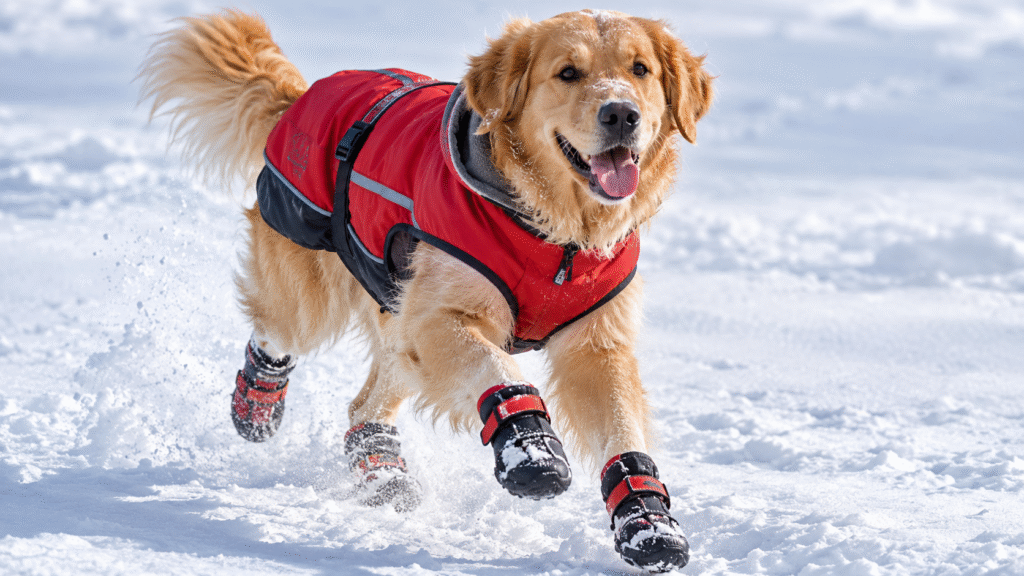
A warm layer can help small, short-haired, senior, or cold-sensitive dogs stay comfortable outdoors.
- Choose a jacket or sweater that fits properly and does not restrict movement, toileting, or walking.
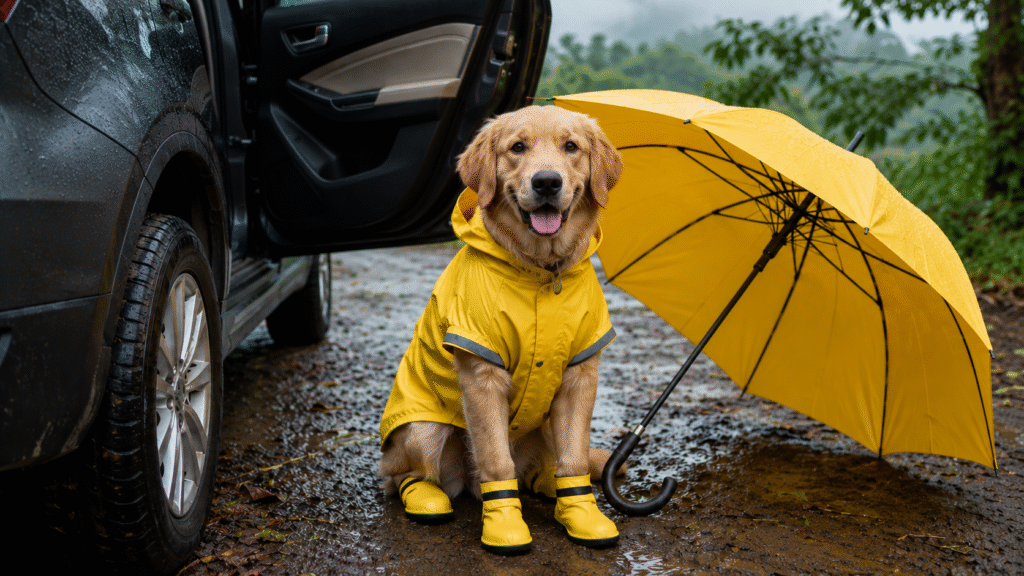
- For rain or snow, a water-resistant outer layer can help keep the coat dry.
- Watch your pet when outdoors.
- If your pet starts shivering, slowing down, lifting their paws, or trying to turn back, take them indoors.
Travelling in changing weather? See Pet Travel Accessories for Indian Weather: A Season-by-Season Buying Guide for practical gear for hot, cold, and rainy trips.
3. Protect the Paws in Snow, Ice, or Salt
Snow, ice, and de-icing salt can irritate paws. If your dog is comfortable wearing boots, use them on snowy, icy, or heavily salted surfaces. If your dog does not wear boots, keep snow walks shorter and clean the paws once you return indoors. Check between the toes for:
- packed snow
- redness
- cracks
- tenderness
- anything caught in the fur
A paw balm can also help protect dry or irritated pads.
4. Keep Your Pet Dry
Wet fur can make cold weather much harder to tolerate.
- If your dog gets wet in rain or snow, dry them properly once you return indoors.
- Pay attention to the paws, chest, belly, and long fur around the legs.
- Carry a towel where you can reach it easily during the journey.
- For long-haired dogs, check for snow or ice caught in the coat after outdoor walks.
For lingering damp smell after wet walks, see How to Dry Your Dog After Walks in the Rain and Avoid Damp Smell During Travel.
5. Carry Regular Food and Enough Water
- Carry your pet’s usual food for the complete trip, with a little extra in case the journey is delayed.
- Keep feeding close to their normal routine unless your vet has advised otherwise.
- Fresh drinking water is just as important in winter as it is in warmer weather. Offer water during the journey and keep it available at the hotel.
- If your pet takes regular medication, keep it in an accessible bag.
For the complete pre-trip basics, see How to Prepare Your Dog for Travel for food, documents, packing, grooming, and safety checks.
6. Take Familiar Bedding
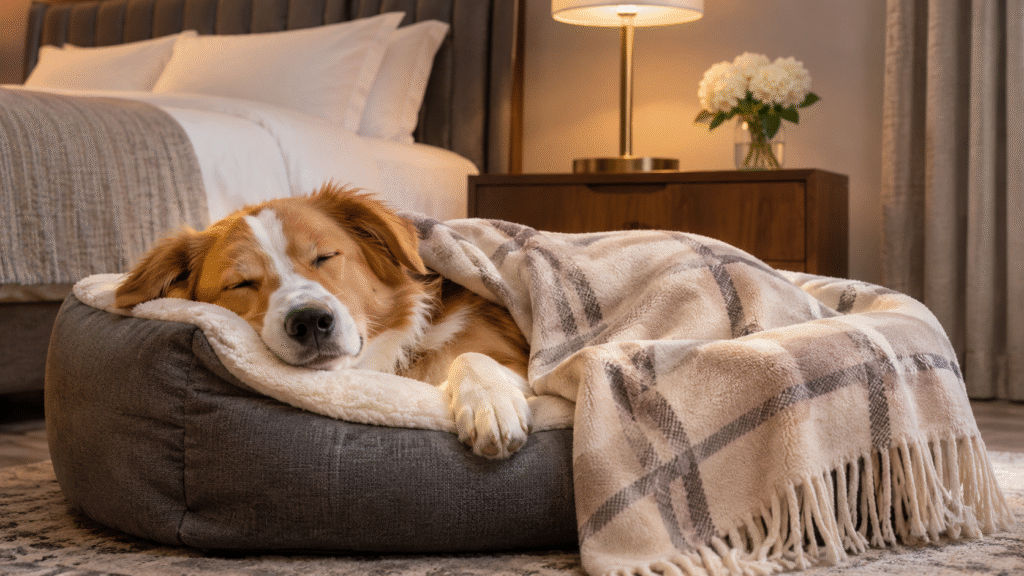
A familiar bed or blanket gives your pet a warm, comfortable place to rest in the hotel.
- Place it away from cold drafts and directly cold floors.
- If the room has marble or tile flooring, add another folded blanket underneath.
- Keep beds a safe distance from room heaters and exposed electrical cables.
- If you use a heated pet bed, choose a product designed for pets and follow its safety instructions.
7. Keep Winter Walks Comfortable
Cold tolerance varies from one pet to another. Keep walks shorter when conditions are freezing, wet, snowy, or very windy, especially if your pet is small, short-haired, very young, senior, or has a health problem. Watch for signs that your pet has had enough:
- shivering
- repeated paw lifting
- slowing down
- whining
- hunching the body
- seeking shelter
- refusing to continue
- repeatedly trying to turn back
Once these signs appear, head indoors rather than extending the walk.
8. Be Careful on Snow and Ice
Snow can be enjoyable for dogs that like it, but icy surfaces can be slippery.
- Walk slowly on frozen paths and avoid letting your dog run where footing looks poor.
- Senior dogs and dogs with joint problems need extra care because slipping can aggravate stiffness or existing mobility issues.
- Keep dogs away from frozen lakes, ponds, and rivers. Ice thickness can be difficult to judge and may not support their weight.
- If your dog is seeing snow for the first time, start with a short outing and see how they respond.
9. Keep the Car Comfortable
Keep the car at a comfortable temperature and secure your pet properly during the journey.
- Dogs should travel with an appropriate car harness or inside a secured travel crate. Cats should remain inside a secure carrier.
- Carry water where you can reach it during stops.
- For trips through very cold or snowy areas, keep a towel and blanket accessible in case your pet gets wet or the journey is delayed.
- Avoid leaving your pet alone in a parked vehicle for long periods in very cold weather.
For route planning, breaks, food, restraints, and overnight stops, read Travelling With Pets by Car in India: Safety, Stops and Road Trip Planning.
10. Check the Hotel Before You Arrive
- Confirm that your pet will have a warm indoor place to sleep.
- Ask whether your pet is allowed inside the room and whether any pet-specific restrictions apply.
- If your dog has difficulty with stairs or slippery flooring, check room access before booking.
- For snowy hill destinations, also ask whether you can drive directly to the property or whether the final approach involves a steep walk.
Before booking, use How to Check If a Hotel Is Pet-Friendly to confirm room access, restrictions, charges, and other rules that may matter during your stay.
11. Give Puppies, Senior Pets, and Pets With Health Problems Extra Care
Some pets need more protection in cold conditions. Speak to your vet before a demanding winter trip if your pet has:
- heart or breathing problems
- arthritis or mobility problems
- diabetes or another chronic condition
- a recent illness or surgery
- regular medication that needs careful timing
Puppies and senior pets may tire faster and become uncomfortable sooner in cold weather. Older dogs may also feel stiffer during winter, so keep walks easier and avoid repeated jumping in and out of the car.
If you are travelling with an older dog, see Travelling With a Senior Dog in India: Health, Mobility and Transport Choices for more detailed advice.
12. Know When Cold Exposure Needs Veterinary Help
Most winter discomfort improves once your pet is indoors, warm, and dry. Seek veterinary advice if your pet develops:
- persistent shivering
- unusual weakness
- poor coordination
- difficulty standing
- extreme sleepiness
- very cold skin
- pale or bluish skin
- swelling, pain, or discoloured skin on the paws, ears, or tail
Warm the pet gradually while arranging veterinary care. Do not vigorously rub suspected frostbitten areas and do not apply intense direct heat such as a heating pad or hair dryer.
Breathing difficulty, collapse, severe weakness, confusion, or an inability to stand should be treated as urgent veterinary problems.
What to Pack for Winter Pet Travel
For most winter trips, pack:
- regular food
- drinking water and bowl
- leash and harness
- warm layer if your pet needs one
- boots or paw protection for snow, ice, or salted ground
- familiar bed or blanket
- towel
- poop bags
- prescribed medicines
- vaccination and basic health records
- basic pet first-aid supplies
- contact details for a veterinary clinic near your destination
Before You Leave
- Check the weather again, confirm your hotel arrangements, and keep your winter gear somewhere accessible.
- If snow is forecast, check road conditions before departure.
- Save the details of a veterinary clinic near your destination, especially if you are travelling to a remote hill area.
Final Thoughts
Comfortable winter travel with your pet in India comes down to a few practical things: keep your pet warm and dry, protect their paws when conditions require it, carry their regular food and water, and give them a comfortable place to rest.
Some pets need extra layers or more careful planning. Others handle cold weather easily.
Pay attention to the weather and to your own pet, and adjust the trip accordingly.
Disclaimer: Winter tolerance varies by pet based on age, size, coat, health, acclimatisation, wind, wet conditions, and activity level. The tips in this article are general travel guidance and are not a substitute for veterinary advice. If your pet has a medical condition, is very young or senior, or shows signs such as persistent shivering, weakness, breathing difficulty, poor coordination, collapse, or suspected frostbite, seek veterinary care promptly.
Image Disclaimer: Images are digitally created/AI generated for illustrative purposes only.