A vet check before pet travel is not always compulsory, but it can save you from serious trouble during a trip. Many pet parents think about packing, transport, and pet-friendly stays first. But travelling with a cat or dog needs more than that: vaccination records, a pet fitness certificate for travel, updated prescriptions, airline or train documentation, hotel confirmation, and a clear idea of whether your pet is actually fit for the journey.
A vet visit before travel with a dog or cat can help you decide whether the trip should go ahead, be postponed, or need extra precautions.
This guide explains why a vet check matters, what documents you need from a veterinarian, what to ask, and how to prepare before road trips, flights, trains, hotel stays, hill trips, and emergency situations.
Why a Vet Visit Before Travel Matters
A routine outing with a pet and a real trip are not the same thing. Travel can expose pets to heat, long car rides, new food, new water, unfamiliar smells, noisy stations, hotel rooms, crowded waiting areas, and sudden changes in routine. It can trigger anxiety, stomach upset, motion sickness, breathing difficulty, skin flare-ups, or exhaustion.

A vet check before pet travel helps you deal with pet travel issues and gives you clarity on whether your pet is fit for the journey. You can also update vaccinations, discuss medication, check existing health issues, and ask what warning signs should you watch for.
This becomes even more important when you are travelling with senior pets, puppies, flat-faced dogs, anxious cats, pets with chronic illness, or animals that cannot handle heat, noise, or confinement well.
When You Should Schedule a Vet Visit Before Travel
You do not need a full vet consultation before every short local outing. But you should consider one before longer, hotter, or more complicated journeys.
Schedule a vet visit 8-10 days before travel especially if:
- Your Pet Has Not Had a Recent Health Check: It becomes more important if you are taking your pet for long journey or they are travelling for the first time.
- Vaccinations Are Due or Records Are Missing: Hotels, boarding places, airlines, or train processes usually ask for certificates of fitness and vaccination.
- Your Pet Is Senior, Very Young, or Chronically Ill: Older pets and puppies often need more careful planning.
- Your Pet Gets Motion Sick or Anxious: The vet can guide you on safer handling and possible support.
- You Are Travelling in Peak Summer or to a Different Climate: Heat, humidity, hill weather, or sudden cold can affect pets differently.
- You Need a Fitness Certificate: Some travel arrangements may require a recent veterinary fitness certificate.
- Your Pet Has Recent Symptoms: Vomiting, diarrhoea, coughing, limping, ear infection, skin problems, or unusual lethargy should be checked before travel.
Do not schedule this visit at the last minute unless the travel is urgent. If your pet needs vaccination, treatment, medication adjustment, or recovery time, a same-day vet visit will not help much.
Vet Approved Documents You Need for Pet Travel in India
Pet travel documents in India can vary depending on how you are travelling and where you are staying. A road trip needs fewer formal documents, while flights, trains, boarding facilities, and hotels ask for more.
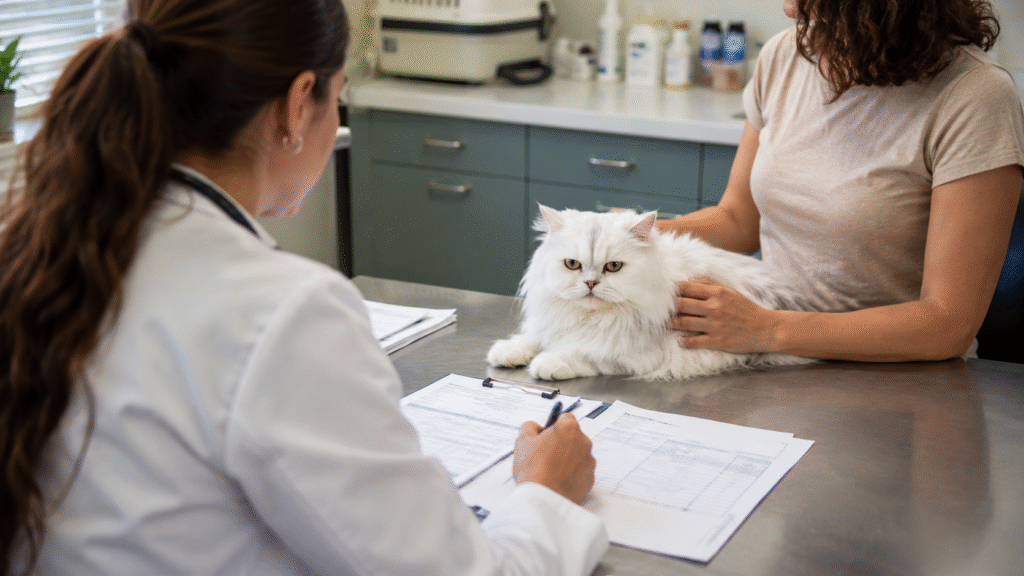
Keep these documents ready:
- Vaccination Record: Especially rabies vaccination and other core vaccines advised by your vet.
- Pet Fitness Certificate for Travel: Needed in some travel situations, especially where official or transport-related documentation is required.
- Previous Prescriptions: Useful if your pet has a recurring condition or ongoing treatment.
- Current Medicine List: Include dosage, timing, and any supplements.
- Deworming or Tick Prevention Details: Useful for boarding, long stays, or travel to tick-prone areas.
- Medical History: Important for senior pets, chronic illness, allergies, seizures, breathing issues, or previous surgeries.
For pet-friendly hotel, airline counter, or railway office written records are necessary, they don’t accept verbal explanations.
What to Ask the Vet Before the Trip
A vet visit before travel with a dog or cat is more useful when you ask practical travel-related questions. Do not leave with just a prescription. Ask even the questions that seem small, because long journeys require a clear understanding of your pet’s health, comfort, stress tolerance, food routine, water needs, and warning signs.
Ask your vet:
- Is My Pet Fit for This Journey? Don’t forget to mention distance, transport mode, weather, and expected travel time.
- Are Vaccinations Updated? Confirm whether any vaccine is due before travel.
- Do I Need a Fitness Certificate? Ask how early it should be issued and what it should mention and validity period.
- What Should I Do If My Pet Gets Motion Sick? You will need veterinary guidance on medication and feeding schedule.
- How Should I Manage Anxiety During Travel? Ask about pet handling, familiarisation, carrier training, and safe calming medication or sprays if needed.
- What Food and Water Routine Should I Follow? Sudden changes can upset the stomach.
- Are There Any Travel Restrictions? This is important for pets with heart, breathing, kidney, joint, stomach, skin, or age-related issues.
- What symptoms should I watch for that may require cancelling or delaying travel? Know the warning signs before you leave.
- What Should I Carry for Emergencies? Ask for pet-specific first-aid preparation. Do not rely on random list from the internet.
Avoid Last-Minute Vet Visits: Schedule the Check in Advance
Do not leave the vet visit until the last minute. If there is fever, infection, stomach upset, skin irritation, ear pain, weakness, or breathing discomfort, the vet may advise rest or treatment before travel. Finding this early is far better than discovering it when the trip is already in motion.
This can affect hotel bookings, road-trip timing, flight plans, train arrangements, or weekend schedules. If you need a pet fitness certificate for travel, waiting until the final day can also create pressure if the clinic is busy or the vet wants to examine your pet properly before issuing one.
For planned travel, especially long-distance travel, do the vet check early enough to handle small problems without panic.
Vet Visit Before Road Trips With Dogs and Cats
Road trips are flexible, but they can be physically demanding for pets. Long drives, heat, traffic, sudden stops, winding hill roads, and unfamiliar places can affect dogs and cats differently.
Before road travel, ask the vet about motion sickness, anxiety, hydration, feeding schedule, heat tolerance, and any medicine your pet may need. This is especially important before hill drives, summer routes, long journeys or even weekend getaways. The documents you may need for a road trip with your pet are:
- Health Certificate: A health certificate is less stringent for road travel than for air or train travel, but it is still recommended for long journeys, especially 500 km or more, and can help if veterinary support is needed on the way.
- Vaccination Records: Vaccination records, especially the rabies certificate, should be carried because they may be required during interstate travel, as quarantine and verification rules can vary.
- Ownership Proof: Ownership proof is not always strictly required, but it is useful if your pet escapes, gets lost, or you are questioned by authorities during travel.
If you are travelling by car, a secure dog car harness, travel crate, or carrier can make the journey calmer and safer. For longer drives, a dog water bottle, towel, poop bags, wipes, and a familiar mat can make the journey easier.
Vet Visit Before Flights, Trains and Hotel Stays
Flights, trains, and hotels need more verification than ordinary road travel.
Air Travel
If you are travelling with your pet by flight, it is wise to ask the airline directly what documents are required and then confirm with your vet what can be issued. You may need:
- Health Certificate for Air Travel issued within 10 days of flight
- Veterinary Fitness Certificate confirming pet is fit for air travel. For senior or health-compromised pets, additional cardiac tests may be required.
- Vaccination Certificates with original rabies vaccination certificate and other relevant vaccination records.
Train Travel
Train travel may also need extra care. Pet arrangements in trains can involve documentation, offline booking, station-level checks, and plenty of ground-level uncertainty. Do not assume that one person’s online experience will apply to every route, train, or station. Complete the documents needed from your vet in advance:
- Health/Fitness Certificate, valid for 10 days, issued by a registered vet confirming that your pet is healthy for train travel.
- Vaccination Certificate, specifically rabies vaccination certificate is essential for parcel office acceptance.
- Ownership Certificate, proving you own the pet, Issued by veterinarian or available from breeder.
Hotel Stays
Hotels and homestays ask for vaccination proof, especially if other pets are on the property. Even when they do not ask, carrying records is wise. To avoid complications at check-in, keep all necessary documents ready and confirm the hotel’s pet-document requirements before booking.
Special Cases That Need Extra Caution
Some pets need more than basic travel preparation:
- Puppies are usually not fully vaccinated, and travel can expose them to other animals, unfamiliar surfaces, and infection risk. Ask your vet whether the puppy should travel at all, what exposure to avoid, and which records to carry.
- Senior pets may struggle with long drives, stairs, cold floors, heat, pain, or long waiting times. They may need medication, mobility support, shorter travel hours, and more frequent breaks.
- Flat-faced dogs and cats may have breathing difficulties, especially in heat, stress, or enclosed travel conditions. A vet check before pet travel is especially important for them.
- Anxious dogs and cats may panic in cars, carriers, stations, airports, or hotel rooms. Ask the vet about safe ways to manage travel anxiety and avoid forcing new restraint gear or carriers on the day of the trip.
- Pets With Chronic Illness, heart disease, kidney issues, seizures, diabetes, breathing problems, skin disease, stomach sensitivity, or joint pain need more careful planning. Carry medical records and ask the vet what symptoms should be treated as urgent during travel.
Emergency Planning Before Travel
Before travelling, check whether there are veterinary clinics near your route and destination. This will come handy especially if you are going to hill areas, smaller towns, forest stays, remote homestays, or long highway routes. 24-hour veterinary care is not available in most remote areas so, prepare these basics:
- Nearest Vet: Save the name, number, and location.
- Regular Vet Contact: Keep your own vet’s number available for remote guidance.
- Digital Records: Keep vaccination records, prescriptions, and reports on your phone.
- Emergency Transport Plan: Know how you would reach a vet if your pet becomes unwell.
- Basic Travel Kit: Carry regular medicines, towel, leash, carrier, water, and cleanup items.
- Red-Flag Symptoms: Ask your vet what signs need immediate attention.
“I will figure it out there” is a dangerous assumption, especially when pets are involved. During pet emergencies, unpreparedness and panic eats valuable time.
Vet Visit Before Travel: Responsible Pet Parenting
Fearmongering is not our intention. As a pet parent, vet visit before travel is a responsibility and respect for the life you are taking into unfamiliar conditions. Your pet cannot explain nausea, overheating, ear pain, joint discomfort, anxiety, or breathing difficulty in words. You have to watch for signs and symptoms, and understand their limits.
A veterinarian is better equipped to help you understand your pet and whether they are fit for travel, what symptoms to watch for, what precautions you should take and when to stop. That clarity matters because responsible pet travel is about making sure your pet handles the process comfortably.
If your pet is healthy, the journey becomes easier for both of you. If your pet is not ready, knowing that before you leave is far better than discovering it in the middle of the journey.
Final Thoughts
So, do you need a vet check before pet travel? Not for every small outing, but definitely before long journeys, flights, train travel, major road trips, hill travel, hotel stays, or travel with puppies, senior pets, anxious pets, flat-faced breeds, and pets with health issues.
A vet visit helps you prepare documents, plan medicines, understand risks, and decide whether the trip is suitable for your pet. It is also about asking whether the travel plan is suitable for them. A pre-travel vet check is one of the clearest ways to ask that question before the journey begins.
FAQ
Do I need a vet check before pet travel?
You may not need one for every short outing, but a vet check is useful before long trips, flights, train journeys, hill travel, hotel stays, or travel with pets that are young, senior, anxious, flat-faced, or medically sensitive.
What documents should I carry when travelling with pets in India?
Carry vaccination records, previous prescriptions, current medicine details, medical history, emergency contact numbers, and a pet fitness certificate if required by your transport provider, hotel, airline, or railway process.
Is a pet fitness certificate required for travel?
It depends on the travel mode, provider, and situation. Some airlines, train processes, boarding facilities, or official arrangements may ask for a recent pet fitness certificate, so always confirm before booking.
When should I visit the vet before a trip?
For planned travel, schedule the vet visit several days in advance. This gives you time to update vaccines, treat minor issues, arrange documents, or change plans if your pet is not fit to travel.
Should senior pets get a vet check before travelling?
Yes, senior pets should ideally be checked before long journeys. They may need advice on pain, mobility, medication, heat tolerance, travel duration, and emergency planning.
Should cats get a vet check before travel?
Yes, especially before long car journeys, train travel, flights, or hotel stays. Cats may hide stress or discomfort, and a vet can guide you on carrier safety, anxiety, hydration, and health readiness.
Can a vet help with motion sickness or travel anxiety?
Yes. A vet can suggest safe ways to manage motion sickness or anxiety. Do not give human medicines or sedatives without veterinary advice.
What should I ask the vet before travelling with my pet?
Ask whether your pet is fit to travel, whether vaccinations are updated, whether a certificate is needed, how to manage food and water, what medicines to carry, and which symptoms should make you delay or stop travel.