Having a senior dog does not automatically mean giving up road trips or holidays. Many older dogs travel comfortably, but age can change mobility, stamina, temperature tolerance, medication needs, and how well your dog handles a long journey. The right travel plan should depend on your dog’s current condition, not age alone.
Travelling with a senior dog requires a little more planning than travelling with a healthy young adult.
Your dog may still look active and behave normally at home while finding long periods in a car, repeated stairs, unfamiliar surfaces, hot weather, or disrupted routines much harder than before.
Before you choose a destination or mode of transport, look at three things: where your dog is in the ageing process, how well they manage normal daily activities, and what the journey will physically require from them.
What Is a Senior Dog?
There is no single age threshold that fits every dog. Body size, breed, genetics, expected lifespan, and general health all affect the ageing process. Small dogs often live longer and may enter the senior stage considerably later than large or giant breeds. An eight-year-old Chihuahua and an eight-year-old Great Dane may therefore be at very different stages of ageing.
Rather than relying on a fixed age, veterinary guidelines commonly treat the senior stage as roughly the last quarter of a dog’s expected lifespan.
Ageing also does not always show clearly from appearance. Your dog may have no grey muzzle or obvious weakness but still develop subtle changes in joints, muscle strength, hearing, vision, stamina, or recovery time. Let your veterinarian assess the actual condition of your dog.
Make Regular Vet Visits Part of Dog Care
Healthy adult dogs should have routine veterinary checks, and once your dog reaches the senior stage, veterinary guidelines generally recommend examinations about every six months. Your vet may recommend more frequent visits if your dog already has arthritis, heart disease, diabetes, kidney disease, breathing problems, or another chronic condition.
These regular visits also give you a much clearer picture of whether your dog remains suitable for longer journeys. Do not wait for a travel problem to start paying closer attention to your dog’s health.
How to Assess Your Senior Dog Before Travel
Chronological age isn’t a real indicator of your dog’s current physical condition. Before planning a trip, watch how your dog manages normal activities at home:
Mobility
Can your dog stand up easily after resting? Can they walk without limping or repeatedly stopping? Do they hesitate before climbing stairs or getting into the car?
A dog that already struggles with these activities will usually need more assistance while travelling.
Stamina
Notice whether your dog tires more quickly than before. A dog that comfortably walks for ten minutes but becomes exhausted after twenty shouldn’t be expected to manage long sightseeing walks.
Pain and Stiffness
Watch for slower movement after rest, reluctance to jump, difficulty settling into a comfortable position, or changes in posture.
Dogs do not always express pain dramatically.
Breathing
Coughing, unusual breathlessness, or excessive panting after mild activity deserve veterinary attention before a long journey.
Balance and Strength
Slipping, wobbling, weakness in the hind legs, or difficulty remaining steady while the car moves can make travel uncomfortable and increase the risk of injury.
Hearing and Vision
Reduced hearing or vision can make unfamiliar hotels, parking areas, staircases, and crowded places more confusing. Your dog may need more guidance even if they navigate home confidently.
Toilet Habits
Older dogs may need more frequent toilet breaks. Do not plan stops according to what your dog could manage several years ago.
Behaviour and Stress
Age can also change how dogs respond to unfamiliar situations. A dog that once enjoyed busy trips may now prefer quieter surroundings or become anxious more easily.
If you notice a significant change in mobility, breathing, appetite, toilet habits, behaviour, or stamina, speak to your vet before travelling.
Get a Pre-Travel Vet Check When Needed
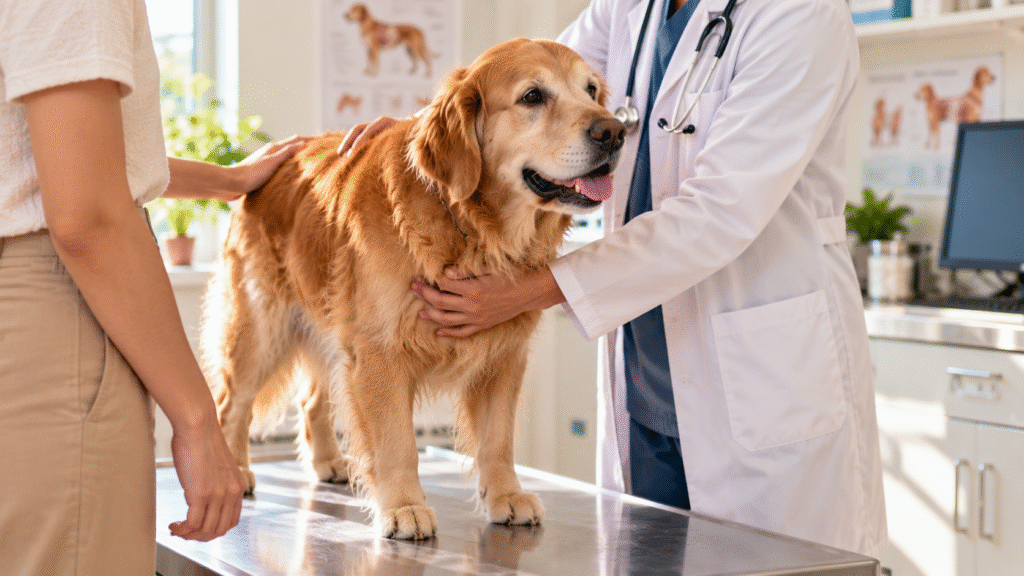
If your dog is senior but healthy, taking a familiar two-hour car journey may not need a veterinary appointment before every trip. However, a long and demanding journey needs more consideration, especially if your dog has an existing medical condition.
Ask your vet about the planned trip if your dog:
- Takes regular medication
- Has arthritis or chronic pain
- Has heart or breathing problems
- Has diabetes or kidney disease
- Has recently become weaker or less mobile
- Has had recent surgery or illness
- Becomes unusually distressed during travel
- Will be travelling by air
Carry enough prescribed medication for the entire trip, plus a small margin in case your return is delayed. Keep medicines in their original packaging and follow storage instructions, particularly for anything that requires refrigeration.
Do not change medication timing or give sedatives to make travel easier without veterinary advice.
Not sure whether your pet needs a health check before travelling? Read: Does Your Pet Need a Vet Check Before Travel?
Make Car Travel Easier on an Older Dog
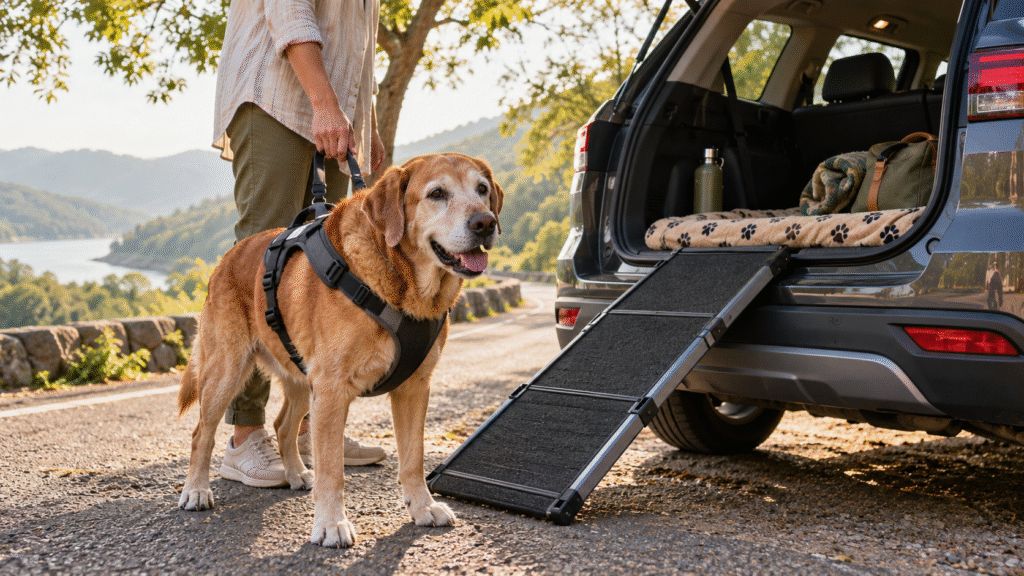
For many senior dogs, travelling by car gives you the most control over breaks, temperature, travel time, and handling. The biggest challenge is not the drive but getting your dog into and out of the vehicle.
1. Avoid Repeated Jumping
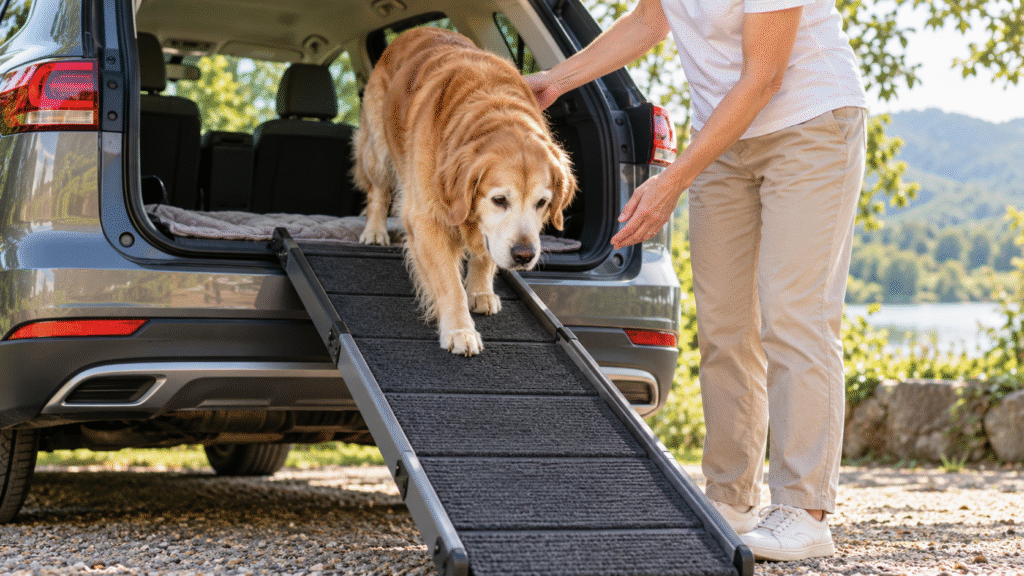
If your dog has arthritis, reduced strength, or other mobility problems, repeated jumps from a high SUV or car can put unnecessary strain on joints. Use a stable ramp, pet steps, or an appropriate support harness if your dog cannot enter and exit comfortably.
Let ramp at home before the trip rather than expecting your dog to understand it at a roadside stop.
2. Give Your Dog a Stable Surface
Older dogs may find it harder to balance when a vehicle turns or brakes. Use a secure car restraint or appropriately secured travel crate and provide a non-slip, supportive surface where your dog can settle. Avoid letting your dog stand and sway for long periods.
Supportive bedding can also help dogs with stiff or painful joints during longer journeys.
3. Take More Frequent Breaks
When travelling with a senior dog, plan stops according to their need. Use breaks for:
- toileting
- drinking water
- gentle movement
- checking your dog’s comfort
- medication or meals when required
Short, calm walks are especially useful during long journeys.
Leaving before sunrise with your dog? Read: How to Prepare Your Dog for an Early Morning Road Trip.
Choose the Transport Mode Around Your Dog’s Needs
No transport option is automatically best for every senior dog.
Car Travel
A private car generally gives you the greatest control. You can stop when necessary, adjust the temperature, carry mobility equipment, and respond quickly if your dog becomes uncomfortable.
For dogs with limited mobility or frequent toilet needs, that flexibility can matter enormously.
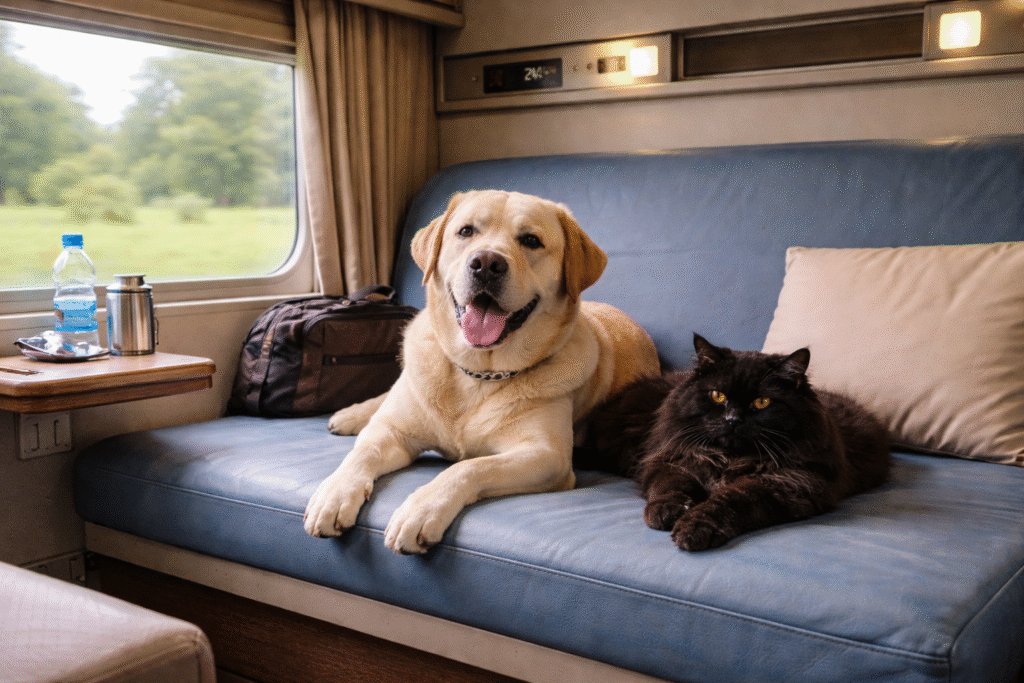
Train Travel
Train travel may reduce the amount of continuous road movement, but consider the entire journey rather than just time on the train.
Your dog may have to manage railway platforms, station crowds, unfamiliar surfaces, boarding and disembarking, restricted toilet opportunities, and long periods away from their normal routine.
Check current Indian Railways pet-booking rules before making travel plans because eligibility and booking arrangements depend on the journey and accommodation.
Air Travel
Think particularly carefully before choosing air travel for a senior dog.
Flying involves more than time in the aircraft. Your dog may face a longer airport process, carrier confinement, unfamiliar handling, noise, temperature changes, and limited opportunities for you to respond if something goes wrong.
Airlines also require health documentation and may impose different conditions depending on your dog’s size, breed, carrier, route, and whether the dog travels in the cabin or aircraft hold.
If your senior dog has heart disease, breathing problems, severe anxiety, reduced mobility, or another significant medical condition, ask your vet whether air travel is appropriate before you book. Consider the physical demands of the complete journey.
Keep Food, Water and Medication Predictable
Travel is not a good time to overhaul your senior dog’s routine.
- Carry their regular food and avoid introducing unfamiliar meals or treats during the trip.
- Offer water regularly and watch hydration more carefully in hot weather.
- If your dog needs medication at fixed times, plan stops and departure times around the medication rather than hoping to manage it somewhere along the route.
- Dogs with diabetes, kidney disease, digestive problems, or other conditions may have more specific feeding and hydration requirements. Follow your vet’s instructions rather than general travel advice.
Choose Senior-Dog-Friendly Accommodation
A property may describe itself as pet-friendly without being particularly easy for an older dog. Before booking, check practical details such as:
- Whether your room requires climbing stairs
- Whether a lift is available and your dog is comfortable using it
- How far the room is from an outdoor toilet area
- Whether floors are slippery
- Whether the property has steep paths or difficult terrain
- Whether your dog can rest somewhere quiet
- How far the nearest veterinary clinic is
For a dog with limited mobility, choose a ground-floor room close to an outdoor area rather than elaborate pet amenities.
What to Pack for a Senior Dog
Along with your normal pet travel supplies, carry items that support your dog’s specific needs:
- Prescribed medicines
- Copies of important medical records
- Current vaccination records
- Your vet’s contact details
- Details of a veterinary clinic near your destination
- Supportive bedding
- Secure harness and leash
- Ramp, steps, or mobility support if needed
- Regular food
- Drinking water and bowls
- Towels and clean-up supplies
- Any prescribed diet or medical supplies your dog normally uses
Keep medication and essential medical information somewhere accessible rather than buried beneath luggage.
When Should You Stop the Journey?
Do not dismiss every change as normal tiredness simply because your dog is old. Stop and assess your dog if you notice:
- Unusual weakness
- Difficulty standing
- Severe or worsening pain
- Repeated vomiting
- Significant diarrhoea
- Unusual confusion or distress
- Persistent coughing
- Difficulty breathing
- Collapse
Seek veterinary help promptly for severe symptoms, particularly breathing difficulty, collapse, marked weakness, or any sudden deterioration.
Should You Travel With Your Senior Dog?
Age alone should not be a deciding factor. A healthy senior dog that moves comfortably, eats normally, handles travel well, and enjoys being with you may still cope beautifully with thoughtfully planned trips.
But travel should adapt as your dog ages. You may need shorter driving days, more stops, easier accommodation, mobility support, quieter destinations, or a different mode of transport.
The most useful question is not “Is my dog too old to travel?” It is “Can my dog comfortably manage this particular journey?”
If the answer is uncertain, talk it through with your vet before you book.
Image Disclaimer: Some images in this article may be AI-generated or digitally enhanced for illustrative purposes.