Travelling with a cat by car is much easier when you sort out four things before leaving: a secure carrier, a workable litter arrangement, familiar food and water, and a plan to prevent stress or escape.
Cats do not always take to road trips as readily as dogs. The unfamiliar movement, engine noise, smells, confinement, and change in routine can make even a normally calm cat anxious.
That does not mean your cat cannot travel comfortably by car. The key is to prepare before the journey rather than putting the cat into a carrier on travel morning and hoping for the best.
1. Travelling With a Cat by Car: Prepare Your Cat in Advance
Do not let the first long car journey also be your cat’s first proper introduction to the carrier.
- Leave the carrier open at home for several days, or preferably longer, before the trip. Put it somewhere your cat already spends time rather than bringing it out only for vet visits.
- Add familiar bedding or a favourite toy and allow your cat to investigate it without being forced inside. Treats can help create a more positive association with the carrier.
- Once your cat is comfortable entering it, introduce the car gradually.
- Start with the cat secured in the carrier inside the stationary car for a short period. If they remain reasonably settled, progress to a very short drive and gradually increase the journey length over several sessions.
This also gives you a chance to discover whether your cat is prone to motion sickness or severe travel anxiety before you are several hours from home.
Does your cat need to get comfortable with a carrier or crate? Read: How to Crate-Train Your Pet Before Travelling.
2. Choose and Secure the Right Cat Carrier
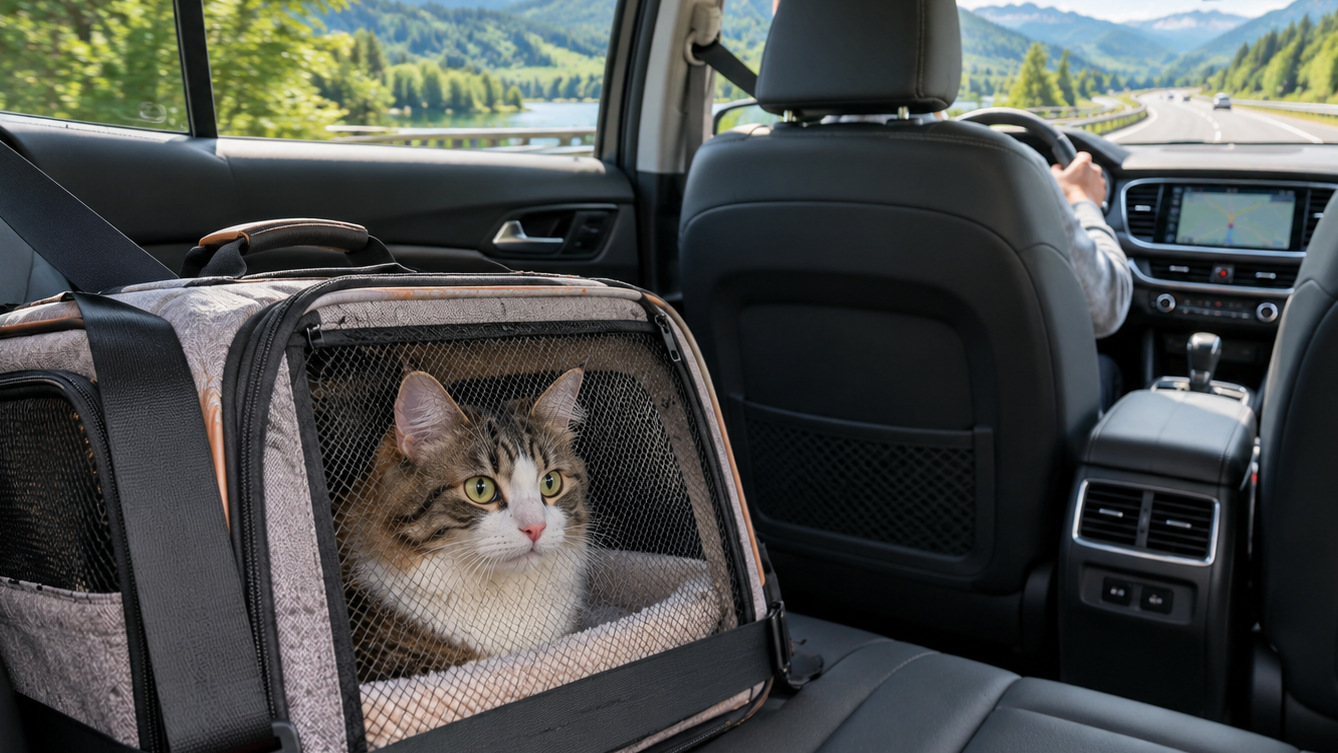
Your cat should travel inside a secure carrier rather than loose in the car.
- Choose a carrier that is sturdy, well-ventilated, easy to clean, and large enough for your cat to stand, turn around, change position, and lie down comfortably.
- Check the doors, clips, zips, or latches before every journey. A carrier that opens unexpectedly at a fuel station or hotel entrance creates an immediate escape risk.
- Line the bottom with an absorbent pad and place familiar bedding or a towel over it. If your cat urinates or vomits during the journey, the pad makes the carrier much easier to clean.
- The carrier itself must also stay secure inside the vehicle. Position it according to the carrier manufacturer’s instructions so that it cannot slide, tip, or move freely during sudden braking.
- Do not place the carrier where direct sunlight falls on it for long periods or where an air-conditioning vent blows directly onto your cat.
3. Plan Litter Breaks
A short car journey may not require a litter stop at all, especially if your cat has used the litter tray before leaving. For longer journeys, carry:
- A portable cat litter or a small travel litter tray
- Your cat’s usual litter
- A litter scoop
- Waste bags
- Absorbent pads
- Paper towels or pet-safe wipes
Use familiar litter for the journey; avoid buying a special travel variety just before the trip.
How to Manage Litter Smell in the Car
- Keep the litter tray empty and packed until your cat actually needs it.
- Carry litter in a tightly sealed container or zip bag.
- After your cat uses the tray, scoop waste immediately, seal it inside a sturdy waste bag, and put it inside a second bag or closed container until you can dispose of it.
- Carry spare litter so you can remove heavily soiled litter rather than leaving it in the car.
- An absorbent pad beneath the tray can catch spills, while paper towels and a pet-safe cleaner are useful if urine reaches the carrier or car interior.
- Avoid trying to mask litter odour with heavily perfumed air fresheners or sprays around your cat. Removing the source of the smell and ventilating the car safely works better.
Never open the carrier for a litter break while a car door or window is open. Park first. Close every door and window. Only then open the carrier and offer the litter tray. Do not repeatedly take your cat out to see whether they might want to use it.
4. Manage Food and Water Carefully
Carry your cat’s normal food rather than relying on finding the same brand during the journey.
- Avoid introducing new food, treats, or supplements on travel day. A car journey is not a useful time to discover that something disagrees with your cat’s stomach.
- A large meal immediately before departure may make travel sickness worse in some cats. If your cat has previously been sick during car journeys, ask your vet how to time meals for a longer trip.
- Carry fresh drinking water and a small stable or collapsible bowl. On longer journeys, offer water when you stop and check whether your cat is drinking normally.
- If you carry wet food, keep it appropriately stored and discard any portion that has been sitting unrefrigerated for too long.
- For very long journeys, plan feeding around proper stops rather than trying to feed your cat while the vehicle is moving.
5. Prevent Escape and Keep Your Cat Safe
Escape prevention deserves as much attention as comfort. A frightened cat can move extraordinarily quickly when a carrier door and car door are open at the same time. Before departure:
- Check the carrier latch or zip
- Make sure your cat’s identification details are current
- Keep a recent clear photograph of your cat on your phone
- Consider a secure, properly fitted harness if your cat may need to come out of the carrier during the journey
- At fuel stations, highway stops, toll areas, parking lots, and hotel entrances, keep the cat inside the carrier.
- If you genuinely need to open it, do so only inside a fully enclosed car with all doors and windows shut.
- Never allow your cat to roam loose while the car is moving, even if they appear calmer outside the carrier. A loose cat can distract the driver, enter the footwell, hide beneath a seat, or escape when someone opens a door.
6. Watch the Temperature
Cats can overheat rapidly inside a parked vehicle. Keep the car ventilated while travelling and never leave your cat alone in a parked car, particularly in warm weather.
During Indian summers, even a seemingly short stop can become dangerous quickly. Arrange fuel, food, and toilet stops so someone can remain with the cat whenever possible.
7. What to do If Your Cat Gets Anxious in the Car
Some vocalising during an unfamiliar journey is common, but persistent distress deserves attention. You can make travel less stressful by:
- Placing familiar bedding inside the carrier
- Keeping the car quiet rather than playing loud music
- Driving smoothly and avoiding sudden braking where possible
- Keeping the temperature comfortable
- Partially covering the carrier with a light cloth if seeing constant movement outside makes your cat more anxious, while keeping ventilation clear
- Speaking calmly rather than repeatedly opening the carrier to reassure the cat
A feline pheromone spray may help some cats. Apply it to the carrier or bedding according to the product directions before putting your cat inside.
If your cat becomes severely distressed during car journeys, speak to your vet before travelling. Do not give sedatives, human medicines, or unfamiliar calming products without veterinary advice.
8. What to Pack for a Cat Car Journey
You do not need an enormous travel kit. Pack what solves the problems you are realistically likely to encounter:
- Secure cat carrier
- Absorbent carrier pads
- Familiar towel or bedding
- Travel litter tray
- Familiar litter
- Scoop and waste bags
- Regular food
- Fresh drinking water
- Food and water bowls
- Paper towels or pet-safe wipes
- Pet-safe cleaner
- Prescribed medication, if needed
- Current identification details
- Recent photograph of your cat
Keep the litter supplies, wipes, water, and spare carrier pad somewhere you can reach without unpacking the entire car.
Travelling in very hot, cold, or rainy weather? See Pet Travel Accessories for Indian Weather: A Season-by-Season Buying Guide for practical gear to match the season and destination.
Before You Start
Before pulling away, check that your cat has had an opportunity to use the litter tray, the carrier is properly closed and secured, and the car temperature is comfortable.
Keep water, litter supplies, and clean-up materials accessible rather than buried under luggage.
Then leave the carrier closed and let your cat settle.
The goal of a successful cat road trip is to create a secure, predictable environment and disturb it as little as necessary until you reach your destination.
Image Disclaimer: Some images in this article may be AI-generated or digitally enhanced for illustrative purposes.