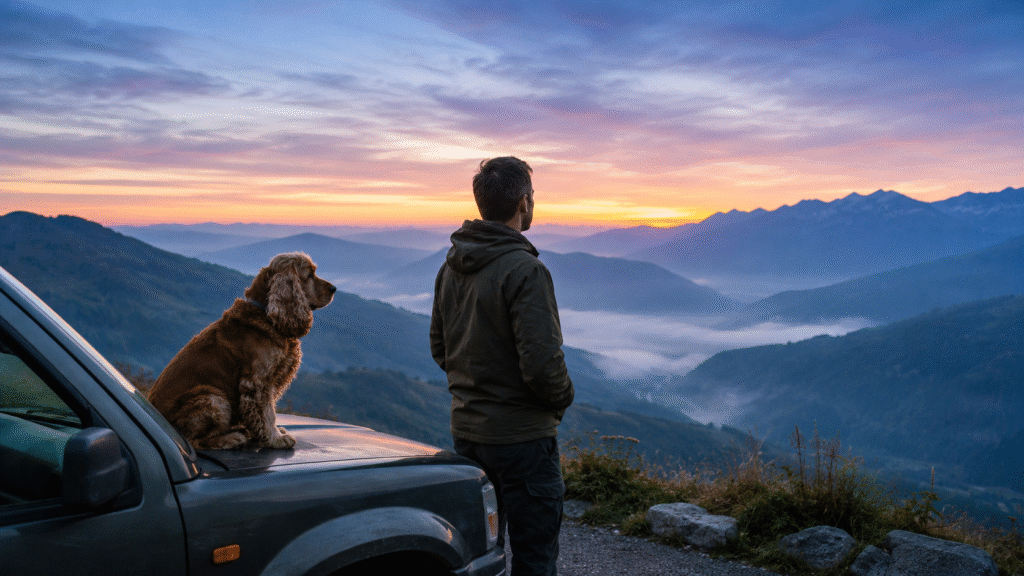
Knowing how to prepare your dog for an early morning road trip makes the difference between a groggy, confused, and chaotic start and a smooth, stress-free departure for both of you. Early starts throw off a dog’s usual routine just as much as ours, and a little preparation the night before goes a long way toward keeping them calm and ready to travel. Here’s a practical guide to get your dog and your car ready before the sun’s even up.
Before you leave, it also helps to read 50 Tips for Travelling With Pets in India so you do not miss documents, food, water, or safety essentials.
Early Morning Trips Are Hard for Dogs
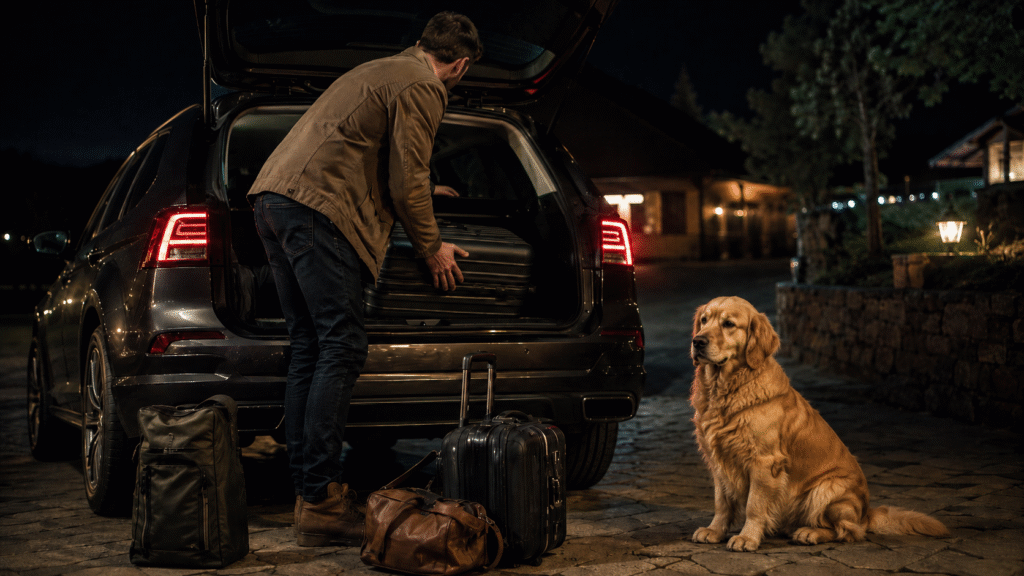
Dogs are used to their usual routines, and their internal clock is often tied closely to feeding times, walks, and sleep patterns. An early morning trip disrupts their routine all at once:
- Broken sleep cycle: Waking a dog before their usual time can leave them groggy, confused, and reluctant to move.
- Empty stomach or rushed feeding: An early start often means skipping, delaying, or rushing meals, which can increase the chance of nausea or discomfort during travel.
- Limited bathroom time: A rushed morning usually means less time for a proper walk or bathroom break, which can make your dog uncomfortable during the ride.
- Unfamiliar darkness and quiet: Dogs associate darkness and quiet with sleeping time, so leaving early while it is still dark outside can feel unsettling.
- Owner stress transfers to the dog: Early mornings are often rushed and stressful for humans too, and dogs are highly sensitive to that tension.
None of this means an early trip is a bad idea; it just needs a bit of extra preparation.
Tips to Prepare Your Dog For an Early Morning Road Trip
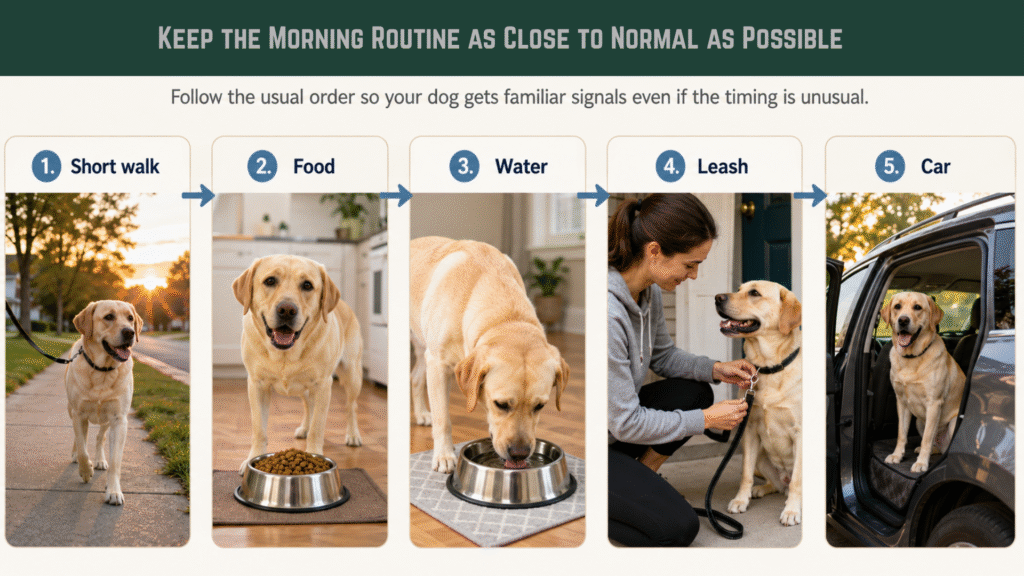
The Night before and the early morning dos and don’ts:
- Stick close to your dog’s normal bedtime. Avoid keeping them up late the night before, even if you’re tempted to tire them out before the journey. A regular sleep schedule helps your dog wake up calmer.
- Pack the car the night before. Load food, water, bedding, and travel gear ahead of time so the actual morning departure is quiet and low-stress, without last-minute bustling around your dog.
- Set out food and water bowls in advance. Having everything ready means you can feed your dog promptly without fumbling around half-asleep in the kitchen.
- Feed a light meal a couple of hours before departure. A small, easily digestible meal is better than a large meal right before getting into the car, especially if your dog is prone to nausea.
- Take them for a proper walk before leaving, even if it’s shorter than usual. This gives them a bathroom break and a bit of activity to ease the transition from sleep to travel.
- Wake your dog gently, not abruptly. A calm, quiet wake-up (rather than sudden noise or excitement) helps prevent grogginess from turning into anxiety or resistance.
- Keep the morning routine as close to normal as possible. Follow the usual order, such as bathroom break, food, water, leash, and car, so your dog gets familiar signals even if the timing is unusual.
- Dress for early morning temperatures. Mornings can be noticeably cooler than the rest of the day, so keep a light blanket in the car if your dog gets cold easily, especially during hill trips or winter drives.
- Bring a familiar blanket or bed for the car. A familiar scent and texture help your dog settle in and go back to sleep during the drive, which is often the best outcome for an early start.
- Avoid rushing the loading process. Give your dog a moment to get comfortable in their seat, harness, or crate rather than hurrying them in while you’re racing the clock.
- Keep the car dim and quiet at the start. Low light, soft voices, and minimal noise help your dog understand that it is still rest time, making it easier for them to doze off once the drive begins.
- Plan your first rest stop earlier than usual. Since bathroom breaks may have been rushed at home, plan a stop within the first hour or two rather than waiting for your usual interval.
- Watch for signs of travel sickness in the early stretch. Motion sickness can be worse when a dog is unsettled, hungry, overfed, or anxious, so look for drooling, lip-licking, whining, or restlessness in the first hour.
- Keep your own energy calm and steady. Dogs pick up on rushed, stressed behavior, so even if you’re running on little sleep, a calm tone and unhurried movements help keep your dog settled.
- Let them settle into sleep once moving. If your dog dozes off shortly after departure, that’s a good sign. Avoid unnecessary stops or noise in the first stretch that could wake them unnecessarily.
For dogs with recurring nausea, anxiety, or discomfort during travel, a quick vet visit before a long road trip can help you plan safer medication and feeding advice.
Travel Kit for Early Morning Road Trip With a Dog
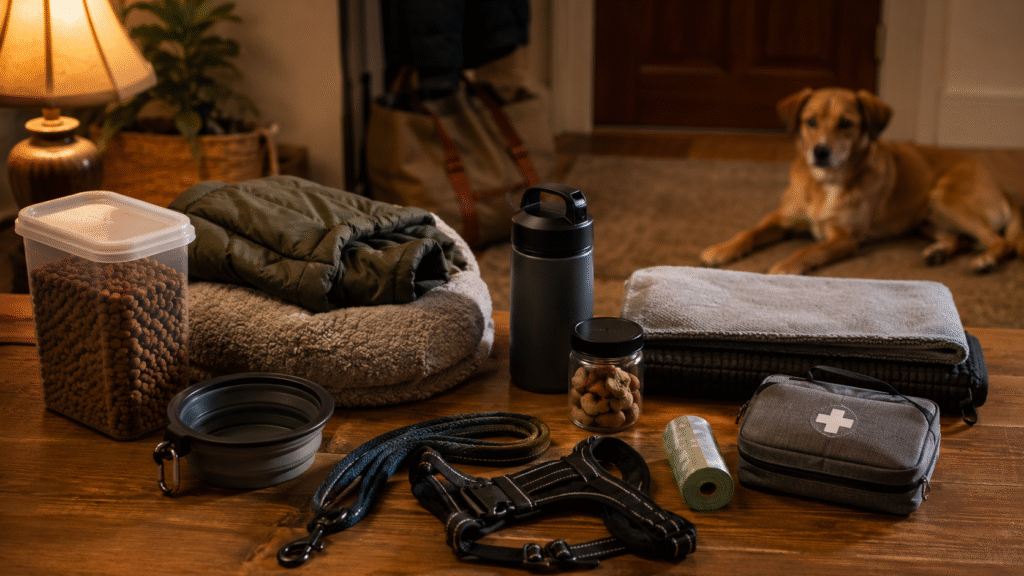
Having a dedicated kit ready the night before removes the guesswork from a groggy, rushed morning. To prepare your dog for an early morning road trip, keep these items packed and close to the door:
- Pre-measured food and a spill-proof water bowl: So you do not have to search through the kitchen half-asleep.
- A familiar blanket or bed: Helps your dog feel secure and settle back into sleep during the drive.
- A light jacket or extra blanket: Useful for cooler early morning temperatures, especially during winter drives or hill trips.
- Leash, harness, and poop bags: Keep them together so the first bathroom break is quick and stress-free.
- A few treats: Helpful for calm, reward-based loading into the car.
- A basic first-aid kit: Useful for minor needs during the journey.
- A towel or absorbent mat: Helpful if the ground is damp, your dog has wet paws, or there is early morning dew.
- A travel water bottle for yourself: An alert, hydrated driver is as important as a settled dog.
Keeping this kit assembled the night before helps your early departure stay calm, organised, and easy, rather than chaotic.
Keep a compact pet first-aid kit for travel in the car, especially for long drives, hill trips, or early departures when shops and clinics may not be open yet.
Frequently Asked Questions
1. Should I feed my dog before an early morning road trip?
Yes, a light, easily digestible meal a couple of hours before departure is usually better than travelling on a completely empty stomach or a large, rushed meal right before getting in the car.
2. Will my dog be anxious about leaving in the dark?
Some dogs may seem a little unsettled by the unusual darkness and quiet, but keeping their normal routine (bathroom, food, leash) in the same order usually helps them adjust quickly.
3. How early should I wake my dog before departure?
Waking them 30–45 minutes before leaving gives enough time for a proper bathroom walk and a light meal without feeling rushed, though this can vary based on your dog’s usual routine.
4. Is it normal for my dog to sleep through most of an early morning drive?
Yes, many dogs doze off shortly after departure on early trips, especially if their sleep was interrupted. This is a good sign that they’re comfortable and settled.
5. What if my dog shows signs of motion sickness on an early trip?
Watch for drooling, lip licking, or restlessness, especially in the first hour, and consider a lighter pre-trip meal or a chat with your vet about anti-nausea options for future early departures.
6. How can I make a 5 a.m. road trip for my dog easier?
Keep the process calm and unhurried, use a few treats for reward-based loading, and avoid rushing them in. A relaxed, familiar routine works better than trying to move quickly.
Final Thoughts
Early morning road trip with a dog doesn’t have to be hard on you or them. With their normal routine kept mostly intact, a light meal, a proper walk, and a familiar setup in the car, most dogs settle in and doze off within the first stretch of the drive. A little prep the night before is really all it takes to turn a groggy 5 a.m. departure into a smooth start to your trip.
Disclaimer: Images used in this article are AI-generated or digitally created for illustration purposes. They are meant to help explain pet travel situations and may not show exact arrangements or travel conditions.