Feed your pet a light, familiar meal a few hours before travel, avoid heavy food close to departure, keep water available, and plan the feeding window before the travel-day chaos begins.
Traveling with pets is stressful, and the anxiety can feel worse when they’re flying in the cargo hold instead of in the cabin by your side. One of the biggest concerns for pet parents is keeping their cat or dog nourished, comfortable, and safe during the journey. Your pet can’t tell you mid-flight if they are hungry, thirsty, nauseous, or uncomfortable, which is exactly why feeding your pet before cargo flights matters so much.
Get the timing and portions right, and you can reduce the chances of nausea, crate soiling, dehydration, and unnecessary distress. Get it wrong, and even a short flight can become uncomfortable for your pet.
We do not recommend booking pets in cargo, but we understand that as a caring pet parent, you have reached this decision after weighing all other options. If cargo travel is the only choice for your pet, this guide will help you plan food, water, and preparation before drop-off, on travel day, and after landing to make the journey as manageable as possible for your pet.
First Things First: Speak to Your Vet Before Booking Cargo Travel
A vet visit is necessary to obtain a health and vaccination certificate, but treating it as just paperwork is a mistake. Get your pet properly checked before cargo travel. Your vet can help you decide whether cargo travel is safe enough for your pet and whether you need any special feeding, hydration, medication, or after-landing care instructions.
This step is especially important if your pet is senior, very young, anxious, unwell, heat-sensitive, recovering from illness, or belongs to a flat-faced breed such as a pug, bulldog, Persian cat, or similar breed.
Cargo travel can mean long crate time, separation from the owner, airport handling, unfamiliar noise, temperature changes, and delays that your pet cannot understand or control. A proper vet check helps you understand your pet better.
Quick Overview: Feeding Timeline for Pet Cargo Travel
| Stage | What to Do |
|---|---|
| Night before | Normal dinner, nothing unusual or rich |
| 2–4 hours before drop-off | Light, easily digestible meal |
| Right before drop-off | Water only, then remove the bowl |
| During the flight | No feeding on direct flights; water through an airline-approved crate-attached dish or container |
| During long delays/layovers | Airline or cargo staff may follow the feeding instructions attached to the crate, depending on airline policy and handling rules |
| After landing | Small portions (about a third of normal), spaced out over a few hours |
Why Feeding Your Pet Before Cargo Flights Matters
Once your pet is sealed inside its crate and loaded into the cargo hold, you have no way to check on it, adjust its food or water, or comfort it if something feels off. Every decision about what and when to feed has to be made in advance; there’s no correcting course mid-flight.
In the chaos of travel preparation, packing, documents, airport timing, and last-minute errands, the feeding window can easily be forgotten. But delayed feeding, overfeeding, or skipping food is harmful for pets. The aim is to feed at the right time and in the right portion, so your pet travels on a light but not neglected stomach.
Start managing your pet’s feeding routine at least a few days before travel, ideally a week before the flight. Try to bring mealtimes closer to the schedule you will need on travel day, especially if your flight requires an early morning or late-night drop-off. Before booking the flight, check the airport reporting time and work backwards to plan the last meal, water break, toilet break, and crate handover.
Set alarms for feeding and water, instead of trusting your memory on travel day. Feeding is one of the few parts of cargo travel you can still fully control before your pet is handed over to airline staff, so it should be planned with the same seriousness as the ticket, health certificate, and crate.
Before you book a cargo flight, it is worth checking whether your pet is physically and emotionally ready for the journey. Read our detailed guide: Does Your Pet Need a Vet Check Before Travel?
What to Feed Your Pet Before Cargo Flight
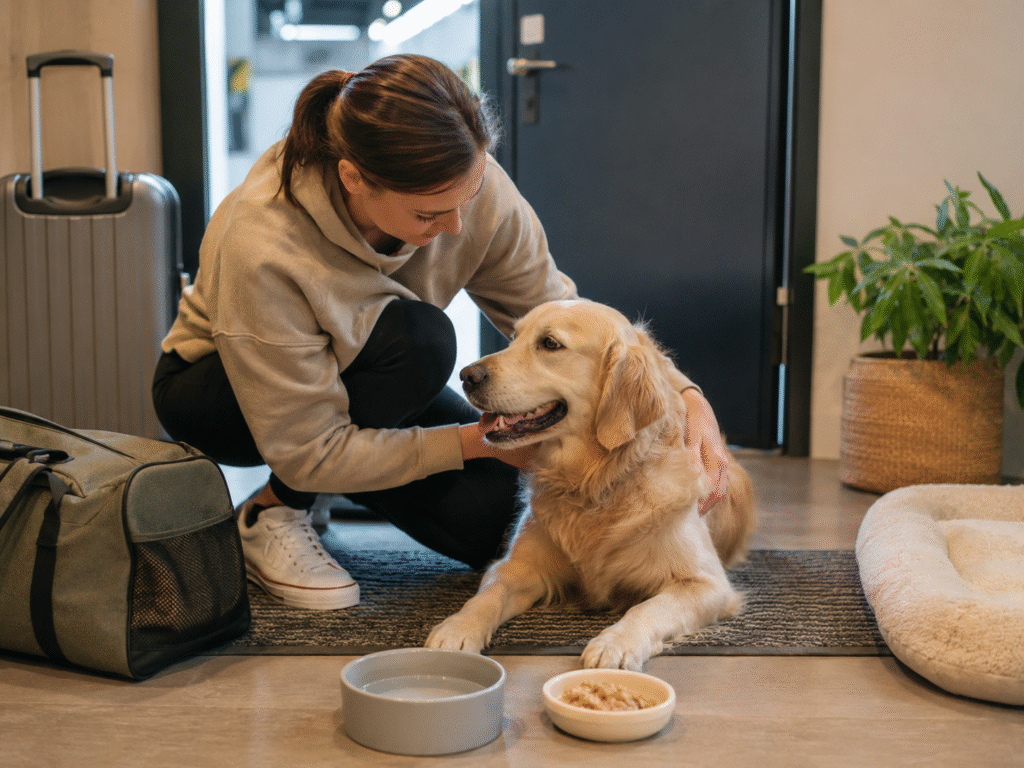
The night before travel: Stick to your pet’s normal dinner. Do not introduce new food, treats, or a “special” pre-trip meal. An unfamiliar meal is more likely to upset digestion at the worst possible moment.
2 to 4 hours before drop-off: Offer a light meal rather than a full one. A lighter stomach can reduce the risk of motion sickness and lower the chance of your pet soiling the crate during the journey. If the crate gets soiled, your pet may have to sit or lie in discomfort until the crate is cleaned and they are taken out safely. If your pet is naturally a light eater or anxious around travel, it’s fine to skip this meal altogether and rely on the previous night’s dinner (confirm with your vet).
Avoid before drop-off: Rich, fatty, or unfamiliar foods, large portions, and feeding immediately (within an hour) before drop-off.
How to Keep Your Pet Hydrated During Cargo Travel
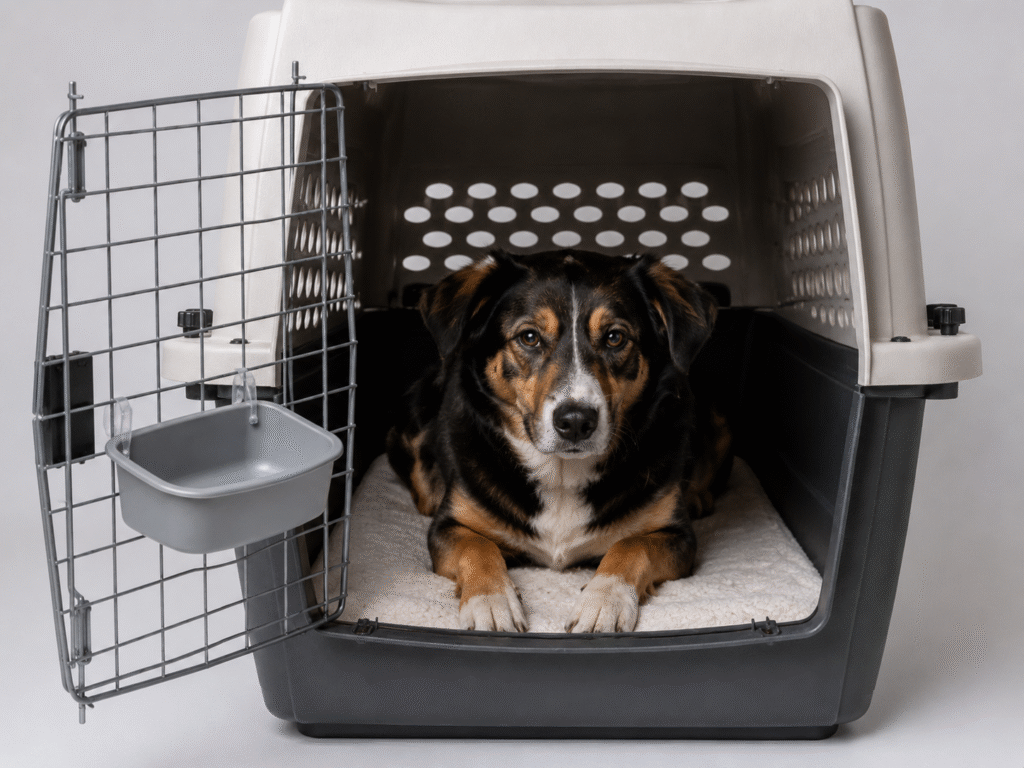
Offer water normally on the morning of travel, and give your pet a small drink before leaving for the airport, unless your veterinarian or airline has advised otherwise.
Avoid placing a loose bowl of water inside the crate, as it can spill during handling and leave the bedding wet. Instead, ask the airline what kind of crate-attached water bowl or container is allowed. Use a secure bowl fixed to the crate door that airline staff can refill from outside before loading or during a delay.
Some pet parents use frozen water in a bowl attached to the crate to reduce early spillage, but this should not be treated as a complete hydration plan, especially in warm weather or during long airport waiting times. The ice may melt before the flight begins.
Before booking cargo travel, ask the airline how your pet’s water will be managed before loading, during delays, and after landing. The goal is simple: your pet should have access to water without the crate becoming wet, messy, or uncomfortable.
Along with feeding and water arrangements, keep your pet’s paperwork ready in advance. You can use our guide on documents required for pet travel in India to prepare the basic travel folder.
Does Your Pet Get Fed During the Flight?
Generally, no, not on a direct flight. Pets travelling in cargo aren’t fed mid-air the way passengers are; the plan is for your pet to travel on a light stomach with only water access, not an in-flight meal.
The exception is layovers, connections, or unexpected delays. If your pet is delayed on the ground for an extended period, airline or cargo staff follow the feeding instructions attached to the crate. Requirements can vary by airline and destination, so confirm the current process before travel.
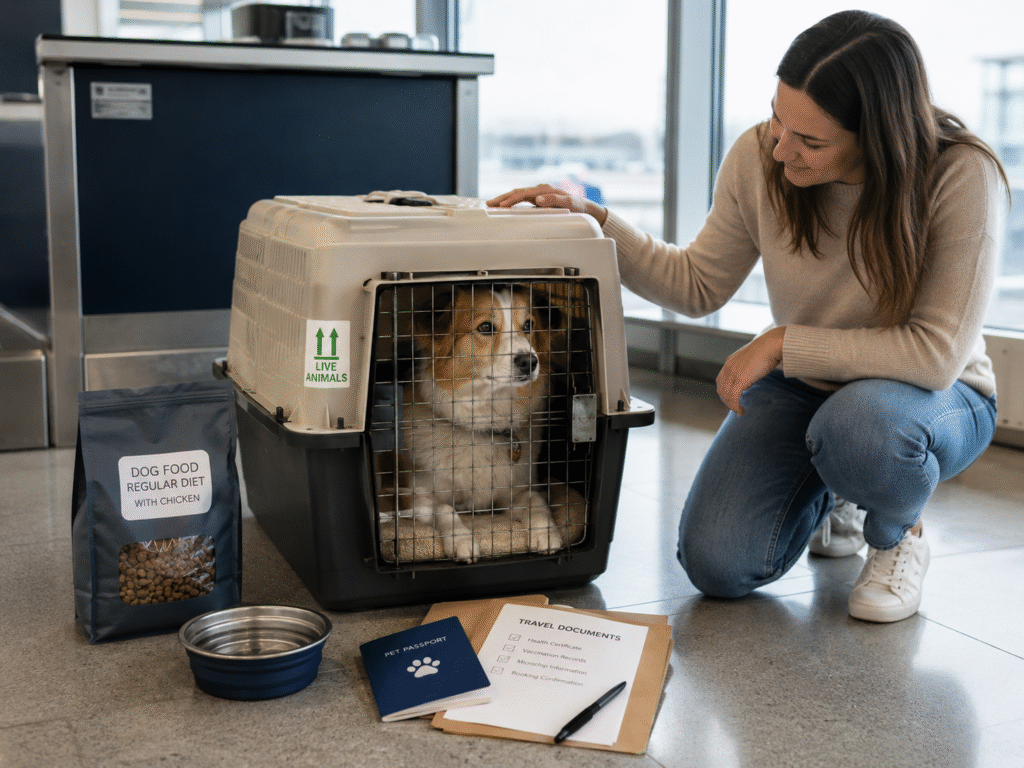
This is why airlines require you to tape a bag of your pet’s regular food to the top of the crate, along with written feeding instructions covering a full 24-hour period. Even if you don’t expect a delay, this step isn’t optional; it’s the fallback that keeps your pet fed if plans change.
Packing Food and Water for the Crate
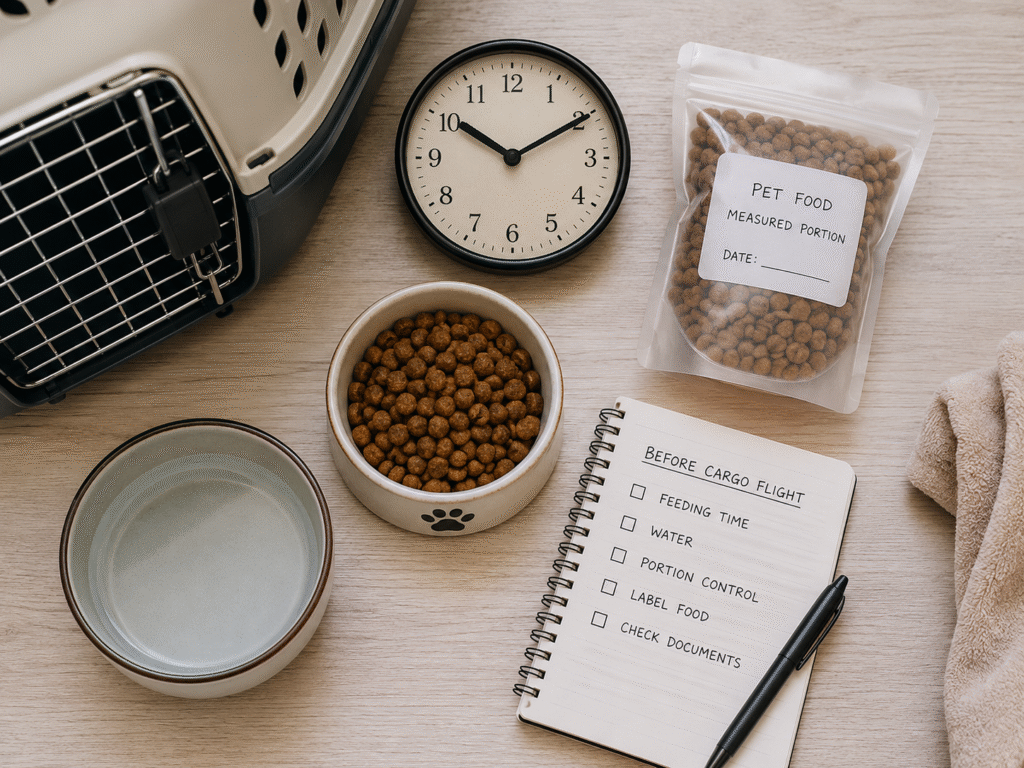
A few practical details can make a real difference when your pet is travelling in cargo:
- Attach two dishes inside the crate: One dish for food and one for water. They should be fixed securely to the crate door or inside wall, and positioned so airline staff can refill them from outside without opening the crate.
- Pack your pet’s regular food: Use your pet’s usual food, not a new brand, new flavour, or rich travel-day treat. Pack it in a sealed bag and label it clearly with your pet’s name, portion size, and feeding instructions.
- Add written feeding instructions: Include clear instructions with exact portions and timing, even if you hope they will not be needed. Unless your veterinarian has specifically advised otherwise, do not write “no food or water” as a casual instruction. Many airlines require proper food and water arrangements for pets in cargo, and withholding water is not advisable for your pet’s well-being.
- Label everything: Add your pet’s name, your name, phone number, flight details, and destination on the food bag, crate, and any attached instructions in case airline or cargo staff need to reach you.
For crate setup, bowl attachment, ventilation, and container requirements, check current airline guidance and IATA-style live animal container requirements before travel.
What to do for Long Cargo Flights
For long cargo flights, there is not much extra you can do once your pet has been handed over, so the preparation before travel matters even more.
Do not treat the pre-flight meal, water arrangement, crate lining, toilet break, documents, and vet advice as small details.
A small mistake can become a long discomfort when your pet has to stay in the crate for several hours without you being able to check, clean, feed, or comfort them. Plan everything early, confirm the airline’s process clearly, and choose a long cargo flight only if your pet is fit enough to handle the whole journey, not just the flying time.
Note: Feeding guidelines can vary by airline, destination, route, aircraft, and cargo handling rules. Always confirm the latest food, water, carrier, and documentation requirements directly with the airline before booking cargo travel for your pet.
For longer journeys, also carry a basic pet first-aid kit for travel so you have essential supplies ready after landing.
Avoid Sedation
Do not sedate your pet before a cargo flight unless a veterinarian has specifically prescribed something and the airline accepts it. Many airlines do not allow sedated pets because sedation can affect breathing, balance, temperature regulation, and the pet’s ability to cope during travel.
Sedation may seem like a way to reduce stress, but it can create new risks in the air, especially for flat-faced breeds, older pets, or pets with hidden health issues. If your pet is too anxious to travel without sedation, that is a sign that cargo travel is not the right choice for the journey.
For long cargo flights, the safer approach is preparation: crate training, familiar bedding, proper hydration planning, correct feeding timing, veterinary advice, and direct confirmation from the airline about handling, delays, and collection after landing.
Feeding Your Pet After Landing
Feeding after landing also needs care, especially when feeding your pet before cargo flights is limited. Resist the urge to give your pet a full meal the moment they arrive. After a stressful journey and a period of reduced food intake, eating or drinking too quickly can lead to vomiting or bloating. Instead:
- Offer a small portion of water first, and let your pet settle.
- Follow with a small portion of food, roughly a third of their normal serving.
- Wait a couple of hours, then offer another small portion of both.
- Return to your pet’s normal feeding schedule and amounts by the next regular mealtime.
Always check the specific airline policy before booking. You can read our Akasa Air pet policy guide if you are considering Akasa Air for domestic travel.
Frequently Asked Questions
Should I feed my pet right before a cargo flight?
No. Feed a light meal 2–4 hours before drop-off, not immediately beforehand. A near-empty stomach reduces motion sickness and the risk of soiling the crate.
Can my pet drink water during the flight?
Yes, your pet should have access to water through an airline-approved crate-attached dish or container. Avoid loose bowls, as they can spill during handling. Some pet parents use frozen water in an attached bowl to reduce early spillage, but this is not a complete hydration plan and should be confirmed with the airline before travel.
Will the airline feed my pet during the flight?
Not on a direct flight. Feeding only happens during extended delays or layovers, based on your pet’s age and the written instructions attached to the crate.
How much food should I pack for my pet’s crate?
At minimum, enough for a full 24-hour period, in case of unexpected delays — even if you don’t expect the flight to be delayed.
Is it okay to leave “no food or water” instructions for my pet?
Generally no, unless specifically advised by your veterinarian for a medical reason. Most airlines won’t accept this instruction, and pets typically need consistent hydration access regardless of flight length.
What should I feed my pet after landing?
Offer small portions of water and food first, spaced out over a couple of hours, then return to your pet’s normal feeding routine.
Final Thoughts
Feeding your pet before cargo flights might seem like a small detail compared to booking, paperwork, and choosing the right crate. But it is the part of the journey that matters to your pet. Getting the timing right, using slow-melt water, and packing food and clear backup instructions won’t eliminate the stress of a long cargo flight, but it does remove some of the risks you can actually control. When in doubt on quantities or timing for your specific pet, especially seniors or pets with health conditions, a quick check with your vet before travel day is worth it.
Image Disclaimer: Some images used in this article are AI-generated or digitally created for illustration purposes. They are meant to help explain pet travel situations and may not show exact airline interiors, airport procedures, carrier placement, or real arrangements. Always follow the latest airline instructions and official pet travel rules.