A road trip from Delhi to Rishikesh with a dog typically involves around 240–250 kilometres on the traditional route through Meerut, Roorkee and Haridwar. Although the drive usually takes five to six hours under favourable conditions, travelling with a dog requires additional time for breaks.
Travelling from Delhi to Rishikesh with a dog is manageable by car, but choosing the right highway is only part of the planning. You also need suitable places to stop, enough time for water and toilet breaks, and a plan for the busier roads approaching Rishikesh. This guide covers the main routes, practical break-stop locations, and a suggested travel schedule for a comfortable journey with your dog.
Delhi to Rishikesh With a Dog: Route Overview
There are two main routes worth considering.
Route 1: Delhi → Delhi–Meerut Expressway → Meerut → Khatauli → Muzaffarnagar → Roorkee → Haridwar → Rishikesh
Route 2: Delhi → Delhi–Dehradun Expressway → Dehradun side → Doiwala/Jolly Grant area → Rishikesh
Route 1: Via Meerut, Muzaffarnagar and Haridwar
Route: Delhi → Delhi–Meerut Expressway → Meerut → Khatauli → Muzaffarnagar → Roorkee → Haridwar → Rishikesh
Distance: Approximately 240–250 km, depending on your starting point and destination.
Driving time: Around 5–6 hours in favourable traffic conditions.
Suggested total travel time with a dog: Allow approximately 6–8 hours, including breaks and a reasonable traffic buffer.
This route follows the Delhi–Meerut Expressway and the NH334 corridor towards Haridwar and Rishikesh.
One advantage of this route is the availability of highway restaurants, petrol stations, and roadside facilities along several sections. This provides more opportunities to plan breaks than a journey relying entirely on an access-controlled expressway.
Traffic may become heavier around highway junctions, Roorkee, and the Haridwar approach. Weekend and pilgrimage traffic can also increase the journey time.
Where to Stop Between Delhi and Rishikesh
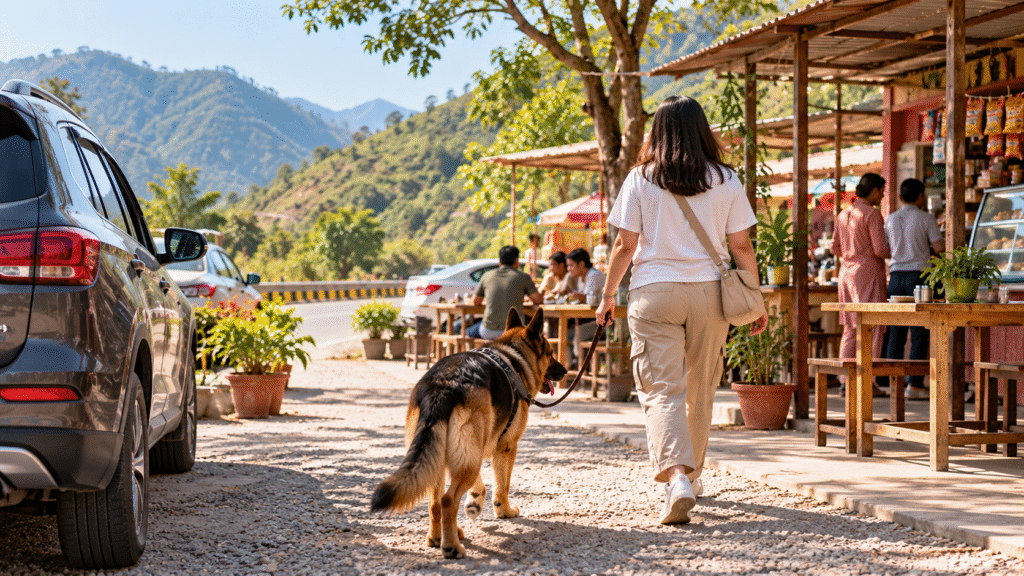
Dogs should have opportunities to drink water, relieve themselves, and stretch during long car journeys. The American Veterinary Medical Association recommends planning breaks approximately every two hours during long road trips.
For the traditional Delhi–Meerut–Haridwar route, the following areas provide a practical framework for planning stops. They are suggested stopping zones, not verified dog-friendly facilities.
1. First Stop: Meerut–Khatauli Stretch
Suggested timing: Approximately 1.5–2 hours after departure.
The Meerut–Khatauli section is a useful area to plan your first break when travelling via the Delhi–Meerut Expressway and NH334. The stretch has established highway food stops, making it a reasonable location for breakfast or refreshments.
- Before stopping, look for a facility with designated parking away from moving traffic.
- If you want to take your dog outside, check that the premises permit it and that there is a suitable area for a short leashed walk.
- Avoid letting your dog walk through busy petrol-pump forecourts or parking areas where vehicles are constantly reversing.
- If travelling alone, carry your own food and refreshments unless you have confirmed a place where your dog can accompany you.
- Never leave your dog unattended inside the car while you enter a restaurant.
2. Second Stop: Roorkee Area
Suggested timing: Approximately two hours after your previous proper break.
Roorkee is another useful reference point on the traditional route. By this stage, your dog may need another opportunity to drink water, stretch, and relieve itself, particularly if the earlier stop was brief.
- Choose a safe stopping location before you reach congested sections of town.
- A petrol station may be useful for refuelling, but it should not automatically be treated as a suitable dog-walking area.
- If your dog becomes anxious around crowds, unfamiliar animals or loud vehicles, choose a quieter location rather than stopping at a busy restaurant entrance.
You may not need a long break here if your dog is sleeping comfortably and you have already stopped recently. However, avoid extending the journey unnecessarily when your dog is showing signs of discomfort.
3. Optional Final Break: Haridwar–Rishikesh Approach
Haridwar is approximately 25 km from Rishikesh, although the remaining driving time depends on traffic and the location of your accommodation.
A final short break can be useful if you anticipate delays approaching Rishikesh or if your hotel is farther towards Tapovan, Shivpuri or another area beyond the town centre.
- Stopping inside crowded Haridwar markets or around busy pilgrimage areas is not advisable merely to give your dog a walk.
- Dogs should remain leashed during every roadside stop. Check the ground for broken glass, food waste, and other hazards before allowing your dog to walk.
If your dog has recently had a comfortable break and the road ahead is moving smoothly, it may be better to continue directly to your accommodation.
Route 2: Via the Delhi–Dehradun Expressway
Route: Delhi → Delhi–Dehradun Expressway → Dehradun side → Doiwala/Jolly Grant area → Rishikesh
The Delhi–Dehradun Economic Corridor was inaugurated on 14 April 2026. It was designed to reduce travel time between Delhi and Dehradun substantially.
The expressway may offer a faster journey under favourable conditions. However, the actual advantage depends on your starting point, the available exits, traffic, and the final connection to your accommodation.
Note: We have not independently verified the availability of pet-friendly rest stops and other wayside facilities along this expressway. Check current facilities and suitable exits before choosing this route with your dog.
Which Route Is Better for Travelling With a Dog?
The traditional Meerut–Haridwar route is a practical option for travellers who want access to established roadside services and greater flexibility when planning stops.
The Delhi–Dehradun Expressway may suit dogs that are comfortable with longer uninterrupted stretches.
Compare the live traffic estimate, total journey time, and confirmed break opportunities before departure.
Suggested Delhi to Rishikesh Travel Plan With a Dog
The following schedule assumes an early departure from Delhi using the traditional route. It is an illustrative plan, not a prediction of actual traffic or arrival time.
| Time | Suggested activity |
|---|---|
| 5:30 AM | Leave Delhi after your dog’s morning toilet break. |
| 7:15–7:45 AM | Stop around the Meerut–Khatauli stretch for water, a short walk, and breakfast for travellers. |
| 9:30–10:00 AM | Plan another break around the Roorkee section, depending on progress and your dog’s needs. |
| 11:00 AM–12:30 PM | Target arrival in Rishikesh, allowing for traffic variations and the location of your accommodation. |
This schedule provides approximately 30 minutes for each planned stop. The actual stopping points and timings should depend on the dog’s age, health, previous car-travel experience, and comfort. Puppies, senior dogs, and dogs with medical conditions may need a different schedule. If traffic delays your arrival, do not compensate by skipping a necessary break.
Related read: How to Prepare Your Dog for an Early Morning Road Trip
What to Check Before Leaving Delhi
A comfortable road trip begins before your dog enters the car.
Plan your dog’s meals
- Avoid giving your dog an unusually large meal immediately before departure.
- If your dog experiences motion sickness, ask your veterinarian about suitable feeding arrangements and whether medication is necessary. Do not administer human anti-nausea medicines without veterinary advice.
- Carry your dog’s regular food rather than relying on highway restaurants.
Secure your dog inside the car
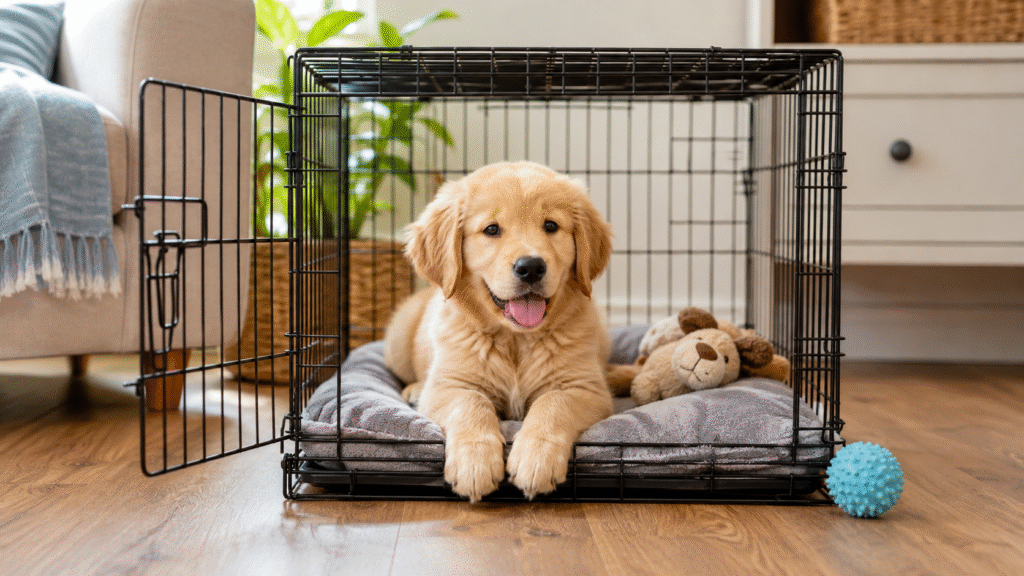
- Use a properly fitted car safety harness or a travel crate that can be securely positioned inside the vehicle.
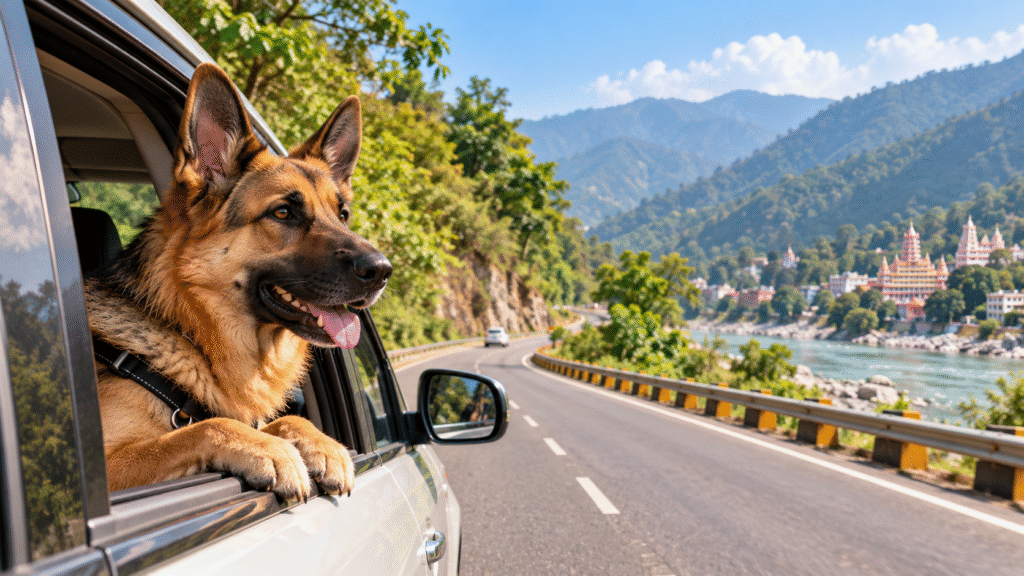
- A dog should not travel loose on the front passenger seat, sit on the driver’s lap, or lean out of an open window.
- Keep the vehicle comfortably ventilated, and avoid directing strong air-conditioning onto your dog continuously.
Carry essential supplies
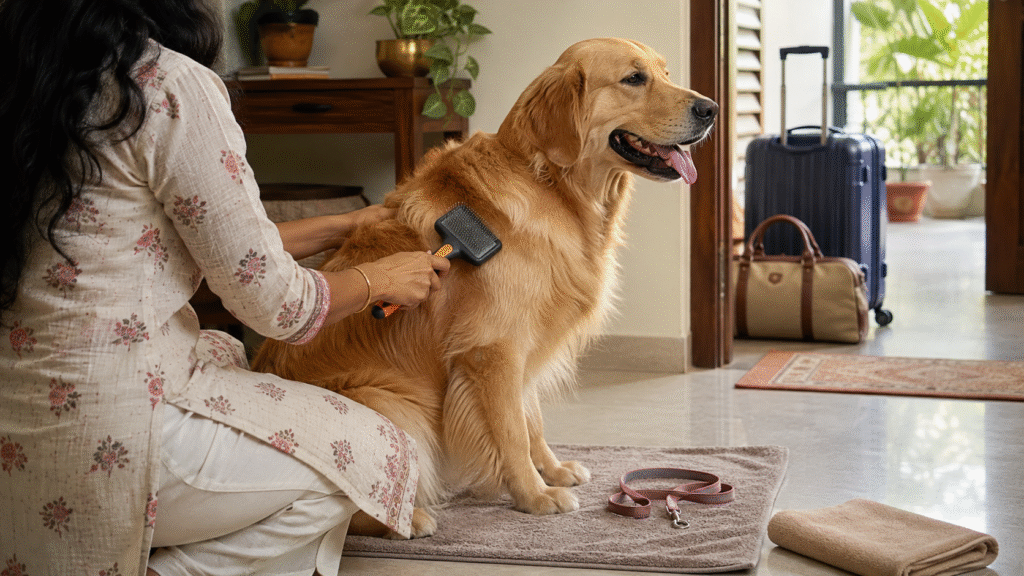
- Pack enough drinking water for the journey, along with a familiar bowl, leash, harness, waste bags, cleaning wipes and a towel.
- Also carry your dog’s vaccination records, identification details, regular medication and your veterinarian’s contact information.
- A small cleaning kit with absorbent towels, pet wipes, disposable bags and spare bedding is useful if your dog becomes carsick.
For detailed preparation, see our guide to travelling with your pet by car.
Where Should You Avoid Stopping With a Dog?
Not every open space beside the highway is suitable for a break. Avoid using the following locations:
- Expressway shoulders and emergency lanes: These are not recreational stopping areas. Do not stop on them unless there is a genuine emergency.
- Busy petrol-pump forecourts: Moving vehicles, spilled fuel and reversing cars create unnecessary risks.
- Crowded roadside markets: Narrow passages, food waste and uncontrolled traffic make walking difficult.
- Areas with roaming dogs: An unfamiliar dog approaching your pet can quickly turn an otherwise routine break into a stressful situation.
- Exposed paved surfaces during summer: Asphalt and concrete can become hot enough to injure your dog’s paw pads.
When getting out of the car, attach the leash securely before opening the door. Never rely on your dog remaining seated simply because it usually obeys commands.
A quiet five-minute break in a suitable location is better than a long walk through a crowded parking area.
Weather, Traffic and Seasonal Travel Precautions
Summer: April to June
An early morning departure can reduce your dog’s exposure to high daytime temperatures. Keep the vehicle air-conditioned when necessary and avoid walking your dog on hot paved surfaces. Do not leave your dog inside a parked vehicle, even with the windows partially open. Interior temperatures can rise rapidly.
Monsoon: July to September
Heavy rain can reduce visibility and affect road conditions. Allow additional driving time and avoid poorly drained roadside stopping areas. Before travelling, check weather warnings and any road advisories affecting the Haridwar–Rishikesh section or roads leading farther into the hills.
Winter: December to February
Fog can affect visibility on the plains, particularly during early morning hours. Although leaving before sunrise may work well in summer, it is not necessarily the safest choice during dense winter fog. Choose a departure time that provides adequate visibility, and keep warm bedding available if your dog is sensitive to cold.
Kanwar Yatra and Other Major Pilgrimage Periods
Traffic restrictions during Kanwar Yatra can significantly affect the Delhi–Meerut–Muzaffarnagar–Haridwar corridor. For example, the 2026 Kanwar Yatra involved phased diversions and restrictions on the Delhi–Haridwar highway and adjoining routes. Check the current advisories from Delhi Traffic Police, Uttar Pradesh Police and Uttarakhand Police before travelling.
Travelling with a dog during a major road closure can mean several extra hours in the car, so postponing a non-essential trip may be more comfortable.
Find season-specific pet accessories for your dog: Pet Travel Accessories for Indian Weather: A Season-by-Season Buying Guide.
The Final Stretch: Reaching Rishikesh With Your Dog
Enter your accommodation’s exact address into the navigation app rather than simply selecting Rishikesh as your destination. Your accommodation may be in the main town, Tapovan, Shivpuri, or another location requiring additional driving.
Check its exact location and vehicle access before leaving Delhi. Some accommodation areas are reached through narrower local roads, and properties may have limited parking or an approach that is unsuitable for larger vehicles. Ask your property whether you can drive directly to the entrance and whether the parking area is within the premises.
- If your dog has spent several hours inside the car, arrange a short toilet break before check-in if necessary.
- Keep the dog leashed while unloading luggage, particularly if the accommodation has open gates, other animals, or direct access to a busy road.
- Once inside the room, offer drinking water and allow your dog time to settle before planning sightseeing.
- Avoid immediately taking a tired dog into crowded markets, busy ghats or other stimulating environments.
What About Travelling Beyond Rishikesh?
If you are staying in Shivpuri or another location farther into the hills, your journey may continue beyond the comparatively straightforward Delhi–Rishikesh drive. These roads can include curves, gradients, and narrower sections. Your dog may experience motion sickness or anxiety on winding roads.
If your accommodation lies beyond central Rishikesh, confirm the remaining driving distance and time separately and try to complete unfamiliar hill-road sections during daylight, especially during the monsoon.
Related read: Dog Motion Sickness During Car Travel: Prevention, Feeding and Warning Signs
Quick Checklist for the Delhi–Rishikesh Drive
Before departure, confirm the following:
- Your dog is comfortable travelling in the car and has an appropriate restraint.
- You have checked the route, traffic conditions, and any highway restrictions.
- You have identified suitable stopping areas approximately two hours apart.
- You are carrying enough drinking water, regular food, and basic cleaning supplies.
- Your dog has a secure collar or harness and identification.
- You have saved your accommodation’s address and checked its pet policy and parking arrangements.
- You have allowed extra travel time for breaks, delays, and the final approach to the property.
For a free pet travel packing checklist, see our Pet Travel Packing Checklist
Image Disclaimer: Images used in this article are for illustrative purposes only. They may not depict the actual roads, stopping locations, accommodation, or travel conditions mentioned in the guide.