Traveling with pets require preparations which are not limited to just pet food and accessories. The right paperwork is also essential for a smooth, legal, and stress-free journey. Whether you are travelling with your dog, flying with your cat, or taking your pet by train, proper documentation helps avoid problems at airports, railway stations, hotels, and checkpoints. This guide covers the documents required for pet travel in India, how to arrange them, and the key rules pet owners should know before travelling.
Importance of Proper Documentation for Pet Travel in India
Pet travel documents serve as proof of vaccinations, health status, ownership, and identity, protecting your pet and the general public from disease transmission and ensuring responsible pet ownership. The importance of proper documentation includes:
1. Travel Approval
Airlines, Indian Railways, hotels, and relocation services may ask for specific pet travel documents before allowing your pet to travel or stay. Missing or incomplete paperwork can lead to denied boarding, booking problems, delays, or last-minute stress.
2. Health and Safety
Pet travel documents show that your pet has received the required vaccinations and is fit to travel. This protects your pet during the journey and also reduces health risks for other animals and people during transit.
3. Identification & Recovery
Identification records, ID tags, microchip details if applicable, and owner information can help recover your pet if they escape or get lost during travel. Clear documents make it easier for others to identify the pet and contact you quickly.
4. Emergency Veterinary Care
If your pet becomes unwell during travel, medical records help a veterinarian in another city understand your pet’s vaccination history, allergies, current medicines, and previous health conditions. This can prevent confusion and support safer treatment.
5. Proof of Responsibility
Proper documentation also shows that you have prepared responsibly for the journey. It can be useful during hotel check-ins, transport checks, ownership questions, or any situation where you need to confirm your pet’s health, identity, or records.
Complete List of Documents Required for Pet Travel in India
The essential documents for all modes of travel are:
1. Health Certificate or Fitness Certificate
A health certificate, also called a fitness certificate, is one of the most important documents required for pet travel in India. It is issued by a registered veterinarian and confirms that your pet is healthy, fit to travel, and not showing signs of infectious or contagious disease.
The certificate should include your pet’s name, species, breed, age, colour, identifying marks, microchip number if applicable, examination date, and the veterinarian’s signature, stamp, and registration details. The original certificate should be carried during travel, along with digital copies for backup.
The validity period depends on the travel mode and destination.
2. Vaccination Certificate
A vaccination certificate for pet travel proves your pet has received necessary vaccinations, especially rabies vaccination. For air travel and railway pet bookings, vaccination proof is mandatory. For travelling with your pet in a private car it’s not mandatory, but carrying an updated rabies vaccination certificate is strongly recommended. It is often required for hotel booking, boarding, relocation, and emergency veterinary care. Carry the original certificates while travelling and keep digital copies as backup.
Rabies Vaccination Certificate:
The certificate must include: vaccine name, date of vaccination, expiry date, batch number, pet’s details, and veterinarian’s signature. Validity of these certificates is generally 1-3 years depending on vaccine type.
Other Vaccinations Depending on Species:
For Dogs: Dogs may also need record of DHPP (Distemper, Hepatitis, Parvovirus, Parainfluenza) vaccination. Depending on your dog’s age, health, destination, and travel mode, the vet may also mention, Leptospirosis, Coronavirus, Bordetella vaccines.
For Cats: Cats should usually have records for FVRCP (Feline Viral Rhinotracheitis, Calicivirus, Panleukopenia) vaccination. Depending on health some cats may need Leukemia vaccine (FeLV).
For Rabbits, Birds, and Other Pets: Pets other than dogs and cats require species-specific vaccines if applicable and also proof of veterinary check-ups.
3. Pet Ownership Certificate:
A pet ownership certificate proves that you are the legal owner of your pet. It can be issued by a veterinarian, breeder, adoption centre, or pet registration authority. It should include your pet’s basic details, your contact information, and the purchase or adoption date.
4. Pet Identification Documents:
Pet identification documents help confirm your pet’s identity during travel and make recovery easier if your pet gets lost. These records are especially useful during flights, relocation, hotel stays, and long-distance travel.
- ID Tags: These are physical tags attached to your pet’s collar or harness. They should clearly display your pet’s name, your phone number, and your email address. ID tags are useful as a quick backup identification method, especially when a microchip scanner is not immediately available.
- Microchip Registration Certificate: A microchip registration certificate proves that your pet has been microchipped with a unique identification number. The microchip number should be registered with a recognised national or international pet registry so that your pet can be traced if it escapes or gets lost. This certificate is usually provided by the veterinarian who implants the microchip. Microchipping can help identify a lost pet, but it is not always required for domestic pet travel in India.
- What About Pet Passport: A pet passport is not usually a separate mandatory document for domestic pet travel in India. In India, the term is often used for a travel record booklet or organised document file that keeps your pet’s identification details, microchip number, vaccination records, and health certificate information together. For international travel, pet owners should follow the document requirements given by the destination country, airline, and AQCS (Animal Quarantine and Certification Service).
5. Medical History Documents
Medical history documents are useful when travelling with senior pets, pets with chronic conditions, or pets on regular medication. These records should include previous illnesses, allergies, treatments, surgeries, current medicines, and any ongoing health issues. If your pet needs prescription medicine, special food, or supplements during travel, carry a copy of the prescription or a short note from your veterinarian. Blood test reports are not required for every journey, but they can be important for senior pets, pets with pre-existing conditions, or international travel.
6. Transport-Specific Documents
These vary based on your chosen travel mode and are covered in detail later in this guide.
How to Acquire Documents Required for Pet Travel in India
Step 1: Schedule Veterinary Appointment (1-2 weeks before travel)
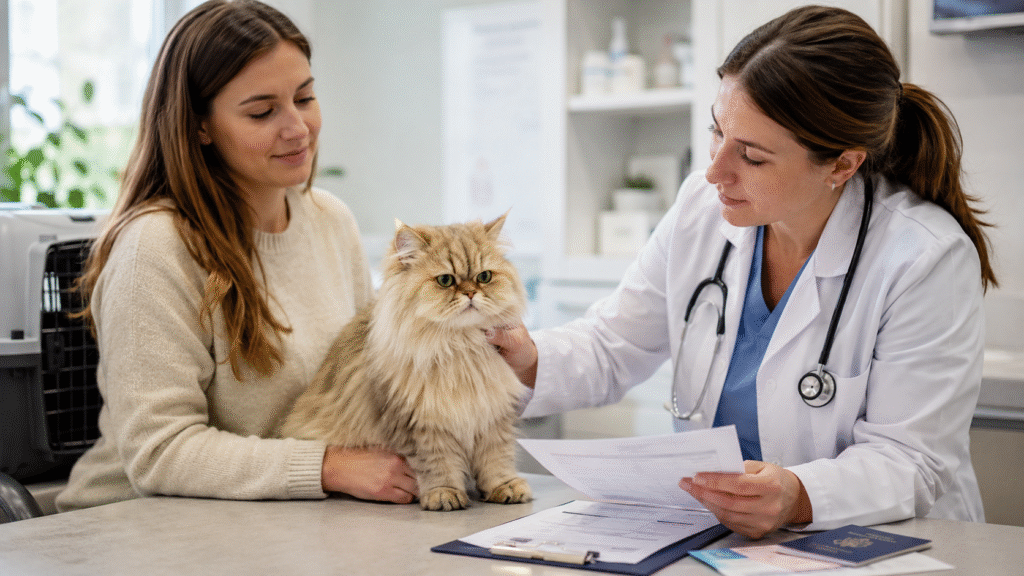
Contact your registered veterinarian and schedule a comprehensive pre-travel health examination. Inform them about your travel plans, destination, and transport mode, as different requirements apply to different journeys.
Step 2: Get Health Examination Done
During the appointment, your veterinarian will conduct physical checkup of your pet for heart rate, respiratory rate, temperature, and other vital signs. They will also examine teeth, ears, eyes, and coat condition and abdomen for any issues.
The veterinarian will document any health concerns or special needs and verify vaccination status against medical records.
Step 3: Obtain Health Certificate for Travel
After successful examination, request for Pet fitness certificate for travel with veterinarian’s stamp and ensure that it’s dated within 10 days of your travel date. Ask for digital copies if they provide.
Step 4: Update Vaccinations if Needed
If vaccinations are expired or incomplete, get them administered during the same visit or schedule follow-up appointment. Request updated vaccination certificate for pet travel with all details including batch numbers and expiry dates.
Step 5: Organize and Check All Pet Travel Documents
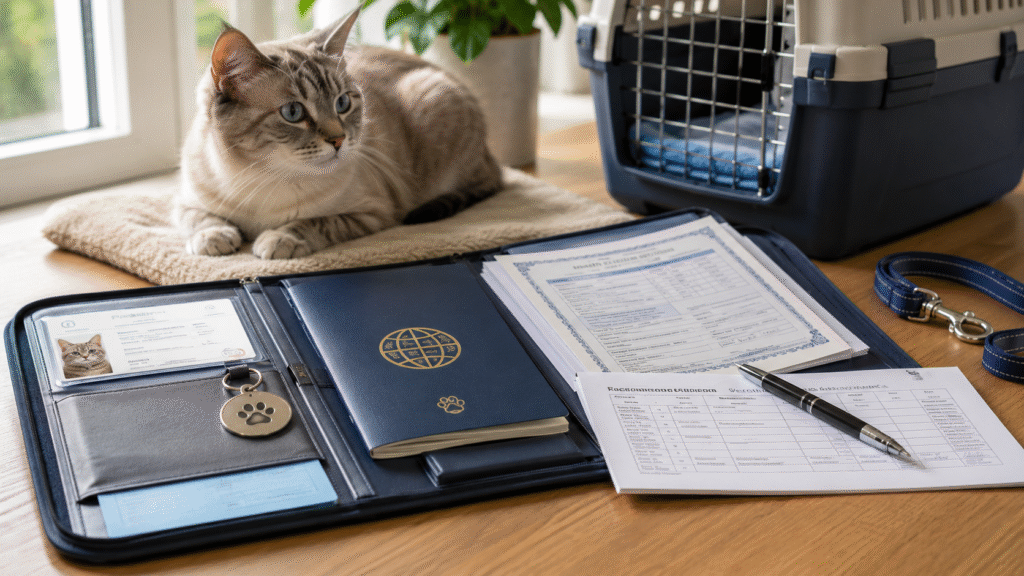
Before travel, keep all required pet travel documents in one folder, including the health certificate, vaccination certificate, microchip certificate if applicable, ownership proof, prescriptions if needed, and transport-specific documents.
Check that the details, dates, veterinarian’s signature, stamp, and registration number are clear and correct. Carry the originals and keep digital copies as backup.
Step 6: Consider Microchipping Only If Required
Microchipping can help identify a lost pet, but it is not always required for domestic pet travel in India. If you are not comfortable with the procedure, first check the rules of your airline, railway, hotel, relocation service, or destination.
For many domestic trips, a health certificate, vaccination records, ID tags, and clear owner details are enough. If microchipping is required, speak to your veterinarian about the procedure, aftercare, and registration before deciding.
Cost of Essential Documents
The costs below are approximate and can vary by city, clinic, travel mode, and service provider. Always confirm the latest charges with your veterinarian, airline, railway office, or pet relocation service before booking.
| Document | Approximate Cost | Notes |
|---|---|---|
| Health/Fitness Certificate | ₹300–₹1,500 | Depends on vet clinic, city, and examination charges |
| Vaccination Certificate | Usually included with vaccination cost | Rabies and core vaccine costs vary by clinic |
| Rabies Vaccination | ₹500–₹1,500 | Cost depends on vaccine brand and clinic |
| Microchip + Registration | ₹1,000–₹3,500 | Needed mainly for international travel, relocation, or specific rules |
| Pet Ownership Proof | Usually free–₹500 | Depends on whether issued by vet, breeder, adoption centre, or registration body |
| Medical Records Copy | Usually free–₹500 | Often provided by the regular vet if records already exist |
| Pet Passport / Travel Document File | No fixed official domestic cost | Private providers may charge depending on services included |
Transport-Mode Specific Documents
Documents for Flying with Pets in India
Pet travel rules vary by airline, route, aircraft type, and pet size. Always check the latest pet policy directly with the airline before booking. For domestic air travel, pet owners usually need:
- Recent health or fitness certificate from a registered veterinarian
- Updated vaccination records
- Rabies vaccination certificate
- Airline pet travel form or owner declaration, if required by the airline
- Original documents at check-in, with digital copies as backup
Process for Flying with Pets:
- Check airline pet policy: Contact airline 6-8 weeks before travel
- Schedule vet appointment: 3-4 weeks before flight
- Get health certificate: 10 days maximum before flight
- Complete airline forms: Submit 2-3 days before travel
- Arrange pet carrier: Buy IATA-approved pet carrier (required for flights)
- Arrive early: Check-in 3-4 hours before international flights with pets
Pet Documents for Train Travel in India
Indian Railways generally requires a recent veterinary fitness certificate and updated vaccination records when booking a pet for train travel. Document requirements can vary slightly by station, route, and booking method, so confirm the latest rules with the parcel office before travel. Documents usually needed are:
- Confirmed passenger ticket
- Veterinary fitness certificate stating that the pet is healthy and not suffering from an infectious or contagious disease
- Updated vaccination records, especially rabies vaccination for dogs and cats
- Owner ID proof
- Pet details such as breed, colour, age, weight, and identifying marks
- Microchip number, if your pet is microchipped
- ID tag with your phone number on the pet’s collar or harness
Southern Railway mentions that a fitness certificate should be obtained 24–48 hours before the journey and submitted with vaccination cards at the time of booking. Since station-level handling can vary, it is better to confirm the document timing with the parcel office before travel. Carry original documents during travel and keep digital copies as backup.
Process for Train Travel:
- Before travel, confirm the latest pet travel rules with the parcel or luggage office at your departure station.
- Ask whether your pet can travel with you in AC First Class/First Class or needs separate luggage booking.
- Once your passenger ticket is confirmed, prepare the required documents.
- Take your pet, carrier, documents, and payment to the luggage or parcel office before departure.
- After booking, collect the luggage receipt and keep it safely throughout the journey.
- If your pet is booked separately, confirm the collection process at the destination station.
Note: Documents for cat travel documents India on trains are identical except cats may be restricted on certain trains; verify beforehand.
Documents for Road Travel with Pets
Road travel with pets in India usually involves fewer formal document checks than air or train travel. Still, it is safer to carry basic pet records, especially for long-distance trips, hotel stays, interstate travel, or emergency veterinary care.
- Health Certificate: recommended for long journeys or your pet has health concerns
- Vaccination Records: especially rabies certificate
- Ownership Proof or adoption records: not mandatory but they can help during loss, disputes, or identification issues.
- ID Tag with your phone number: your pet should wear an ID tag as it is one of the simplest and most useful safeguards if your pet escapes during a stop, hotel stay, or roadside break.
Process for Road Travel:
- Get basic health check: Optional but recommended
- Update ID tags: Ensure current contact information
- Arrange transport: Safe carrier in vehicle
- Pack documents: Keep copies accessible
- Plan stops: Research pet-friendly rest areas
Documents for International Pet Travel from India
International pet travel requires more paperwork than domestic travel. The exact documents depend on the destination country, airline, pet species, route, and current AQCS requirements.
1. AQCS Export Certificate
If you want to take your pet out of India, you will need an export certificate is issued by the Animal Quarantine and Certification Service. It confirms that your pet has been examined, is fit to travel, and meets the required health and vaccination conditions.
You will usually need:
- Veterinary health certificate
- Rabies vaccination certificate
- Other vaccination records
- Microchip details, if required
- Owner passport and travel details
- Airline booking or travel details
- Original documents and photocopies
2. Destination-Country Requirements
Every country has its own pet import rules. Before booking, check whether the destination country requires:
- Import permit
- Microchip
- Rabies titre test
- Specific vaccinations
- Parasite treatment
- Quarantine on arrival
- Health certificate in a particular format
3. International Health Certificate
An international health certificate is more detailed than a domestic fitness certificate. It may need to mention the pet’s identification details, vaccination status, microchip number, parasite treatment, test reports, and fitness for air travel, depending on the destination rules.
4. Airline Documents
Airlines may ask for their own pet travel form, owner declaration, crate details, and approval before accepting the pet. Always confirm airline rules before booking, especially for pet size, breed restrictions, carrier type, cabin/cargo rules, and temperature restrictions.
5. Pet Passport
A pet passport is not a standard mandatory document for all international travel from India. In many cases, pet owners need separate documents such as the AQCS export certificate, health certificate, vaccination records, microchip certificate, and destination-country forms. Some countries use a passport-style pet record, so check the destination country’s official requirements before travel.
Common Mistakes Pet Owners Make with Documentation
1. Obtaining Health Certificate Too Early: A health or fitness certificate should be taken close to the travel date, according to the airline, railway, or destination requirement. Getting it too early can make it unusable for travel.
2. Expired Vaccinations: Expired vaccination records can create problems during flights, train bookings, relocation, or hotel stays. Check vaccination dates well before travel and update them if needed.
3. Pet Name Inconsistencies: Your pet’s name and details should match across all documents. Different names, spellings, or descriptions can cause confusion during verification.
4. Missing Veterinarian Details: A certificate without the veterinarian’s signature, stamp, registration number, clinic name, or date can be rejected. Check these details before leaving the clinic.
5. Forgetting Copies: Original documents should be carried during travel, but copies are important as backup. Keep digital copies on your phone and store photocopies separately from the originals.
6. Not Updating Microchip Details: If your pet is microchipped, make sure the registered phone number and owner details are current. Outdated information can make recovery difficult if your pet gets lost.
7. Ignoring Transport: Specific Requirements: Airlines, railways, hotels, and relocation services may ask for different documents. Always confirm the exact requirements for your travel mode before booking.
8. Missing Emergency Contact Information: Carry your regular veterinarian’s phone number and basic medical records during travel. This helps another vet give safer care if your pet becomes unwell away from home.
Pet Travel Document Timeline: When to Prepare Each Document
6–8 Weeks Before Travel
Start by checking the latest requirements for your travel mode, destination, airline, railway, hotel, or relocation service. Schedule a vet visit, discuss your travel plans, and check whether vaccinations, microchipping, or special documents are needed.
3–4 Weeks Before Travel
Update pending vaccinations if required and collect existing medical records, ownership proof, and identification details. For international travel, start checking AQCS and destination-country requirements early, as approvals, tests, permits, and airline clearance can take time.
1–2 Weeks Before Travel
Prepare the required documents and confirm the exact timing for the health or fitness certificate. Different airlines, railways, and countries may require this certificate within a specific period before travel.
2–3 Days Before Travel
Organize all documents in one folder. Check that your pet’s name, owner details, vaccination dates, identification details, veterinarian’s stamp, signature, and registration number are clear and correct. Keep originals, photocopies, and digital copies ready.
Day Before Travel
Recheck your documents, transport booking, carrier, emergency contacts, food, medicines, and comfort items. Follow your veterinarian’s advice on feeding, medication, and calming support before the journey.
Frequently Asked Questions
Q: Can I use photocopies of vaccination certificates?
Some transport modes accept copies, but original certificates are always safer. Keep originals; use copies as backups.
Q: How long is a health certificate valid?
A pet health certificate is usually valid only for a short period before travel, and the exact validity depends on the airline, railway, destination, or international travel rules.
Q: Is microchipping mandatory for pet travel?
Not legally mandatory but many airlines and international travel require it.
Q: What if my pet’s vaccinations are expiring during travel?
Get vaccinations renewed before travel. Expired vaccinations won’t be accepted.
Q: How do I get a pet passport?
Contact your veterinarian. Some veterinary clinics issue pet passports; they take 2-4 weeks.
Q: What documents are needed for traveling with pets between Indian states?
For travelling between Indian states with a pet, carry the vaccination certificate, rabies certificate, recent health/fitness certificate, owner ID proof, pet ID details, and any transport-specific documents required by the airline, railway, hotel, or relocation service.
Q: Can I travel internationally with my pet without an export certificate?
No. For international travel from India, you generally need an AQCS export certificate for your pet before departure.
Q: How much advance notice do airlines need for pet travel?
Most airlines need advance approval before pet travel, and the notice period can vary by airline, route, aircraft, and pet travel category. It is safest to contact the airline as early as possible after booking, preferably at least a few days to a few weeks before travel, and get written confirmation.
Conclusion
Understanding and obtaining the documents required for pet travel in India is essential for any pet owner planning journeys with their companions. Whether you’re flying your cat across the country, taking your dog on a train journey, or driving across state, proper documentation ensures your pet’s legal compliance, health safety, and your peace of mind.