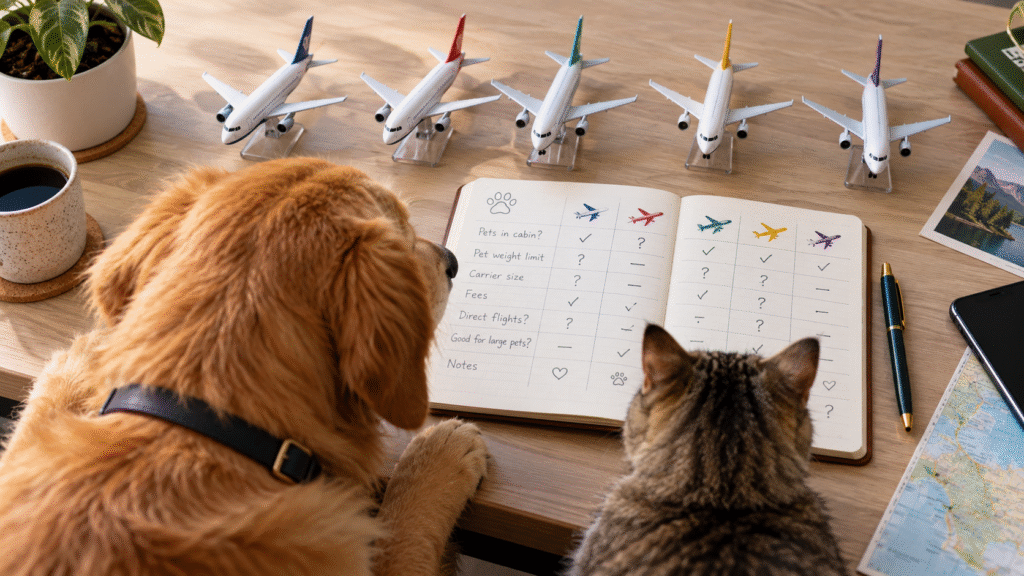
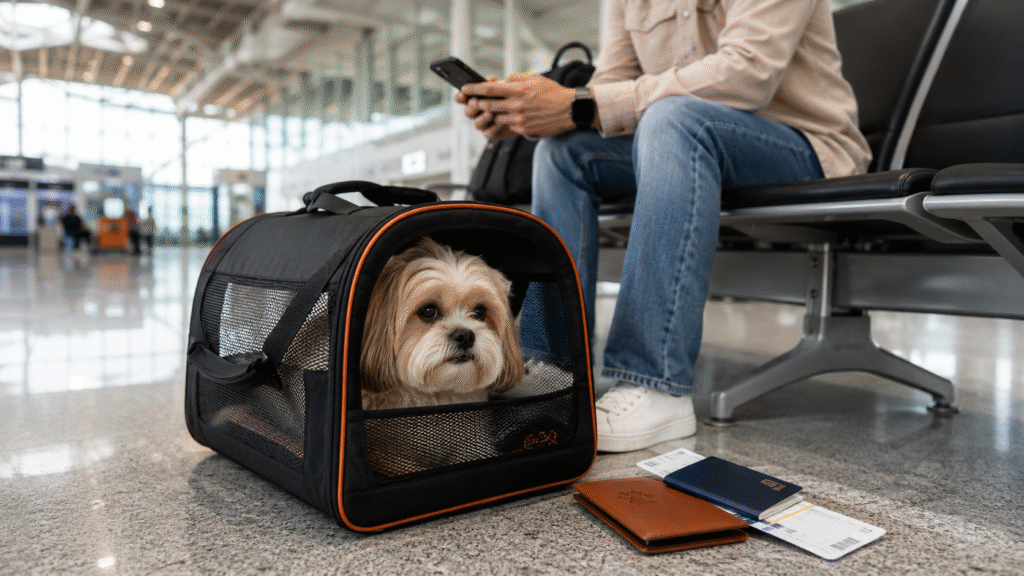
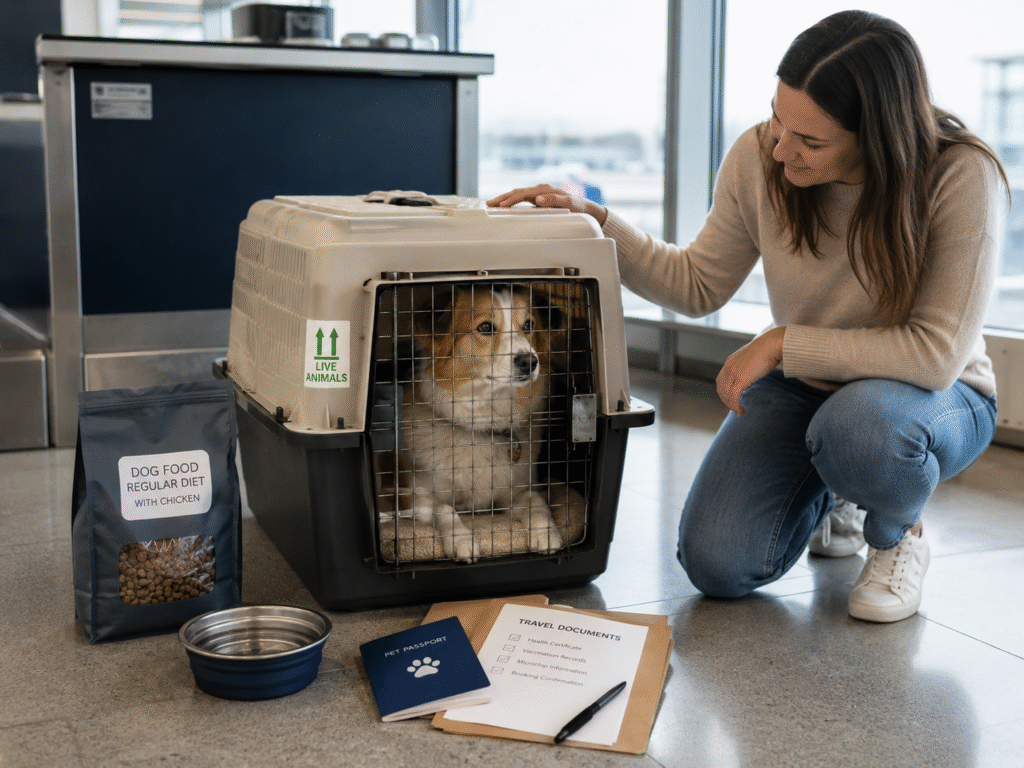
An airline-approved pet carrier must do three things: fit your pet comfortably, stay within the airline’s size limits, and meet the carrier rules for the flight you booked.
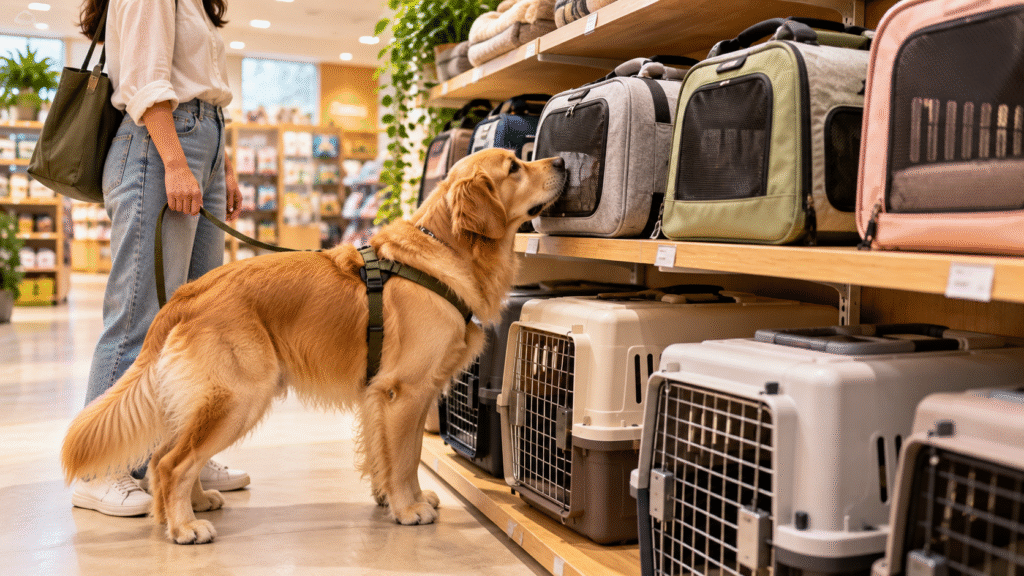
“Airline-approved” is not a universal standard. Airlines use different size limits, weight limits, and carrier requirements, so a bag that works for one airline may not work for another. Start with your airline’s rules, then measure your pet, and choose a carrier that gives enough room to stand, turn, and lie down comfortably without exceeding the airline’s external size limit.
What Does “Airline-Approved Pet Carrier” Actually Mean?
An “airline-approved” label on a product does not mean every airline will accept it.
IATA publishes standards for transporting animals, but it does not certify individual carrier brands or models. Your airline decides whether the carrier meets its requirements for your particular journey. Before buying, check:
- The carrier follows the airline’s maximum external dimensions.
- The pet and carrier together are within the airline’s cabin weight limit.
- The carrier provides enough internal room for your pet.
- The carrier meets the airline’s requirements for ventilation, construction, and security.
Before choosing a carrier, check which airlines currently accept pets in India and whether your pet can travel in the cabin or needs another arrangement.
Carrier vs Crate: What to Choose
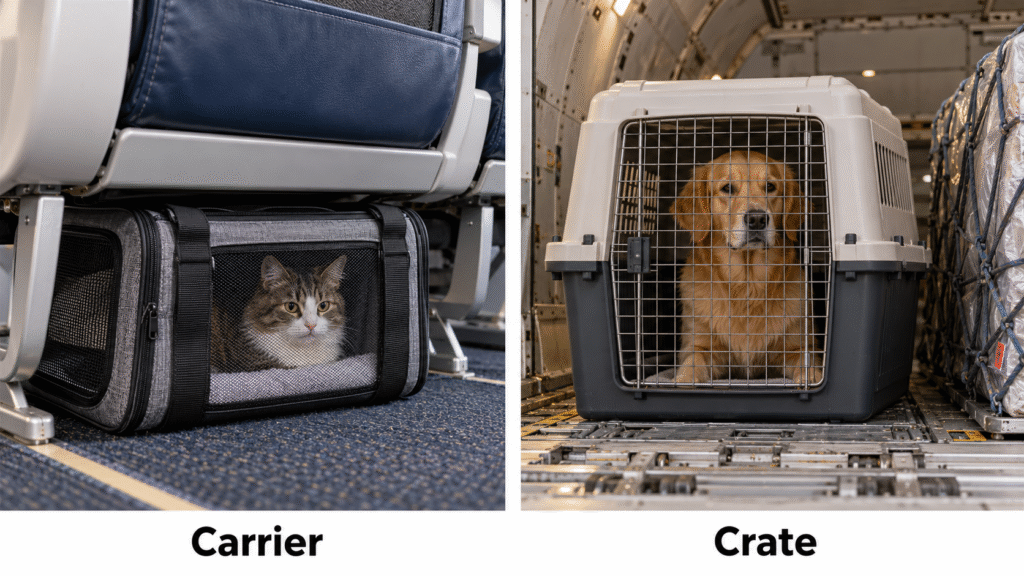
A pet travelling in the cabin needs a carrier that fits beneath the aircraft seat. Airlines therefore usually impose strict dimensions and may require a soft-sided carrier.
A pet travelling via checked baggage or cargo needs a hard crate to protect them during handling and transportation.
The same carrier doesn’t work for both. If your pet will travel in the cabin, check the airline’s under-seat carrier requirements. If your pet will travel in the aircraft hold, follow the airline’s separate crate specifications.
For dogs, our guide to choosing a dog travel carrier explains how to match carrier size and fit to your dog’s body and travel needs.
Pet Carrier Size Rules for Indian Airlines
The four Indian airlines that currently offer cabin travel for regular pets use different carrier limits.
| Airline | Maximum cabin carrier size | Maximum pet + carrier weight |
|---|---|---|
| Air India | 17 × 10 × 9 inches | 10 kg |
| Akasa Air | 19 × 12.6 × 10 inches | 10 kg |
| Alliance Air | 18 × 18 × 12 inches | 8 kg |
| FLY91 | 17 × 10 × 8 inches | 7 kg |
- Air India requires a soft carrier measuring no more than 17 × 10 × 9 inches. It must fit under the seat, remain secure and leak-proof, have ventilation on at least three sides, and have no functional wheels.
- Akasa Air currently allows a combined pet-and-carrier weight of up to 10 kg in the cabin. Its published cabin carrier limit is 19 × 12.6 × 10 inches.
- Alliance Air allows a soft, ventilated carrier up to 18 × 18 × 12 inches. The pet and carrier together cannot exceed 8 kg, and the pet itself cannot weigh more than 5 kg.
- FLY91 limits cabin carriers to 17 × 10 × 8 inches and the combined pet-and-carrier weight to 7 kg. The carrier must remain under the seat during the flight.
Why “Fits Most Airlines” Is Not Good Enough
There is no single cabin-carrier size used by every airline. Air India currently allows a carrier up to 17 × 10 × 9 inches, while Akasa Air allows a larger 19 × 12.6 × 10-inch carrier. FLY91 uses an even lower height limit of 8 inches.
A bag marketed as suitable for airline travel may therefore fit one airline’s rules and exceed another’s.
Among these airlines, FLY91 currently has the smallest published cabin-carrier dimensions. Its 17 × 10 × 8-inch limit also falls within the size limit of Air India, Akasa Air, and Alliance Air. If your pet fits comfortably in a FLY91-size carrier, that size gives you the widest flexibility across these airlines, but you still need to check the other airlines’ carrier rules.
Use this order before you buy a carrier or crate:
Choose the airline → check its dimensions → measure your pet → choose the carrier.
That is much safer than buying a carrier first and trying to find an airline that will accept it later.
How to Measure Your Pet for an Airline Carrier
Do not choose a carrier from your pet’s weight alone. Your pet still needs enough room to use the carrier comfortably. Air India’s current carrier guidance, for example, requires enough space for the pet to stand, sit, turn, and lie down naturally.
Measure your pet while it is standing normally. For a dog, check its body length, shoulder width, and standing height. Include the ears when they naturally stand above the head. For a cat, allow enough length and height for the cat to change position comfortably.
Then compare two different sets of measurements. You need both to work:
- Internal carrier dimensions to check whether your pet fits comfortably.
- External carrier dimensions for airline acceptance.
What to Look for in a Cabin Pet Carrier
Once the size works, check the carrier itself.
- Choose enough internal space for your pet to change position comfortably. A carrier should not force your pet into one cramped position for the entire journey.
- Check the external measurements carefully. Handles, frames, and rigid sections can add to the overall size.
- Look for good ventilation. Mesh or ventilation panels should provide airflow while remaining strong enough to contain the pet securely.
- Choose secure zippers and closures. Your pet should not be able to push open an entry point from inside.
- Use a leak-resistant base. Add an absorbent liner or mat in case your pet urinates during a long airport wait or flight.
- Check the empty carrier weight. The bag itself counts toward the combined cabin limit, so a heavy carrier can reduce the weight available for your pet.
- Check whether the carrier can fit under the seat. Meeting the weight limit alone does not make a pet eligible for cabin travel.
If you are flying with a cat, our guide to flying with a cat in India covers airline options, documents, cabin rules, and practical preparation.
Can You Use a Hard Carrier in the Cabin?
Air India specifically requires a soft-sided carrier for cabin travel, and Alliance Air also specifies a soft, ventilated bag or kennel.
Soft carriers also have a practical advantage under aircraft seats because they usually have some flexibility around their upper edges.
However, flexibility should not mean that the carrier collapses onto your pet.
What Kind of Crate Does a Pet Need for Cargo Travel?
Pets travelling in the aircraft hold need a different type of container. For example, Air India requires a hard carrier that conforms to its applicable IATA-based container requirements for pets travelling as checked baggage or cargo. A suitable hold or cargo crate should:
- Give your pet enough room to stand, sit, turn, and lie down naturally.
- Use strong, rigid construction that will not collapse during handling.
- Provide adequate ventilation without blocked openings.
- Close securely so that the pet cannot escape.
- Have a leak-resistant floor with suitable absorbent bedding.
- Meet the airline’s requirements for food and water access.
Do not use cabin-carrier measurements when choosing a cargo crate. The airline will assess the crate according to the pet’s size and its hold or cargo requirements.
Common Pet Carrier Mistakes
A few mistakes cause most carrier-fit problems.
- Do not trust the words “airline approved” without checking the measurements yourself. The label does not guarantee acceptance by your airline.
- Do not choose a carrier from weight alone. A light pet may still be too tall or long to fit comfortably inside the permitted carrier.
- Do not forget the carrier’s own weight. Airlines calculate cabin limits using the combined weight of the pet and carrier.
- Do not confuse internal and external dimensions. Your pet needs sufficient internal room, while the airline checks the carrier’s external size.
- Do not assume one carrier fits every airline. Carrier dimensions differ even among Indian airlines that accept pets in the cabin.
- Do not introduce the carrier on travel day. Let your pet spend time inside it before the journey so you can also see whether the size and fit actually work.
To make your pet comfortable with a carrier or crate, read: How to Crate-Train Your Pet Before Travelling.
Before You Buy an Airline Pet Carrier
Run through this checklist before ordering:
- Confirm which airline you plan to use.
- Check whether your pet qualifies for cabin travel.
- Write down the airline’s maximum carrier dimensions.
- Check the combined pet-and-carrier weight limit.
- Measure your pet while it is standing naturally.
- Compare your pet’s measurements with the carrier’s internal dimensions.
- Compare the carrier’s external dimensions with the airline limit.
- Check ventilation, closures, floor construction, and empty carrier weight.
- Confirm the latest carrier requirements with the airline before travelling.
A carrier works only when the airline accepts its external size, and your pet fits comfortably inside it. Both conditions matter.
Image Disclaimer: Some images used in this article may be AI-generated or digitally created for illustration purposes. They are intended to explain pet carrier size, fit, and travel situations and may not show exact airline-approved products, aircraft interiors, or carrier arrangements. Always check the latest carrier requirements directly with your airline before travelling.