Whether it’s an unexpected downpour, a stop by a lake, or a puddle your dog couldn’t resist, a wet dog mid-trip is a common situation, and handling it properly matters for both your dog’s comfort and skin health. Knowing what to do if your dog gets wet during a road trip can save you a damp, smelly car and an uncomfortable pet for the rest of your journey. Here’s a practical, step-by-step guide to manage the situation calmly and keep your dog safe and dry for the rest of the drive.
What to Do If Your Dog Gets Wet During a Road Trip
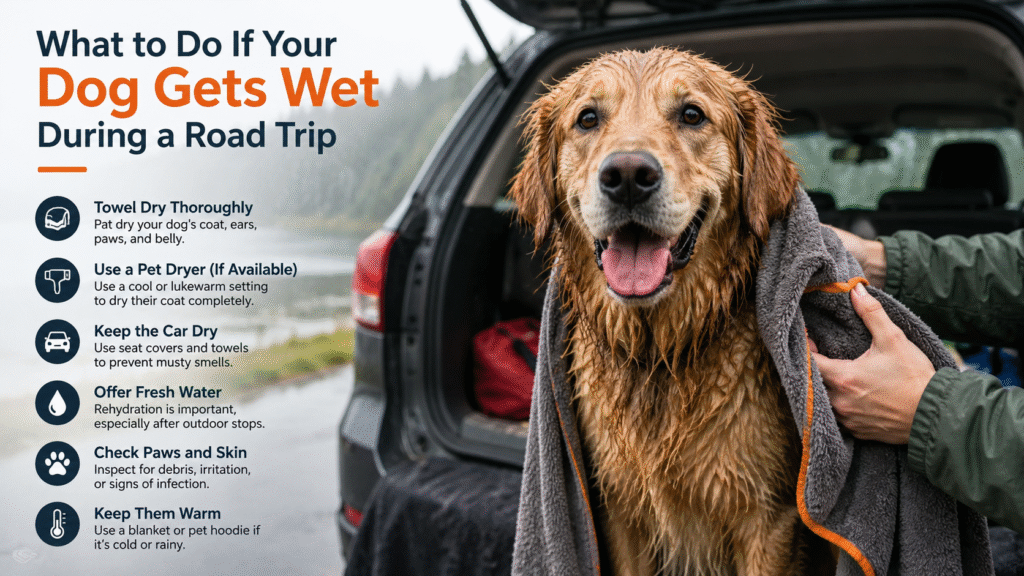
1. Stay calm: Dogs pick up on stress quickly, and scolding them for being wet only adds anxiety to an already uncomfortable situation. A calm, matter-of-fact approach will help you manage the situation more easily and speed up the whole drying process.
2. Let your dog shake it out first: Before getting back into the car, give your dog a moment to shake off excess water on their own. Walk them a little and let them do it outside rather than inside the car cabin.
3. Towel-dry immediately: Pay special attention to the belly, chest, and paws, since these areas retain the most moisture and come into direct contact with the seat or floor mats. A quick towel-dry here prevents most of the mess.
4. Keep a dedicated towel in the car: A super-absorbent chamois or microfibre towel dries a dog far faster than a regular bath towel and takes up very little space in the glovebox or trunk.
5. Dry the ears carefully: Moisture around the ears can increase the risk of irritation and ear problems, especially in floppy-eared breeds. Gently wipe the outer ear and visible folds only. Do not push a cloth, cotton buds, or fingers deep into the ear canal.
6. Check and dry between the paw pads: Moisture trapped between paw pads can lead to fungal or bacterial irritation over time, particularly if your dog stays damp for hours during a long drive. Press a towel gently between the toes instead of wiping only the top of the paw.
7. Use a waterproof or quick-dry seat cover: A dedicated seat cover protects your upholstery from water stains and lingering odour. Quick-dry or machine-washable covers are especially useful for repeated road trips.
8. Improve air circulation gently: Cracking a window slightly or running the AC on a low, indirect setting helps moisture evaporate faster without shocking your dog with sudden temperature change.
9. Avoid blasting AC or heat directly on a wet dog: Sudden extreme temperatures can be uncomfortable or even risky, especially for flat-faced (brachycephalic) breeds like pugs or bulldogs.
10. Watch for shivering: If your dog seems cold or starts shivering, wrap them in a dry blanket rather than relying on cabin airflow alone to warm them up. If shivering continues, your dog seems weak, or they appear unusually uncomfortable, contact a veterinarian.
11. Carry a spare set of towels or blankets: If you travel with your dog often, keep backup drying supplies specifically for the backseat. This way, you do not have to use your regular travel blankets, jackets, or clothes in an emergency.
12. Wipe down thoroughly if the water source was natural: If your dog got wet in a lake, river, or roadside puddle, wipe the coat, paws, belly, and legs properly. Natural and stagnant water can carry dirt, bacteria, algae, parasites, and irritants that you do not want drying into your dog’s coat.
13. Check for ticks while drying off. This is especially important if your dog got wet in a grassy, wooded, or muddy area. A full-body towel-dry is also a good opportunity to check the ears, neck, belly, legs, tail base, and between the toes for ticks.
14. Let your dog fully air-dry before their next rest: Avoid letting a damp dog curl up and nap for hours in a wet coat, as prolonged dampness against the skin can lead to irritation or a musty odour that’s hard to shift later.
15. Plan a full bath once you reach your destination: Especially if your dog got wet in murky or natural water, a proper bath at your hotel, campsite, or home rinses away anything a quick towel-dry couldn’t fully remove.
Travelling in Monsoon season? Follow these monsoon do’s and don’ts for travelling with pets to avoid common seasonal problems.
Build a Wet Dog Kit for the Car
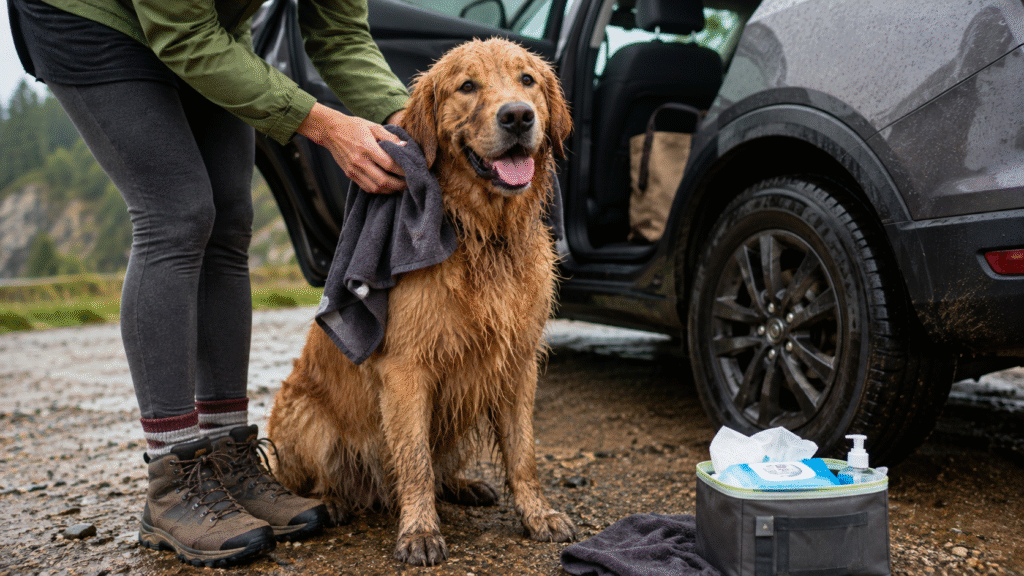
A small, dedicated wet dog kit kept permanently in your car means you’re never caught off guard on future road trips. Here’s what’s worth including:
- A super-absorbent chamois or microfiber towel: Dries faster and more effectively than a standard towel
- A waterproof or quick-dry seat cover: Protects upholstery and reduces lingering odor
- Pet-safe wipes: Useful for a quick clean-up of paws, belly, and coat without a full bath
- A spare dry blanket: For warmth if your dog is shivering or the weather is cool
- A small towel specifically for ears and paws: Keeping one separate avoids cross-contamination with a muddier towel
- A travel-size dry shampoo or deodorising spray: Use only after towel-drying; it can help with residual smell between baths.
- A zip pouch or waterproof bag: To store used, damp towels separately until you can wash them
Keeping this kit stocked and easily accessible (rather than buried in the trunk) makes the whole process faster the next time your dog gets wet mid-trip.
Keeping a pet first-aid kit for travel along with a wet dog kit is useful, especially during monsoon road trips.
Frequently Asked Questions
1. Is it safe to drive with a wet dog in the car?
Yes, it’s generally safe as long as you avoid blasting hot or cold air directly on them and keep an eye out for shivering. A quick towel-dry before continuing the drive makes it more comfortable for both of you.
2. Why does a wet dog smell so bad in the car?
Wet dog odor comes from bacteria and yeast naturally present on a dog’s skin and coat, which become more active and noticeable when damp. A thorough towel-dry and a travel-size deodorizing spray help manage the smell until you can give a full bath.
3. Can a wet dog catch a cold from AC in the car?
Dogs don’t catch colds the way humans do, but sudden cold air on a wet coat can cause discomfort or contribute to a chill, especially in puppies, senior dogs, or short-haired breeds. It’s best to use indirect, low-intensity airflow rather than direct AC on a wet dog.
4. How long can my dog stay wet before it becomes a problem?
There’s no fixed time limit, but the longer a dog stays damp, especially around the ears, paws, and skin folds, the higher the risk of irritation or infection. Aim to towel-dry within the first few minutes and fully air-dry before their next long rest.
5. What should I do if my dog got wet in a lake or river during the trip?
Give them a thorough wipe-down as soon as possible to remove any bacteria, algae, or parasites picked up from natural water, and check their coat for ticks if the area was grassy or wooded. A full bath once you reach your destination is the safest way to fully clean them off.
6. Do I really need a dedicated wet dog kit for road trips?
It’s not mandatory, but keeping one in the car saves time and stress the next time your dog gets wet unexpectedly. A basic kit with an absorbent towel, seat cover, and pet-safe wipes covers most situations without needing to improvise mid-trip.
7. How long does it take for a wet dog to dry?
Drying time depends on your dog’s coat type, size, humidity, and how wet the fur is. A short-haired dog may feel mostly dry within 15–30 minutes after towel drying, while a thick-coated or double-coated dog may take much longer because moisture stays trapped close to the skin.
8. How do you dry a wet dog without a dryer?
Start with a highly absorbent microfibre towel and press it gently into the coat instead of rubbing harshly. Dry the paws, belly, legs, body, tail area, and outer ears in order, paying special attention to areas where moisture gets trapped. After towel drying, keep your dog in a well-ventilated space with a fan or open airflow for 15–20 minutes. Brush the coat gently once it is no longer dripping wet so the fur separates and dries faster.
Important: If your dog keeps shivering, seems weak, has irritated skin, or smells strongly even after drying, contact a veterinarian.
Final Thoughts
A wet dog during a road trip isn’t a big problem as long as you handle it with a little preparation and a calm approach. A quick towel-dry, some attention to ears and paws, and a proper wet-dog kit in the car go a long way toward keeping both your dog and your car comfortable. Once you’ve got this routine down, a sudden downpour or an irresistible puddle stop will barely slow your trip down.