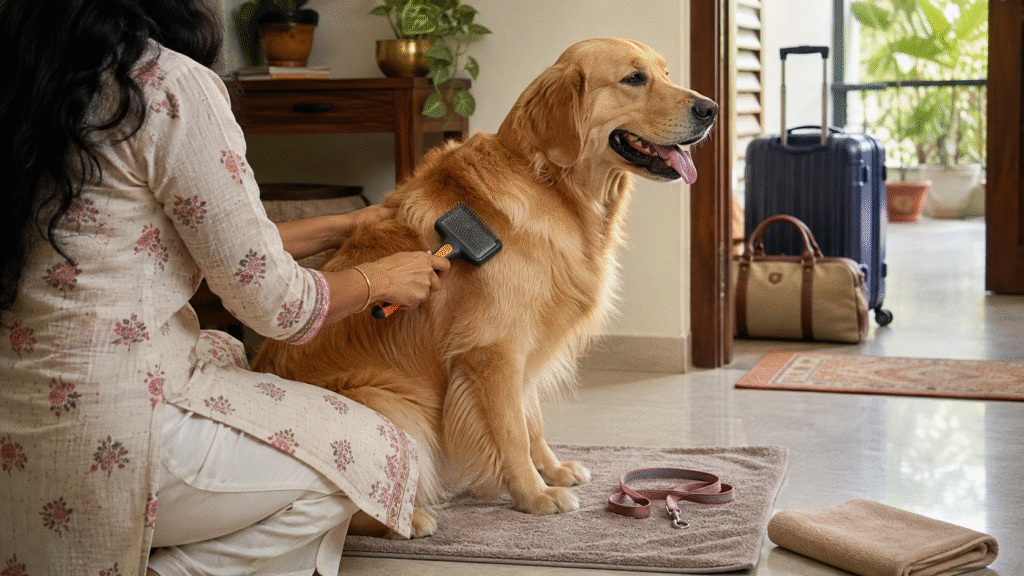
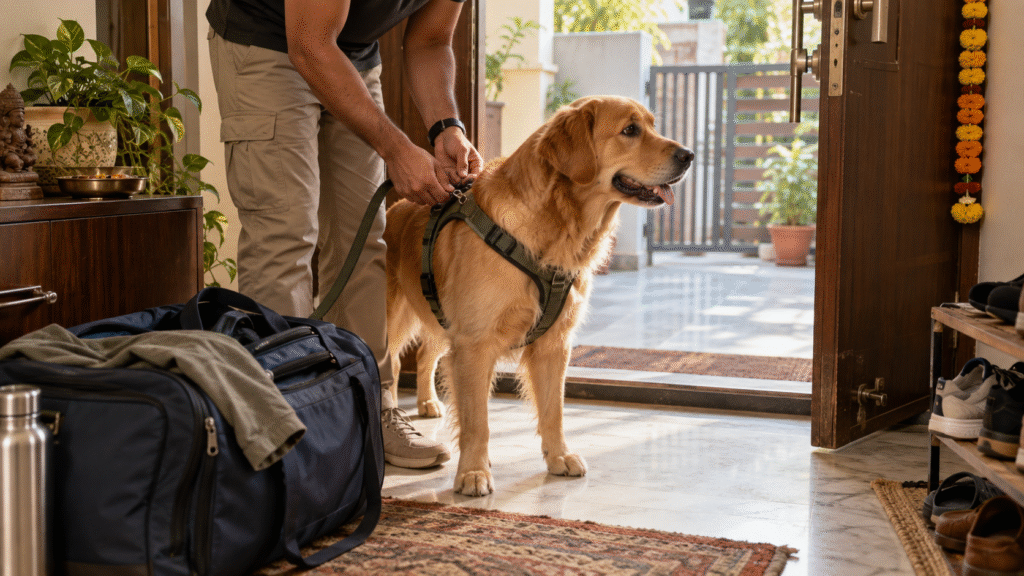
Crate training is one of the most genuinely useful things you can do for your pet’s travel experience. A crate that feels like a safe, familiar space can make a huge difference for a pet who is confined for hours. It helps them settle into travel calmly rather than spending the entire journey frightened.
Travelling with a pet often means asking them to spend hours inside a crate, surrounded by unfamiliar sounds, movement, and people. Without preparation, that can feel stressful and confusing. This guide explains how to crate-train your pet before travelling, with a realistic timeline, step-by-step training process, and advice for pets who need more time to adjust.
Why Crate Training Is Not Optional for Pet Travel
At home, your pet moves freely in a familiar space with you nearby. Travel is different. The crate gets moved, the sounds around it change, there may be motion, and during air travel, your pet may spend hours inside it without you present. A pet who has never been crate trained is suddenly being asked to accept unfamiliar confinement, movement, noise, separation, and stress all at once.
That is too much to expect on travel day.
A properly introduced crate can become a safe, familiar space for your dog or cat, but only if your pet already trusts it. The crate should feel like part of their routine before the journey begins, not like something they are forced into for the first time at the airport, railway station, hotel, or car door.
How Early Should You Start Crate Training For Travel?
Ideally, crate training should begin from the day you bring your pet home. But in real life, emotions often take over practicality, and many pets are never crate-trained at all. That makes travel more difficult, especially if your pet suddenly has to be confined to a crate during a car trip, train journey, or flight.
As a general guide:
- Puppies or pets with no crate history: Start at least two weeks before a short trip, and three to four weeks before a longer journey.
- Adult dogs new to crates: Plan for roughly two to four weeks, depending on temperament
- Anxious pets or those with a difficult crate history (e.g., rescues): four to six weeks or more is realistic. Rushing the process can backfire, making the crate feel even more frightening.
The honest recommendation: let your pet’s comfort set the pace, not your calendar. If travel is time-sensitive, start as early as possible so you have room to slow down if your pet needs it.
How to Crate-Train Your Pet Before Travelling?
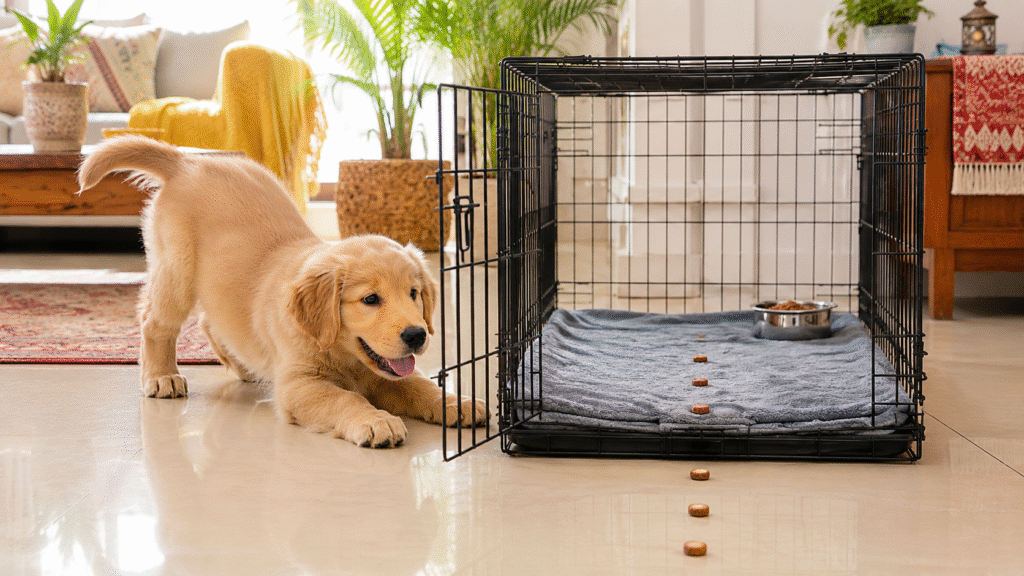
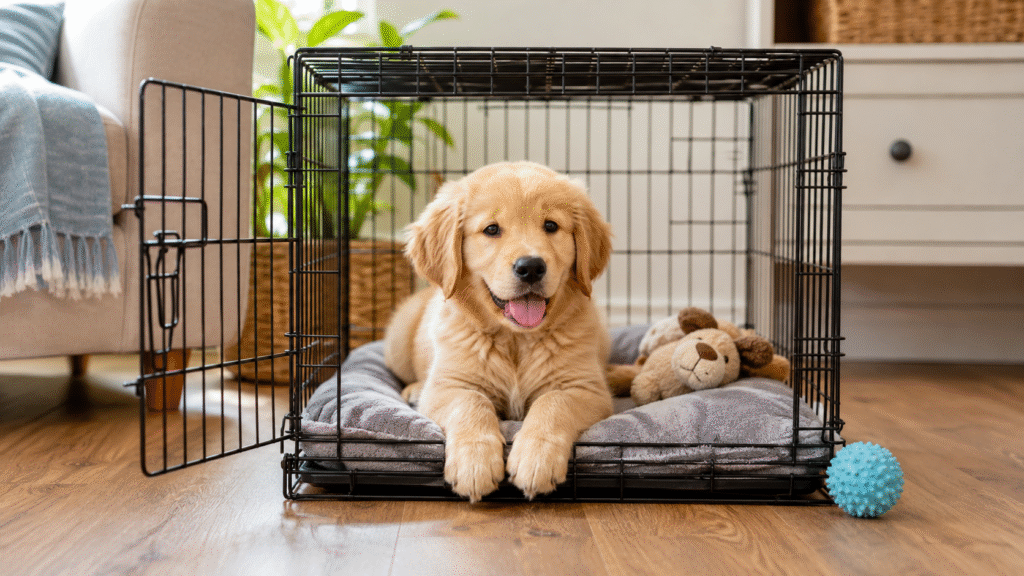
1. Introduce the crate as a neutral, inviting space. Place the crate in a common area of the home with the door open, and not tucked away or stored for later use. Add soft bedding. Let your pet explore it entirely at their own pace without pressure.
2. Build positive association with food and rewards. Place treats near the crate, then just inside the doorway, then gradually toward the back. Feeding regular meals near, and eventually inside, the crate helps your pet associate it with something genuinely good rather than something imposed.
3. Practice entering and exiting freely. Let your pet go in and out on their own terms before you ever close the door. This stage can take a few minutes for some pets and several days for others. There’s no fixed timeline.
4. Begin closing the door for short periods. Once your pet is entering calmly and comfortably, close the door for a few seconds while you stay nearby. Then open it and reward calm behavior. Gradually extend the time in small increments, always ending on a calm note rather than pushing until your pet becomes distressed.
5. Add distance and time away. Once your pet is settled with the door closed, start stepping away briefly before returning a few minutes at first, gradually building to leaving the room, then the house, for short periods.
6. Introduce motion. This step matters specifically for travel. Once your pet is comfortable in the closed crate at home, move the crate into the car and take short drives around the block at first, gradually building up distance, speed changes, and turns, so the sensation of motion isn’t new on the actual travel day.
7. Repeat in different locations and contexts. Let your pet experience the crate in different settings, such as the car, a new room, or a travel waiting area when possible. This helps them understand that the crate itself is safe, even when the surroundings change.
Throughout the process, never force your pet into the crate, never close the door and walk away before they are ready, and never use the crate as punishment. These mistakes can undo weeks of progress and make the crate feel frightening. Good crate training for travel needs patience and should always be built around your pet’s comfort.
For flights, crate preparation should also go along with proper feeding before cargo travel so your pet is not uncomfortable during the journey.
Choosing the Right Crate
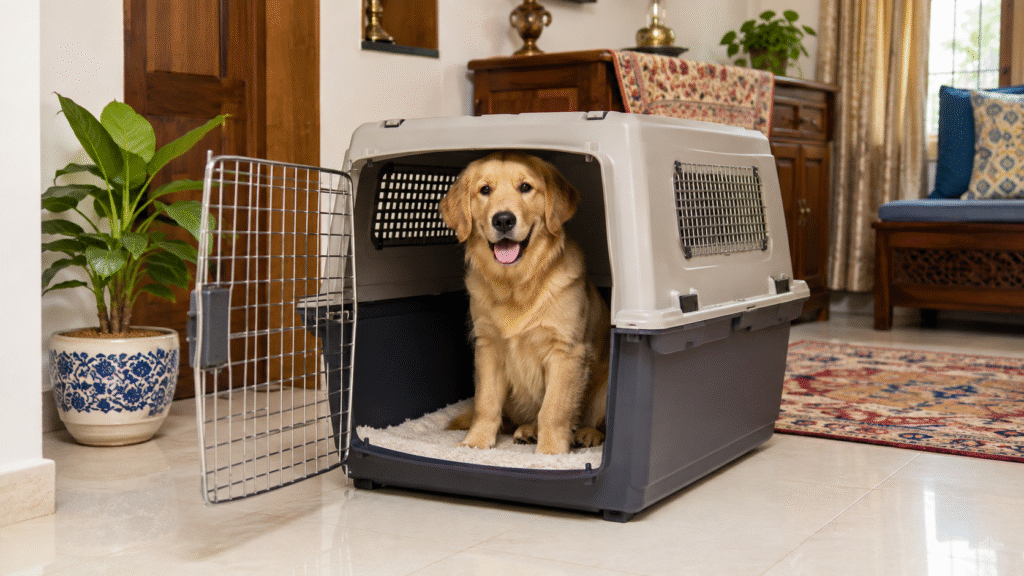
The right crate makes training easier and is non-negotiable for actual travel.
- Size: Your pet should be able to stand up, turn around, and lie down comfortably inside. The crate should not be cramped, but it should also not be so large that your pet slides around or feels exposed during movement.
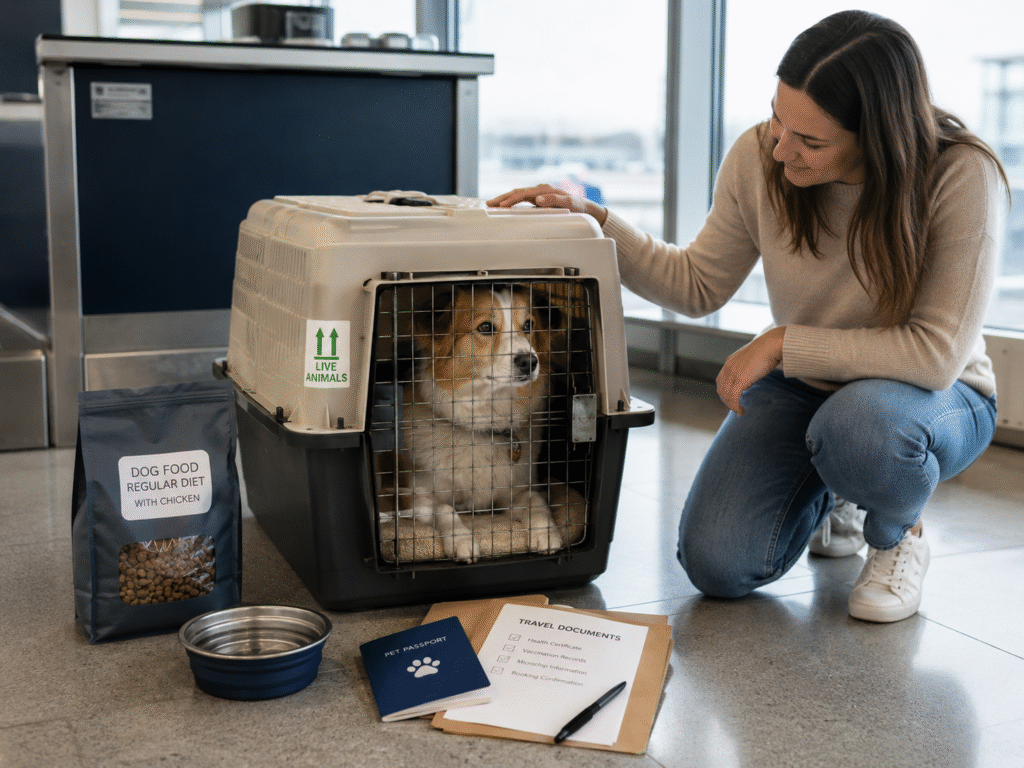
- Airline-compliant, if flying: If the crate will be used for air travel, check the airline’s current crate requirements before buying or travelling. Cargo travel usually requires a sturdy, hard-sided, well-ventilated crate, while in-cabin travel usually requires a soft-sided carrier that fits under the seat. Always confirm the exact size, material, locking, ventilation, and labelling rules with the airline.
- Familiarity matters more than novelty: If possible, train your pet in the same crate or carrier they will use on travel day. A pet who is comfortable in one crate may not automatically feel safe in a different one during the actual journey.
- Enclosed vs. open-sided: Some anxious pets feel more secure in an enclosed, den-like crate, while others prefer better visibility and airflow. Observe your pet during early training sessions and choose the style they settle in most comfortably.
Signs Your Pet Is Ready
You’ll generally know your pet is prepared for travel when:
- They enter the crate voluntarily, without coaxing or treats needed every time.
- They can rest, eat, or settle calmly inside with the door closed.
- They don’t show signs of panic (frantic scratching, non-stop barking, drooling, or trying to escape) when the door closes, or the crate is moved.
- They’ve experienced motion in the crate through car rides without significant distress.
- They can tolerate being out of your sight while crated for a reasonable stretch of time.
If Your Pet Is Not Adjusting Well
Not every pet adjusts to crate training on a predictable schedule, and that is normal. It does not mean you have failed. A few things are worth keeping in mind:
- Go back a step, not forward. If your pet shows anxiety at any stage, return to the last stage where they were calm. Pushing through fear usually makes the crate feel less safe, not more familiar.
- Watch for genuine panic versus normal adjustment. Some initial whining or reluctance is common. Frantic, escalating distress, especially attempts to injure themselves trying to get out, is different and is a sign to stop and reassess rather than continue.
- Consider a certified positive-reinforcement trainer. If progress stalls or your pet has a history of confinement-related trauma (common in some rescues), professional guidance can help far more than continuing to troubleshoot alone.
- Talk to your vet if travel is unavoidable and time is short. Your vet may suggest options based on your pet’s temperament, age, health, and travel conditions.
- Accept that crate training isn’t always the solution. For pets with severe separation anxiety or panic responses, forcing crate tolerance can do more harm than good. Discuss this honestly with a veterinarian or qualified trainer instead of pushing through regardless.
A vet visit before travel with a dog or cat can help you decide whether the trip should go ahead, be postponed, or need extra precautions.
Common Mistakes to Avoid
- Starting too late. A week before travel is rarely enough time, especially for a pet with no prior crate experience.
- Closing the door too soon. Rushing to the closed-door stage before your pet is voluntarily entering and settling is one of the most common reasons training stalls.
- Skipping the motion step. A pet who is calm in a stationary crate at home can still be startled by the sensation of a moving vehicle. Practising short car rides in advance helps make travel day less stressful.
- Using the crate as punishment. Even once, this can undo weeks of positive association.
- Ignoring escalating distress. Letting a whining or panicking pet “cry it out” when the reaction has crossed into genuine fear is uncompassionate and non-productive. It can make the crate feel like a threat rather than a safe space.
- Assuming a home crate and a travel crate are interchangeable. If possible, train with the actual crate that will be used for travel.
Final Thoughts
Crate training before travel reduces your pet’s fear and stress during a journey they do not fully understand. When you do it patiently and without force, the crate can become a small, familiar space rather than confinement and provide comfort even in an unfamiliar situation.
If travel is part of your pet’s near future, start crate training early. Giving your pet enough time to adjust is one of the easiest ways to make the journey comfortable for them.