Flying with a cat in India is possible on airlines that accept pets in the passenger cabin, but eligibility depends on your cat’s age, combined weight with the carrier, route, health, and the number of pet spaces available on that flight. Cabin travel keeps your cat close to you, but it still means hours inside a carrier in an unfamiliar, noisy environment. Good preparation therefore matters just as much as meeting the airline rules.
If you are flying with a cat in India, the first question is usually whether your cat can stay with you in the cabin. For many small cats, the answer can be yes, provided the airline accepts pets, and your cat meets its cabin requirements.
But cats are not simply small dogs when it comes to travel. They are often strongly attached to familiar territory, smells, hiding places, and routine. An airport introduces new sounds, people, handling, confinement, and movement all at once, which many cats find stressful.
This guide focuses specifically on cat cabin travel in India, from airline eligibility and carriers to behaviour, flat-faced breeds, feeding, litter needs, airport handling, and signs that flying may not be right for your cat.
Flying With a Cat in India: Can Your Cat Travel in the Cabin?
Yes, some Indian airlines allow domestic cats in the passenger cabin, but owning a small cat does not guarantee a cabin space.
Airlines usually consider the combined weight of the cat and carrier, the cat’s age, the type and dimensions of the carrier, the route, aircraft limitations, documentation, and the number of pets already booked on that flight.
For example, Air India currently allows domestic cats and dogs weighing up to 10 kg, including the carrier, to travel in the Economy cabin on eligible routes. Cabin pets must be at least eight weeks old, and only two pets are accepted in the cabin on each flight.
Pet spaces are limited, so confirm your cat’s place with the airline; booking your own seat does not necessarily reserve space for the cat.
Which Airlines Allow Cats in the Cabin in India?
Four Indian airlines currently provide cabin-travel options for eligible pet cats: Air India, Akasa Air, Alliance Air and FLY91.
- Air India allows domestic cats in the cabin on domestic and selected international flights. The combined weight of the cat and soft carrier must not exceed 10 kg. Cabin pets travel in Economy, and advance approval and documentation are required.
- Akasa Air allows cats aged three months or older through its Pets on Akasa service on eligible domestic flights. Its current service allows up to two pets in the cabin per flight, and the in-cabin weight limit is 10 kg including the carrier.
- Alliance Air accepts small domestic cats in the cabin on domestic flights. The cat itself must weigh no more than 5 kg, while the combined weight of the cat and carrier must not exceed 8 kg. Alliance Air permits a maximum of two pets per flight and does not allow pets in the cargo hold under this service.
- FLY91 accepts small domestic cats aged at least three months in the passenger cabin. The combined weight of the cat and carrier must not exceed 7 kg, and only one pet is accepted in the cabin per flight. Passengers must give at least 24 hours’ notice.
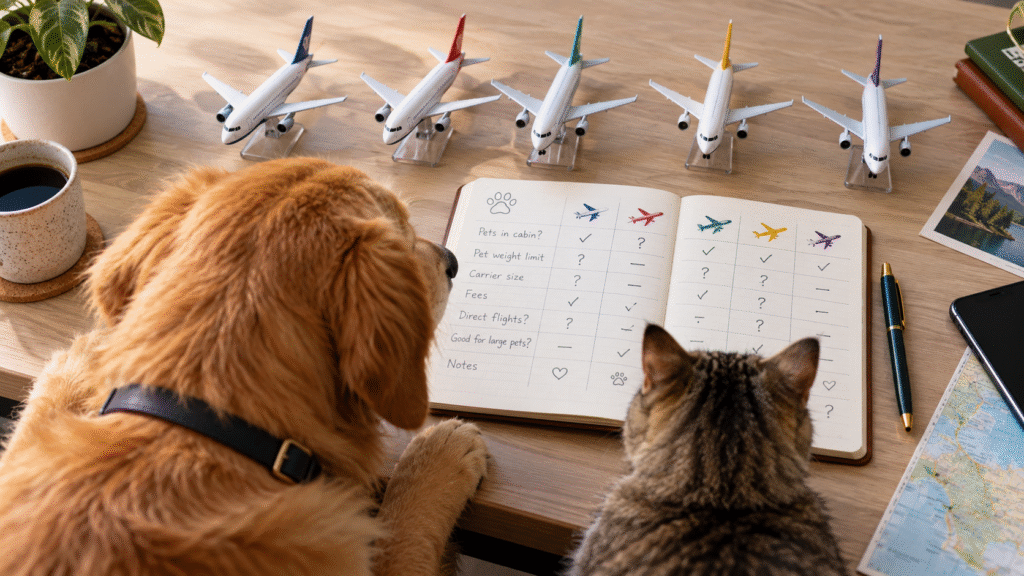
Airline policies differ considerably in weight limits, carrier dimensions, routes, pet-slot availability, and booking procedures, so confirm the current rules before buying your ticket.
For more detail, see our individual guides to the Air India pet policy and Akasa Air pet policy, or compare all current options in Which Airlines Allow Pets in India?
What Documents Do You Need for Cat Air Travel in India?
The exact cat travel documents in India depend on the airline and route.
For example, Air India currently requires a valid health and rabies vaccination certificate issued within seven days of departure, along with the required airline paperwork.
Before travelling, check whether your airline requires:
- Your cat’s vaccination record showing that required vaccinations, including rabies where applicable, are current.
- A recent veterinary health or fit-to-fly certificate issued within the airline’s specified validity period.
- The airline’s pet booking confirmation and any indemnity or declaration form it requires.
- Additional permits or health documents when travelling internationally.
Do not assume that documents accepted by one airline will automatically satisfy another.
Wondering which pet travel documents you need? Read the complete list: Documents Required for Pet Travel in India
What Happens at the Airport When Flying With a Cat?
Airport procedures vary by airline, but travelling with a cat usually involves more than arriving with a boarding pass and proceeding directly to security.
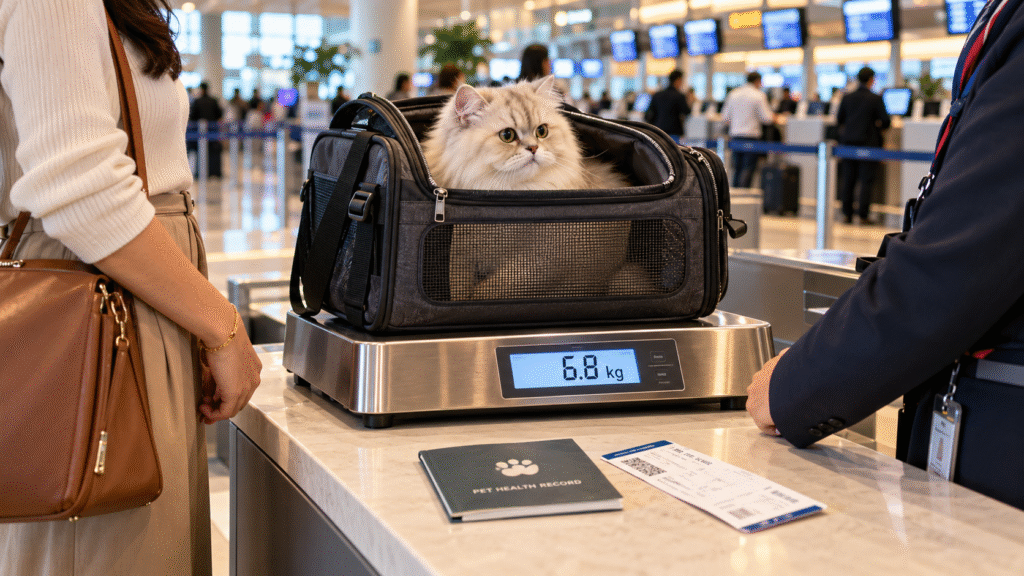
- Start at the airline check-in counter. Even if you have already submitted your cat’s documents while booking, carry the originals and required copies. The airline may recheck vaccination records, the health certificate, indemnity forms, and the pet booking before accepting your cat for travel. Passengers travelling with pets may also be required to check in at the airport rather than online.
- Expect the carrier and weight to be checked again. The airline may weigh your cat together with the carrier and confirm that the carrier meets its cabin dimensions and can fit under the seat. Do not pack extra items inside the carrier that could push the combined weight above the permitted limit.
- Your cat may also be observed before acceptance. Airline staff can refuse travel if a pet appears unwell, heavily sedated, unable to stand normally, unusually unresponsive, or shows other concerning signs. Air India, for example, specifically checks pets for signs of poor health, stress, and sedation before completing check-in.
- Plan carefully for security screening. Keep your cat’s carrier fully secured while moving through the terminal and follow the instructions given by airport security staff. Do not open the carrier in a busy terminal unless you are specifically required to do so. If your cat has to come out during screening, this is one of the moments when escape risk is highest, so ask staff how they want you to proceed before opening it.
- After security, choose a quieter waiting area if possible. Keep the carrier stable and away from crowds, loud children, other animals, and people trying to interact with your cat. Avoid repeatedly opening the carrier to check on them. Watch instead for persistent panting, open-mouth breathing, excessive drooling, frantic escape attempts, or unusual weakness.
- Give yourself enough time without creating unnecessary waiting. Follow your airline’s reporting requirement rather than arriving at the last minute. Air India currently asks passengers travelling with pets to report at least three hours before departure. Other airlines may have different reporting times.
- At boarding, keep your cat inside the carrier. Some airlines provide priority boarding for passengers travelling with pets, which can reduce the amount of time spent standing in a crowded boarding queue. Once onboard, place the carrier where your airline requires it, usually under the seat in front of you, and keep your cat inside for the flight.
The airport is often the most unpredictable part of cabin travel for a cat. Having the documents ready, keeping the carrier secure, and knowing what will happen before you reach the terminal can prevent a stressful situation from becoming an escape or missed-flight emergency.
Which Cat Carrier Should You Choose for Flights
Your carrier is your cat’s space for most of the journey, so buy it only after checking your airline’s current measurements.
Air India, for example, currently specifies a soft carrier for cabin pets that fits beneath the seat.
An appropriate cat carrier for flights should be securely closed, well ventilated, leak-resistant, and large enough for the cat within the airline’s permitted dimensions. Line the base with an absorbent pad and add a light familiar-smelling cloth if space permits.
Be cautious with products advertised as an “airline-approved cat carrier.” IATA does not certify or approve commercial pet-carrier brands. The carrier has to meet the requirements of the airline operating your particular flight.
Where Does Your Cat Stay During the Flight?
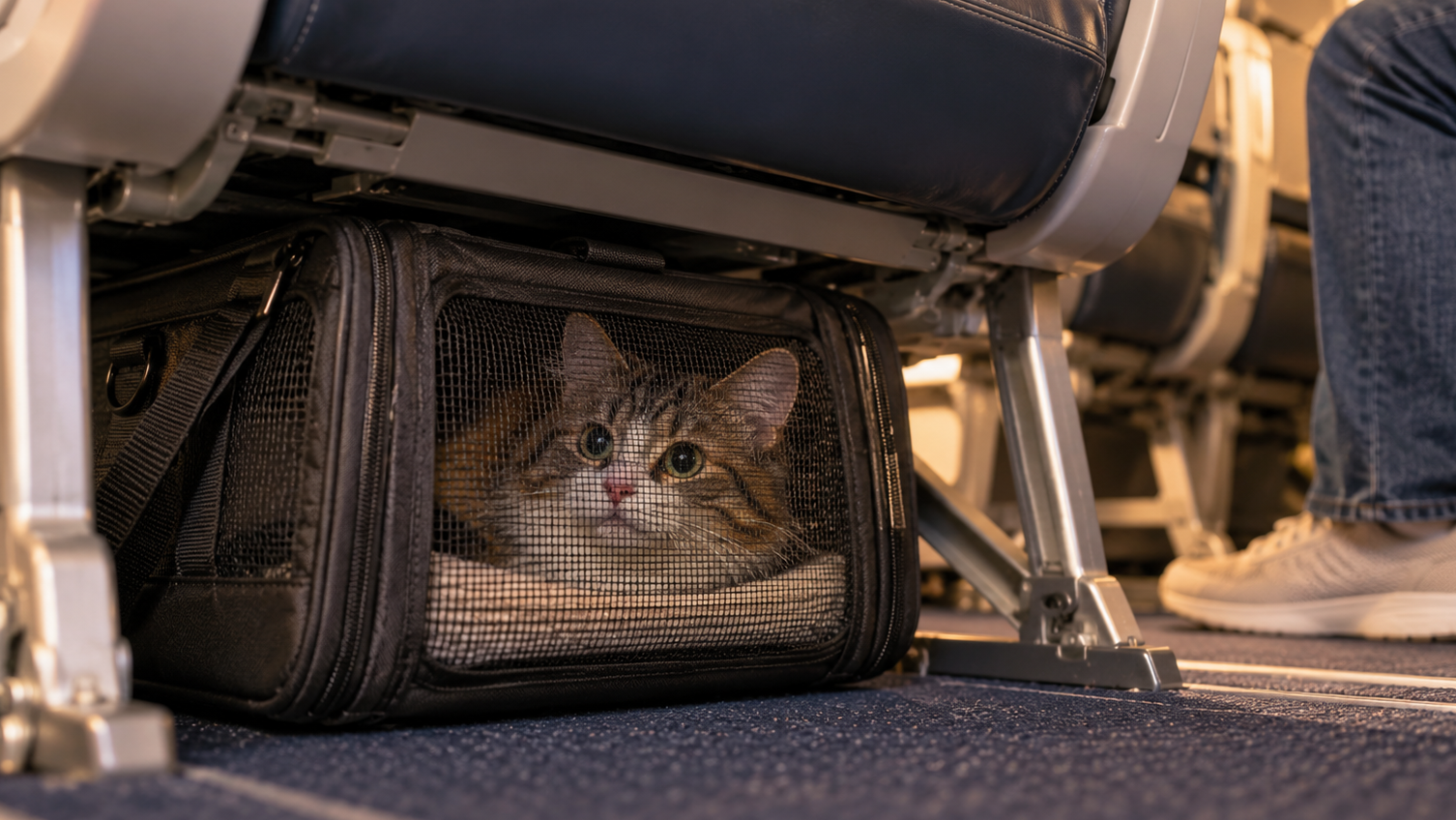
For cabin travel, your cat normally remains inside the airline-compliant carrier throughout the flight.
Air India requires the carrier to remain under the seat in front and does not allow passengers to hold the pet in their arms or place the carrier on a passenger seat. Akasa’s indemnity conditions similarly require pets to remain inside their designated container while onboard.
Do not plan on taking your cat out for cuddles, feeding, or a stretch during the flight.
Feeding, Water and Litter Before the Flight
Avoid experimenting with food on travel day. Give your cat’s normal diet and ask your veterinarian about meal timing, particularly if your cat has diabetes, digestive problems, or another medical condition.
Do not deliberately restrict water simply to avoid urination.
Give your cat access to the litter tray shortly before leaving home. Line the carrier with an absorbent pad and carry spare pads, wipes, and disposal bags in case your cat urinates, vomits, or soils the carrier during the journey.
For longer travel days, discuss feeding, water, and toilet planning with your veterinarian before departure.
How to Keep a Cat Calm During a Flight
There is no trick that guarantees a relaxed cat, but preparation can reduce avoidable stress.
- Keep the carrier familiar by introducing it well before the journey rather than storing it away until travel day.
- Use a familiar-smelling cloth or bedding inside the carrier, and make sure it doesn’t reduce ventilation or usable space.
- Keep the carrier steady while walking; don’t swing or bump against objects.
- Reduce unnecessary exposure to crowds, loud voices, and strangers reaching towards the cat.
- Monitor your cat for abnormal breathing, persistent panting, excessive drooling, weakness, or severe agitation.
Cats Protection and feline-handling guidance also note that covering part of a carrier with a light familiar cloth can help some cats feel less exposed, provided ventilation remains unrestricted.
Should You Sedate a Cat Before Flying?
Do not sedate your cat simply because you expect them to be anxious. IATA advises against routine sedation or tranquillisation for dogs and cats travelling by air because these drugs can affect the animal’s ability to respond normally to transport stress. Airlines may also refuse sedated animals.
If your cat has severe travel anxiety, speak to your veterinarian. There is an important difference between casually sedating an animal and a veterinarian deciding whether a particular prescribed anxiety-management plan is appropriate for that individual cat.
Do Cat Breeds Matter When Flying?
Breed alone does not determine whether a cat can fly safely, but it can affect practical and medical considerations.
Large breeds such as Maine Coons may struggle to remain within an airline’s combined cat-and-carrier weight limit while still having a carrier large enough for comfortable confinement.
Long-haired cats may require extra attention to grooming and temperature, particularly when travelling through hot Indian airports.
The most important breed-related concern, however, involves flat-faced cats.
Flat-Faced Cats Need Extra Care Before Flying
Brachycephalic, or flat-faced, cats can include Persians, Himalayans and Exotic Shorthairs, although the degree of facial shortening varies between individual cats. Flat-faced anatomy can be associated with airway and breathing problems.
Air travel adds confinement, unfamiliar surroundings, temperature changes, and stress. Veterinary guidance therefore recommends particular caution when brachycephalic animals travel by air.
Air India currently permits flat-faced cats in the cabin but advises owners to consult a veterinarian before travel. It does not allow brachycephalic dogs and cats in the cargo compartment because of increased respiratory and temperature-related risks.
For detailed information on Brachycephalic breeds, read: Can Persian Cats Fly on Air India?
Is Your Cat Suitable for Air Travel, and Why Can Flying Be Difficult?
Cats are territorial animals, and many find unfamiliar surroundings and changes to routine stressful. Unlike many dogs, which may be accustomed to walks, outdoor environments, vehicles, and meeting unfamiliar people, a house cat may spend most of its life within a highly predictable territory. A cat can meet every airline requirement and still be a poor candidate for air travel.
Before booking, consider your cat’s health, age, previous experience in a carrier, response to car journeys, tolerance of strangers and noise, breathing history, and ability to remain confined without becoming severely distressed.
Fear in cats is not always obvious. One cat may vocalise continuously or claw at the carrier, while another may freeze and become unusually quiet. Panting, excessive drooling, frantic escape attempts, or abnormal breathing deserve particular attention.
A cat being physically eligible to fly does not automatically mean flying is a good choice for that particular cat. For a short optional holiday, a familiar sitter or other suitable care arrangement may sometimes be kinder than putting a highly anxious cat through air travel.
When Should You Reconsider Flying With Your Cat?
Reconsider the journey if your cat has significant breathing problems, uncontrolled illness, severe carrier panic, extreme travel anxiety, or another condition that could make confinement and air travel unsafe. Be particularly cautious with flat-faced cats and cats with known respiratory disease.
Also consider whether the journey itself is necessary. Cats Protection notes that many cats find travelling and unfamiliar environments stressful because of their territorial nature and reliance on routine.
Sometimes the best cat flight preparation is deciding that an optional flight does not need to happen.
Is Cabin Travel Better Than Cargo for a Cat?
Yes. If your cat qualifies for cabin travel, it avoids the long separation from you needed in cargo transport. You remain close enough to monitor the carrier and notice obvious signs of distress.
However, cabin travel is not automatically comfortable. Your cat may still spend several hours confined while moving through road transport, the airport, security, boarding, the flight, and arrival.
The useful question is not simply, “Can my cat fly in the cabin?” It is also, “Can my cat cope reasonably well with this journey?”
Confused about cargo or cabin travel? Read this: Cargo Travel Isn’t the Only Option: What Pet Parents Should Know Before Booking.
Prepare Your Cat for the Carrier Before Flying
Do not make flight morning the first time your cat discovers that the carrier door closes.
Leave the carrier open at home and allow your cat to investigate it voluntarily. Put familiar bedding inside, offer treats nearby or inside it, and gradually practise short periods with the door closed. Carrier training done slowly and positively can reduce fear associated with confinement.
Once your cat is comfortable, practise carrying the closed carrier and, if your cat tolerates it, taking short car journeys.
The aim is not to make your cat love airports. It is to make the carrier itself one familiar thing in an otherwise unfamiliar day.
To make your pet comfortable with a carrier or crate, read: How to Crate-Train Your Pet Before Travelling.
Final Cabin Checklist for Flying With a Cat
Before leaving for the airport, confirm that:
- Your airline has accepted your cat and confirmed an in-cabin pet space on the specific flight.
- Your cat and carrier together remain within the airline’s current cabin weight limit.
- The carrier meets the airline’s dimensions and has secure closures, ventilation, and an absorbent liner.
- Your vaccination records, health certificate, and airline paperwork are complete and within their required validity periods.
- Your cat has been gradually accustomed to the carrier before travel day.
- You have packed spare absorbent pads, wipes, waste bags, medicines, and any other essentials needed during the journey.
- Your veterinarian has assessed any health, breathing, anxiety, or flat-faced breed concerns before you fly.
Final Thoughts
Flying with a cat in the cabin can help with the separation involved in cargo travel, but being beside you does not automatically make the journey easy for your cat. A good decision combines airline eligibility with your cat’s health, temperament, carrier tolerance, and actual need to travel. The question is not only whether your cat is allowed on the plane. It is whether this cat, on this journey, can travel safely and without stress.
Image Disclaimer: Some images used in this article are AI-generated or digitally created for illustration purposes. They are meant to help explain pet travel situations and may not show exact airline interiors, airport procedures, carrier placement, or real arrangements. Always follow the latest airline instructions and official pet travel rules.