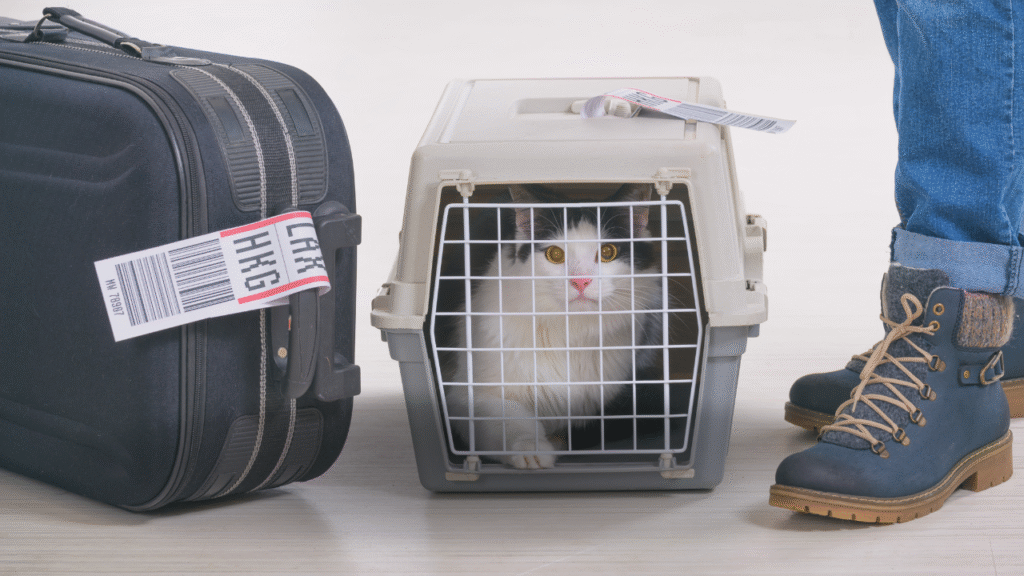
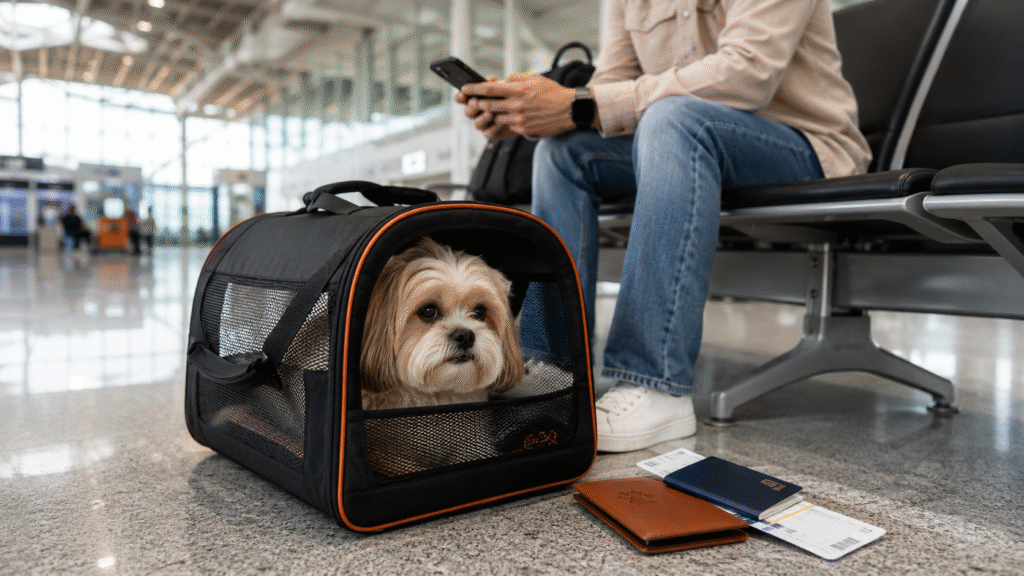
Before you book your pet on a cargo flight, take a moment. Not to be talked out of it, but to think it through, as you would with any decision that affects someone who has no say in it.
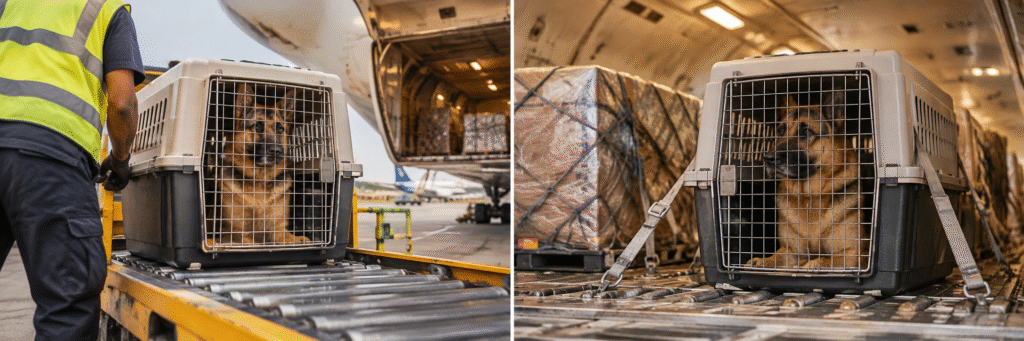
What Cargo Travel Actually Means for a Pet
Once the crate door shuts, your pet is on its own. They are placed in the belly of the aircraft, in the dark, surrounded by engine noise, vibration, and the general chaos of loading and unloading, with no owner nearby to offer reassurance, and no understanding of why any of this is happening.
They can’t be let out to stretch, relieve themselves, or be comforted if they’re frightened. For however many hours the flight lasts, they’re alone, confined, and may be afraid, with no way to make sense of it all.
This is worth sitting with before treating it as a routine box to check on a moving or travel checklist.
A Real Disagreement, Not a Settled Question
It’s worth knowing that this isn’t a fringe concern; it’s a genuine, ongoing disagreement between animal welfare advocates and the pet transport industry.
PETA has been direct about where it stands: on its guidance for air travel with animal companions, the organization states that flying an animal in the cargo hold can be dangerous, even life-threatening, and it encourages owners to keep their pets in the cabin whenever possible. When that isn’t an option, PETA’s advice is to consider leaving the pet at home with a trusted sitter rather than sending them through cargo at all.
The pet relocation and shipping industry, unsurprisingly, tells a different story. Many pet transport companies actively describe the “dark, cramped, frightening cargo hold” as a myth, pointing to pressurization, temperature control, and airline regulations as evidence that the space is safe and well-monitored.
Both things can be true at once: the cargo hold may be regulated and climate-controlled, and still be a deeply disorienting, frightening experience for an animal that has no framework for understanding confinement, engine noise, or separation from their person. Regulation reduces physical risk. It doesn’t touch the emotional and psychological experience of the animal inside the crate.
Heat, Cold, Delays and Tarmac Time: The Ground Risks of Pet Cargo Travel
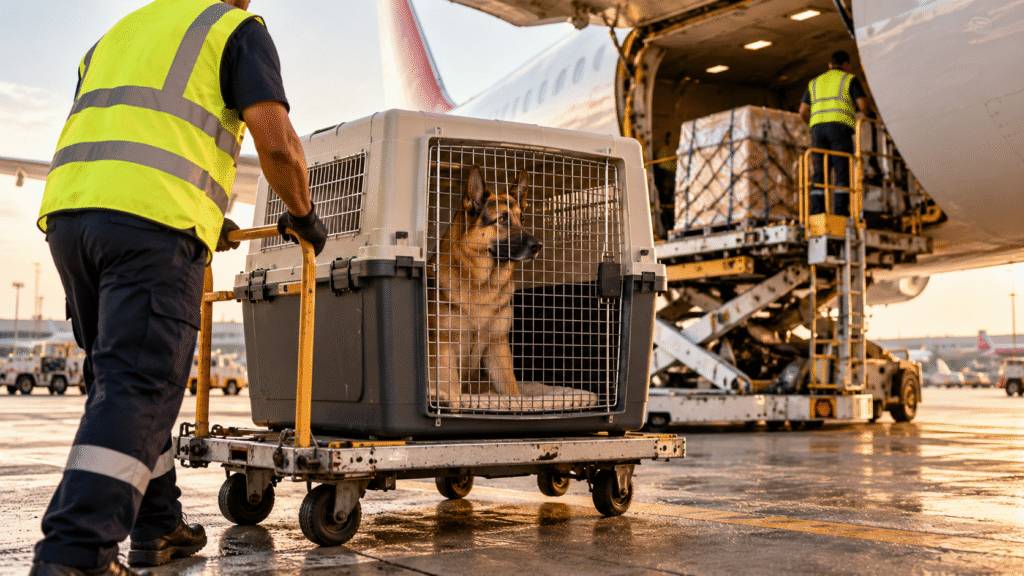
Something that doesn’t get talked about enough: the most dangerous part of cargo travel usually isn’t the hours spent airborne. It’s the time on the ground.
Cargo holds are often pressurized and temperature-regulated once the aircraft is in the air. But before takeoff and after landing, pets often wait in crates on the tarmac, on baggage carts, or in unheated, non-air-conditioned holding areas sometimes for extended periods, especially during connections, delays, or a busy airport queuing for takeoff. Because animals are typically loaded last and unloaded first, that waiting window is real, not hypothetical. A hot tarmac in summer or a freezing one in winter can affect a crate’s temperature far more severely than the climate-controlled hold ever will in flight.
This is exactly why most airlines enforce seasonal restrictions, sometimes called heat or cold embargoes, refusing pet cargo bookings altogether when ground temperatures fall outside a safe range. The permitted temperature range can vary by carrier, aircraft, route, and type of transport. These restrictions apply not just at your departure airport, but at every layover and your destination too, since a mild morning at home means nothing if your pet lands somewhere in a heatwave or a freeze.
Rain adds its own complication: crates left exposed on an open tarmac during loading or unloading can mean a wet, cold pet sitting in damp bedding for the rest of the journey, on top of everything else they are already dealing with.
If cargo travel is genuinely unavoidable, this is one of the most concrete things worth controlling for: direct flights only, travel during moderate weather months if you have any flexibility, and checking not just your home city’s forecast but the weather at every stop along the route.
The Question Worth Asking First: Need or Want?
Before anything else, it’s worth being honest about why your pet is flying.
A genuine need usually looks like permanent relocation across an ocean or a distance with no practical ground alternative: a move abroad, a family relocating for good, a situation where there simply isn’t another way to bring your pet with you.
A want looks more like a vacation, a short visit, a trip where your pet’s presence is a nice-to-have rather than a necessity. Pets don’t need to see new places. They don’t miss out by staying home. A trip that would put your pet through hours of confinement and fear for a week’s holiday is very different from a one-time relocation with no other option.
This single question need or want is often enough to make the decision clear on its own.
If It’s a Want: Better Options Exist
If your pet’s trip is optional, some genuinely better alternatives are usually available:
- Boarding with a trusted, reputable facility. A good boarding kennel or cattery, one you’ve vetted and ideally tried in advance, keeps your pet in a stable, supervised environment instead of a plane’s cargo hold.
- A pet sitter, ideally one your pet already knows. Staying in familiar surroundings their own home, their own smells, their own routine is far less disruptive than travel of any kind.
- Family or friends your pet is comfortable with. Sometimes the simplest option also works.
None of these require your pet to be confined, hungry, thirsty, or frightened for hours in the dark. If the trip isn’t essential for your pet to be part of, it’s worth asking whether it’s essential at all.
If It’s a Genuine Need: Reducing the Harm
Sometimes there truly is no way around it: an international relocation, a permanent move, a situation with no viable ground route. In those cases, the goal shifts from “avoid it” to “do it as carefully and safely as possible.”
- Ground transport, where distance allows. Professional pet transport services drive pets in climate-controlled vehicles, door-to-door, with someone able to check on the pet throughout the journey, something cargo travel never allows.
- A hybrid route: road as far as possible, flight only for the unavoidable stretch. For long-distance or international relocations, some pet relocation services will drive a pet by road for most of the journey, say, to a departure hub closer to the destination, or across a leg that doesn’t require flying at all, and only put the pet on a plane for the shortest possible remaining distance, such as a single ocean crossing. This won’t eliminate cargo entirely, but it can meaningfully cut down the time your pet actually spends in a crate on a plane, and it’s worth asking any pet relocation company you’re considering whether this kind of route is possible for your specific move.
- Flight nannies or accompanied transport. Some pet relocation companies offer a paid handler who books the same flight and travels in the cabin, checking on the pet at both ends of the journey and during layovers. It’s worth being clear-eyed about what this does and doesn’t solve: the handler cannot be inside the cargo hold with your pet during the flight itself, so it doesn’t eliminate the hours of solo confinement, but it does mean a familiar, responsible person is present at loading, layovers, and unloading, rather than your pet being handled by strangers with no one checking in at all.
- In-cabin, if your pet qualifies. Small enough pets can sometimes avoid the cargo hold altogether by flying in the cabin, worth checking before assuming cargo is the only path.
- Direct flights only, and careful timing. Avoiding layovers, extreme heat or cold months, and choosing airlines with stronger animal-handling track records all reduce risk when cargo genuinely can’t be avoided.
- A vet check beforehand. Confirming your pet is fit to travel not just paperwork-fit, but genuinely healthy enough for the stress of the journey matters more than treating the health certificate as a formality.
This Isn’t About Guilt
If you’ve already flown a pet in cargo, or you’re facing a genuine relocation with no other option, none of this is meant to make you feel like you’ve failed your pet. Sometimes there really isn’t a better path, and doing it thoughtfully with the right preparation, the right airline, the right timing is a real form of care, even if the experience itself is still hard on the animal.
What this is meant to do is interrupt the assumption that cargo is simply “how pets fly” without a second thought. It’s a decision, not a default. And it’s one worth making slowly, with your pet’s actual experience in mind rather than only your own convenience.
Before You Book, Ask Yourself
- Is this trip something my pet needs to be part of, or something I want them to be part of?
- Have I actually looked into boarding, a sitter, or ground transport as real alternatives, not just assumed cargo is the only way?
- If cargo genuinely is unavoidable, have I done everything possible to reduce the fear and risk involved: direct flights, the right season, a vet check, the right crate?
- Am I making this decision for my pet’s sake, or for my own convenience?
There’s no single right answer here for every pet and every situation. But a pause a real one- before the booking is made is something every pet deserves.
If you’re facing a decision about pet travel and are unsure what’s right for your specific pet, a conversation with your veterinarian, who knows your pet’s health, temperament, and tolerance for stress, is worth more than any general guide.
Image Disclaimer: Images used in this article are AI-generated or digitally created for illustration purposes. They are meant to help explain pet travel situations and may not show exact airline interiors, airport procedures, carrier placement, or real flight arrangements. Always follow the latest airline instructions and official pet travel rules.