A hotel room can feel very different from home to your dog. New smells, footsteps in the corridor, doors opening and closing, unfamiliar voices, lifts, housekeeping, and a changed routine can all make it harder for them to settle. A little preparation and a calm first few hours can make the stay much easier.
Knowing how to keep your dog calm in a hotel room starts with understanding why the room may feel unsettling in the first place.
Your dog has arrived in an unfamiliar space filled with smells and sounds they cannot identify. People may walk past the door throughout the day, housekeeping may knock unexpectedly, and voices or movement from nearby rooms can keep an alert dog on edge.
Do not expect your dog to walk into the room and immediately behave exactly as they do at home. Give them time to explore, create a familiar resting space, reduce unnecessary stimulation, and keep their normal routine as much as possible.
In a Nutshell: How to Keep Your Dog Calm in a Hotel Room
- Ask for a quiet room away from lifts, staircases, service areas, and heavy foot traffic.
- Let your dog explore the room before expecting them to settle.
- Set up familiar bedding away from the door.
- Keep walks, meals, and toilet breaks close to your dog’s normal routine.
- Reduce corridor noise and other triggers before your dog starts reacting.
- Do not leave your dog alone until they have settled and you know they can cope.
How to Keep Your Dog Calm in a Hotel Room
1. Choose a Room That Will Be Easier for Your Dog
The room you choose can make a noticeable difference, especially if your dog is anxious, reactive, elderly, or easily disturbed by noise. If possible, ask for a room:
- away from lifts
- away from busy staircases
- away from housekeeping or service areas
- away from the main lobby or other high-traffic spaces
- close to an easy outdoor toilet area
A ground-floor room can make toilet breaks easier, particularly for an older dog or one that dislikes lifts.
Also confirm the hotel’s pet rules before booking. Ask whether dogs can be left alone in the room, whether certain areas are off-limits, and whether housekeeping can enter while your dog is inside.
A hotel being described as pet-friendly does not automatically mean the setup will suit your particular dog.
Travelling with an older dog? See our guide to Travelling With a Senior Dog in India for practical advice on mobility, health checks, transport choices, and making the journey easier.
2. Help Your Dog Settle When You Arrive
When you first enter the room, keep your dog on the leash while you check the space.
Look for open balconies or windows, exposed wires, dropped food, medicines, cleaning products, or anything else your dog could reach.
Once the room is safe, let your dog sniff around at their own pace. There is no need to repeatedly call them back or make them lie down immediately. Sniffing helps dogs gather information about an unfamiliar place.
Avoid unpacking in a rush while doors are repeatedly opening and closing. The first few minutes should feel as calm and predictable as possible.
If your dog arrives unsettled after a car journey, our guide to Dog Motion Sickness During Car Travel explains the early signs of nausea, feeding before travel, and what to do if your dog gets sick on the road.
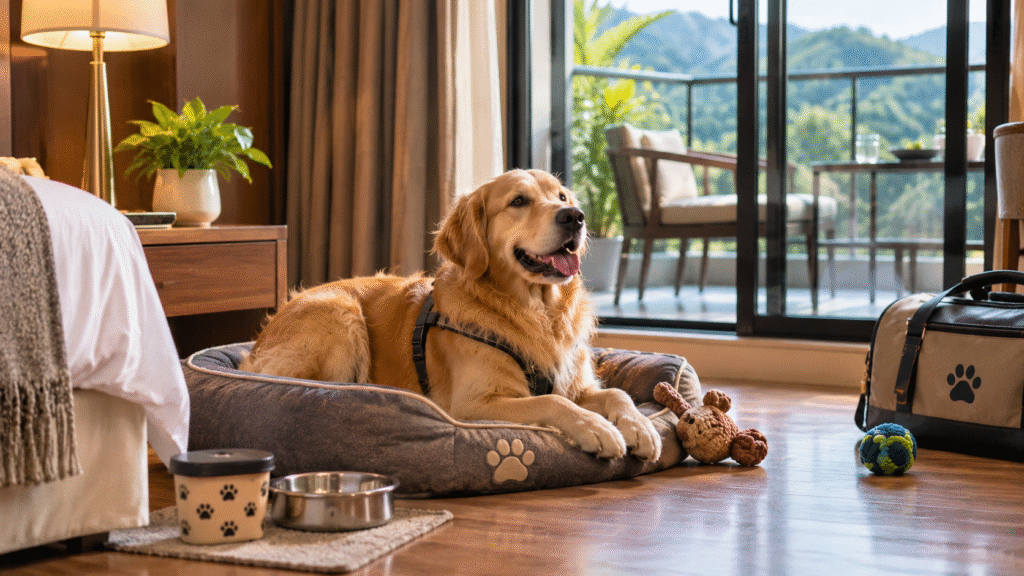
Create a Familiar Resting Area
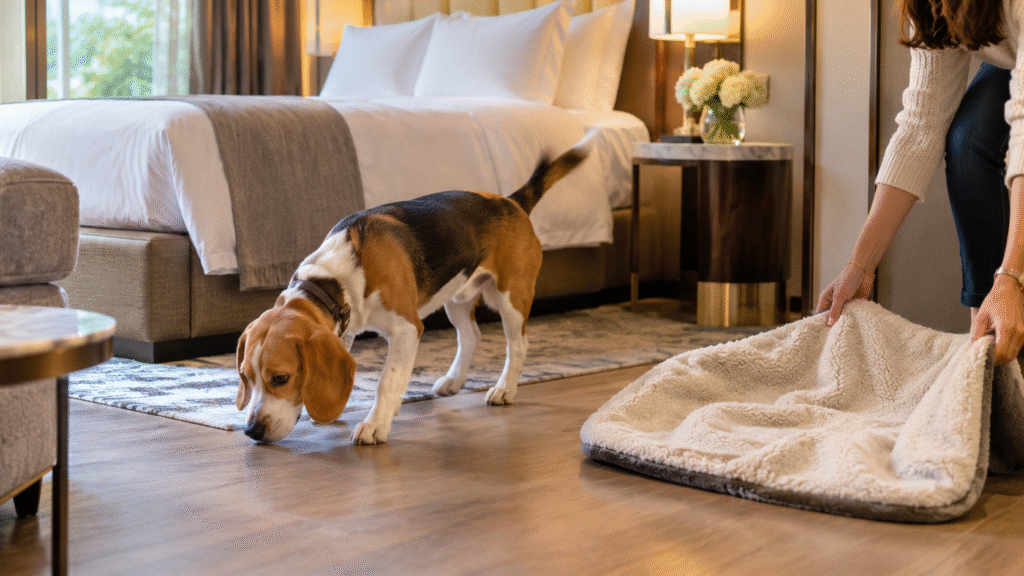
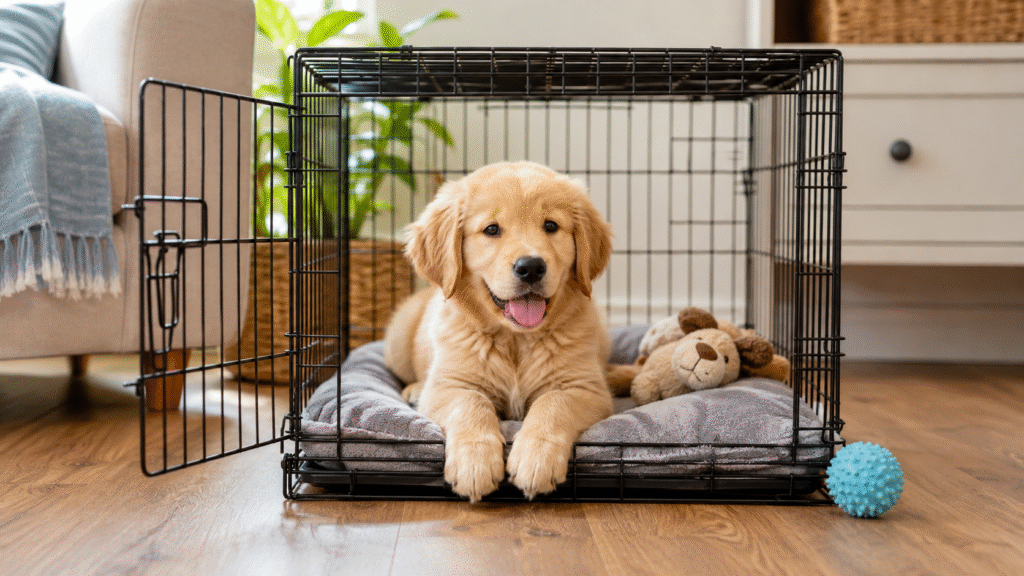
- Bring something your dog already associates with rest at home, such as their usual bed, a familiar blanket, a crate they already use, a favourite toy, or a familiar mat.
- Do not introduce a completely new crate for the first time after reaching the hotel.
- Place the resting area somewhere quiet and, if possible, away from the room door. Avoid placing your dog’s bed directly beside a window overlooking a busy road, courtyard, corridor, or other dogs.
- Show your dog where their water, bed, crate, or mat will be, then give them time to settle without constantly moving things around them.
The aim is to create one part of the room that feels predictable even though everything else is new.
If your dog is not yet comfortable using a crate, start before the trip with our guide to How to Crate Train Your Pet before Travel rather than introducing it for the first time in the hotel.
3. Reduce Noise and Other Hotel Triggers
For many dogs, the biggest problem in a hotel is not the room itself. It is everything happening outside it.
- Footsteps, suitcase wheels, voices, lifts, housekeeping trolleys, doors shutting, and other dogs passing in the corridor can make an alert dog repeatedly rush towards the entrance and bark.
- Try to reduce these triggers instead of constantly correcting your dog for reacting to them.
- Keep their resting area away from the door. If outside movement is visible through glass doors or windows, close the curtains.
- Low-volume television, a fan, or another steady background sound may help soften sudden corridor noises.
- If your dog reacts every time somebody passes, increase the distance between your dog and the door before they become fully worked up.
- If your dog is already overstimulated, avoid adding more stimulation immediately. A busy hotel lawn, crowded café, packed market, or noisy lobby may make it even harder for them to settle afterwards.
4. Keep Your Dog’s Routine Familiar
A new environment becomes easier to handle when the rest of your dog’s day still feels familiar.
- Try to keep feeding times reasonably close to the normal routine.
- Take your dog out for toilet breaks before they become restless and begin pacing around the room.
- A calm walk after arrival can help your dog decompress, but avoid trying to exhaust them in the hope that tiredness will automatically remove anxiety.
- Give them quiet time too.
- Before bedtime, take your dog for a final toilet break, offer water, and set up their usual sleeping area as closely as possible to the way you would at home.
Your dog may take longer than usual to settle on the first night. That is not necessarily a problem. The more predictable the routine feels, the easier it becomes for the unfamiliar room to feel ordinary.
5. What to Do If Your Dog Is Anxious, Pacing or Barking
Some dogs need more time than others to adjust. Signs that your dog is struggling may include:
- constant pacing
- panting when the room is not hot
- whining
- trembling
- repeatedly checking the door
- barking at small sounds
- refusing food
- being unable to lie down and rest
- trying to hide
- following you constantly around the room
If this happens, reduce stimulation. Keep the room quiet, close curtains if outside movement is visible, stay nearby, and allow your dog to settle without repeatedly touching, calling, or giving commands.
A familiar chew or food toy can help some dogs, but do not assume a dog that refuses it is simply being difficult. Dogs under significant stress may not want food.
If Your Dog Keeps Barking
First, work out what is causing the barking.
- If your dog reacts to footsteps or voices outside, move them farther from the door and reduce the sound or visual trigger.
- If they bark because they are unsettled after arrival, give them more time to decompress.
- If they bark only when you leave, the problem may be separation-related rather than the hotel itself.
- Avoid shouting or repeatedly telling your dog off. Punishment does not remove the reason they are barking and may add more stress to an already unfamiliar situation.
- If the barking continues and is disturbing other guests, you may need to remain with your dog, arrange a sitter, change rooms, or alter your plans.
If your dog regularly struggles with travel or unfamiliar places, a pre-travel health check can help rule out pain, nausea, or other problems.
See our guide to Vet Check Before Pet Travel for what to discuss before the trip.
6. Leaving Your Dog Alone in the Hotel Room
One of the biggest mistakes you can make is arriving at a hotel, putting down the luggage, and immediately leaving your dog alone while you go for dinner. Even a dog that stays alone comfortably at home may struggle in an unfamiliar hotel room.
- First, give your dog time to settle while you are there.
- If hotel rules allow dogs to remain alone and your dog normally handles separation well, test a very short absence before leaving for longer.
- Step outside briefly and listen for barking, scratching, whining, or other signs of distress.
- A phone or pet camera can also help you see what happens after you leave.
- If your dog immediately panics, do not keep increasing the time and hope they eventually give up.
- A distressed dog may bark continuously, scratch the door, damage furniture, injure themselves, or trigger complaints from other guests.
In that situation, change your plans rather than forcing the dog to cope.
If You Need to Leave Your Dog for a Short Time
First, check that the hotel actually allows it. If the property permits dogs to remain unattended and your dog is comfortable being alone:
- take them for a toilet break first
- leave fresh water
- remove food, wires, bins, and anything unsafe
- close balcony doors and windows securely
- leave familiar bedding
- reduce outside visual triggers
- place a Do Not Disturb sign on the door
- tell reception and housekeeping that a dog is inside
Do not leave your dog loose in the room if they are likely to panic, destroy furniture, try to escape, or react aggressively when somebody enters.
Inform the housekeeping staff specifically that a dog is inside.
7. Manage Housekeeping, Room Service and the Door
Unexpected door opening is one of the easiest ways for a hotel stay to go wrong. A dog may rush towards an open door, bark at staff, or escape into the corridor.
- Use the security latch when you are inside if the room has one.
- Before opening the door for room service or housekeeping, secure your dog with a leash, put them behind another closed door if one is available, or use their crate if they are already comfortable in it.
- You can also keep the leash attached when you know room service or another necessary interaction is coming, so you can manage the doorway safely.
- If your dog is nervous around strangers, do not ask hotel staff to enter simply to see whether your dog will tolerate it.
You already know the room is unfamiliar. There is no benefit in adding another avoidable trigger.
8. Know When the Hotel Is Too Stressful
Sometimes good preparation is not enough. A hotel may simply be a poor fit for your dog if they cannot settle because of constant corridor activity, nearby dogs, loud music, lifts, crowds, or other unavoidable triggers.
Consider changing rooms or accommodation if your dog remains highly distressed despite having time to settle and a quieter environment.
You should also reconsider future hotel stays if your dog repeatedly:
- cannot sleep or rest
- refuses food or water for an unusual length of time
- pants or paces continuously
- panics when left alone
- becomes increasingly reactive
- tries to escape
- becomes destructive
- shows aggression towards people entering the room
The goal is not to prove that your dog can stay in a hotel.
The goal is to choose accommodation and travel plans your dog can actually cope with.
Final Thoughts
Keeping your dog calm in a hotel room is less about constantly trying to soothe them and more about making the environment easier to handle. Choose a quieter room, give your dog time to explore, create a familiar resting area, keep their routine predictable, and reduce triggers before they escalate.
Most importantly, do not force alone time or hotel situations your dog is clearly struggling to manage.
A hotel stay works best when the room becomes boring, familiar, and uneventful. For many dogs, that is exactly what helps them relax.
Image Disclaimer: Images used in this article are for illustrative purposes only.