Dog motion sickness during car travel can start with subtle signs such as lip licking, drooling, restlessness, or whining before it progresses to vomiting. Preparing your dog gradually, managing food carefully, and knowing when the symptoms are more than ordinary car sickness can make road travel much easier.
Dog motion sickness during car travel is common, especially in younger dogs and dogs not used to travelling by car.
The movement of the vehicle can trigger nausea, while fear or anxiety can make the symptoms worse. Some dogs eventually begin to feel anxious as soon as they enter the car because they associate it with feeling sick.
Watch for the earlier signs of nausea, prepare your dog before longer journeys, and speak to your vet if the problem is frequent or severe.
Signs of Dog Motion Sickness
Vomiting is the most obvious sign, but it is often not the first one. Watch for:
- Excessive drooling
- Repeated lip licking or smacking
- Whining
- Restlessness or pacing
- Panting
- Unusual quietness or lethargy
- Vomiting
- Diarrhoea
If your dog consistently starts drooling, whining, or becoming restless once the car starts moving, motion sickness may be the cause, even if they don’t vomit.
How to Prevent Dog Motion Sickness During Car Travel
Start with short journeys rather than taking a dog who rarely travels straight into a long road trip.
- Let your dog spend a few minutes in the stationary car first. Then try a very short drive and gradually increase the distance over several sessions.
- Keep the car cool and reasonably quiet, and drive as smoothly as possible.
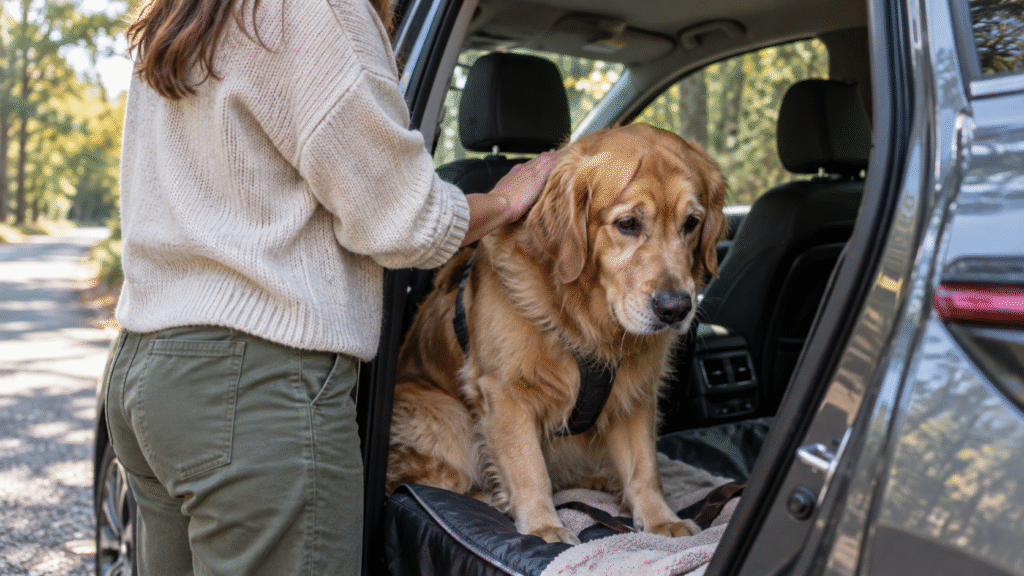
- Secure your dog in a suitable car harness or travel crate so they can’t slide around or move freely inside the vehicle.
- Familiar bedding can also help make the travel space feel less unfamiliar.
Not sure which restraint setup is right for your dog? See our guide to Dog Car Seat Belt vs Harness vs Crate: Which Is Safer?
Should You Feed Your Dog Before a Car Journey?
There is no single feeding schedule that suits every dog.
- A large meal immediately before travelling may make nausea worse in a dog that is prone to motion sickness. However, this does not mean every dog should automatically be fasted for many hours before a journey.
- If your dog has travelled comfortably before, keep feeding reasonably close to their normal routine while avoiding an unusually heavy meal just before departure.
- If your dog has a history of vomiting in the car, ask your vet whether you should adjust the timing or size of the pre-travel meal.
- Always carry fresh drinking water and offer it during suitable stops on longer journeys.
What to Do if Your Dog Starts Feeling Sick in the Car
If you notice heavy drooling, repeated lip licking, restlessness, or other signs that vomiting may be coming:
- Stop somewhere safe when possible.
- Give your dog a short break outside the car on a secure leash and allow them to settle before continuing.
- Do not offer a large amount of food immediately after vomiting.
- If car sickness happens repeatedly, speak to your vet before the next long journey.
- Veterinary anti-nausea medication may help some dogs, but medication should be chosen and dosed by a veterinarian.
- Do not give human travel-sickness medicine unless your vet has specifically advised it for your dog.
Motion Sickness or Travel Anxiety?
The two can look very similar and can occur together.
A dog with motion sickness often becomes uncomfortable after the vehicle starts moving.
A dog with car-related anxiety may show signs before the journey begins, such as refusing to approach the car, trembling, whining, panting, or becoming distressed inside a stationary vehicle.
A dog that repeatedly feels nauseous during travel can also learn to fear the car.
Gradual car training can help break this association. If anxiety remains severe, speak to your vet rather than repeatedly forcing the dog through stressful journeys.
Warning Signs That Need Veterinary Attention
A single episode of vomiting during a car journey is not automatically an emergency, particularly if your dog settles once the vehicle stops.
Contact a veterinarian if vomiting is repeated, your dog becomes weak or unusually lethargic, cannot keep water down, develops persistent diarrhoea, or continues to appear unwell after the journey.
Seek urgent veterinary attention if your dog has difficulty breathing, collapses, has blood in vomit or stool, or repeatedly tries to vomit without producing anything.
Do not assume every episode of vomiting in a travelling dog is motion sickness. Illness, digestive problems, toxins, and other medical conditions can cause similar symptoms.
Before Your Next Car Journey
If your dog gets car sick, prepare before the next trip rather than waiting for symptoms to start.
Use short practice drives, avoid a heavy meal immediately before departure, keep the car cool, secure your dog properly, and watch for early signs such as drooling and lip licking.
If motion sickness continues despite these changes, speak to your vet about the next step before planning a longer journey.
Image Disclaimer: Some images in this article may be AI-generated or digitally enhanced for illustrative purposes.