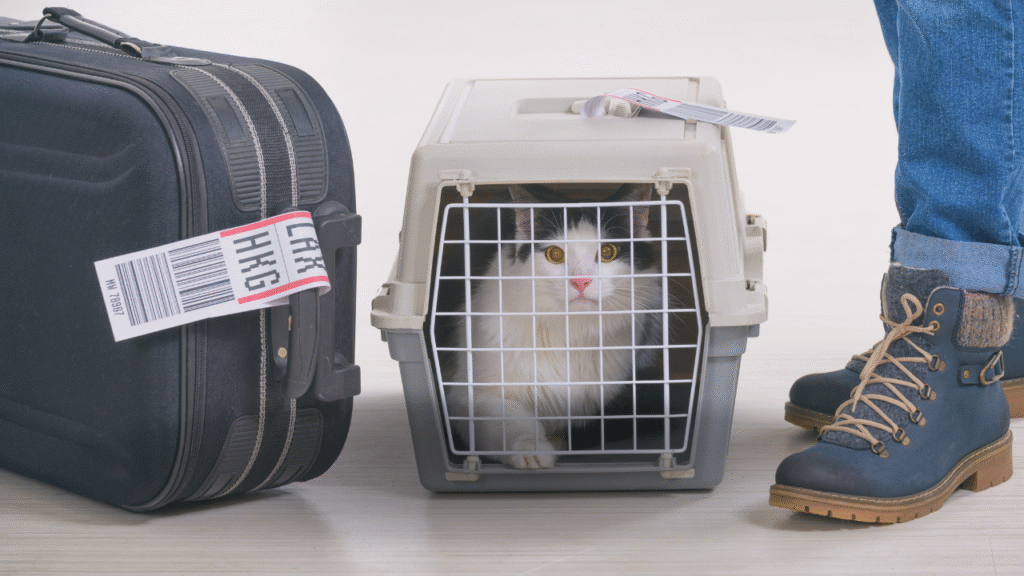
Choosing a dog travel carrier begins with three questions: How large is your dog, how will you travel, and where will the carrier be placed during the journey? Size and comfort matter in every situation, but cars, trains, and aircraft create different safety and handling requirements.
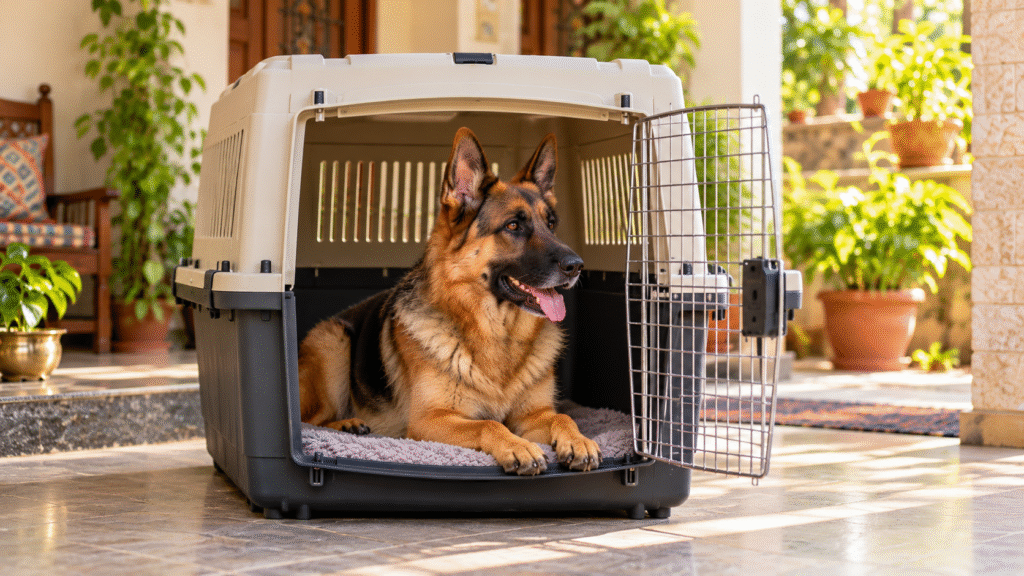
A dog travel carrier is not a bag that holds your pet. It must provide enough space, ventilation, and support, and suit your mode of travel. A carrier perfect for a short car ride may be rejected by an airline, while a bulky flight crate becomes inconvenient at a railway station.
No single carrier works equally well for every dog and every journey. Small dogs travelling in an aircraft cabin need a compact carrier that fits within the airline’s limits. Dogs travelling in the aircraft hold require a rigid kennel. For road journeys, secure installation inside the vehicle is more important than portability.
This guide explains how to choose the right carrier without paying for features you do not need or overlooking the ones that protect your dog.
Dog Carrier for Travel: Match the Type to the Journey
Choose the carrier type according to your travel mode.
| Travel mode | Suitable carrier | Essential feature |
|---|---|---|
| Car | Rigid crate or crash-tested carrier | Secure vehicle installation |
| Train | Soft-sided carrier or hard-sided crate as required | Easy handling and a leak-resistant base |
| Flight cabin | Carrier that meets the chosen airline’s cabin limits | Correct dimensions and ventilation |
| Aircraft hold or cargo | Rigid kennel accepted by the airline | Secure construction and compliant size |
Do not rely on a product listing that describes a carrier as suitable for “all travel.” Check its dimensions, maximum supported weight, ventilation, closure system, and installation instructions.
Dog Carrier Size Guide: Measure Your Dog Before Buying
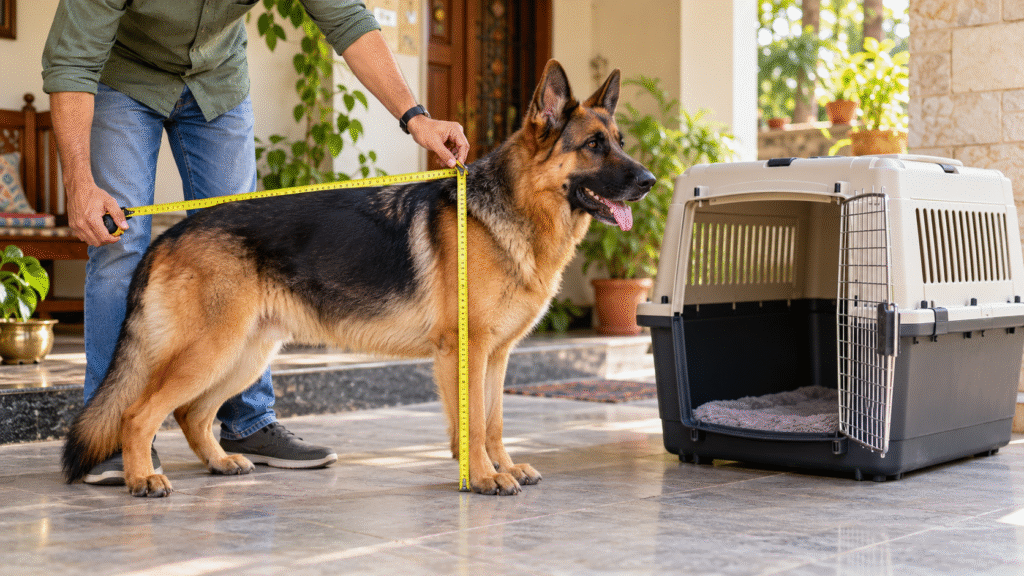
A carrier should allow your dog to stand naturally, turn around, and lie down without being forced into a curled or crouched position. Measure your dog before buying a crate or carrier:
- Measure from the tip of the nose to the base of the tail.
- Measure from the floor to the top of the head or ears, whichever is higher.
- Measure across the widest part of the body.
- Weigh your dog accurately.
Compare these measurements with the manufacturer’s internal carrier dimensions, not only the exterior measurements. Then check the stated weight limit. Sizing varies with brands, so don’t follow the “small,” “medium,” or “large” labels.
For air travel, check the airline’s current carrier limits and use the required container-sizing method before placing an order.
Soft-Sided vs Hard-Sided Dog Carrier
A soft-sided carrier is lighter, easier to carry, and more flexible. It suits small dogs that remain calm inside enclosed spaces. Choose one with a reinforced base, locking zips, strong stitching, and mesh panels that cannot be torn by claws.
A hard-sided dog carrier provides a more rigid structure and is easier to keep stable. It is the appropriate starting point for aircraft hold or cargo travel and for dogs that chew, scratch, or push forcefully against soft fabric.
Backpack carriers and transparent bubble carriers are designed mainly for short periods of carrying. They are not substitutes for a properly sized travel carrier when a dog must remain enclosed for several hours.
How to Choose a Dog Carrier for Car Travel
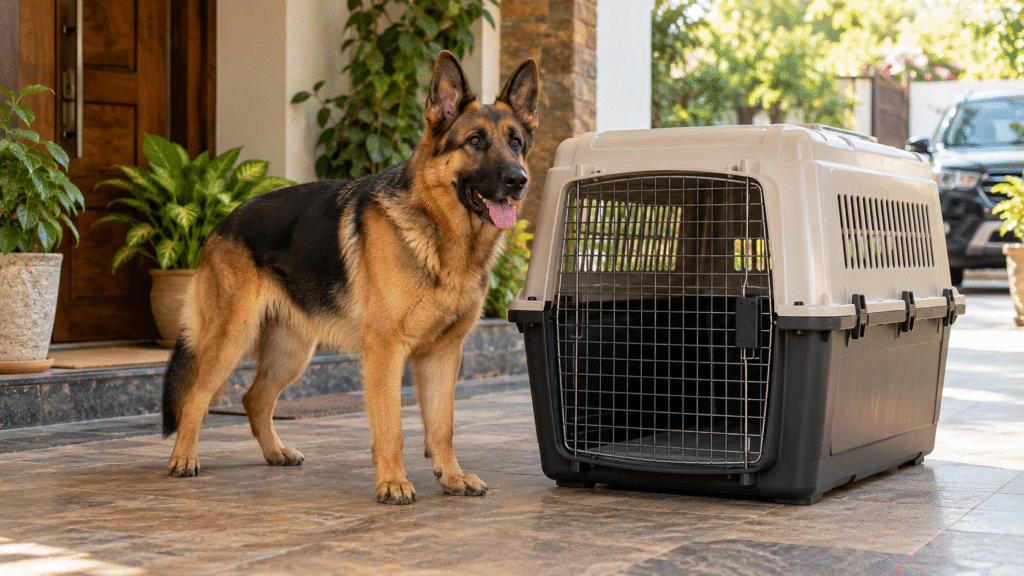
For car travel, choose a carrier designed to remain secured during braking, swerving, and impact. Look for independent crash testing rather than broad claims such as “car-safe.”
Check that the manufacturer provides a specific installation method using a seat belt, anchor system, or vehicle cargo points. A luggage sleeve, shoulder strap, or ordinary carrying handle is not a vehicle-restraint system.
Place the secured carrier on the rear seat or in the vehicle’s designated cargo area as instructed. Do not place it on the front passenger seat, where an airbag can cause serious injury. Choose a dog carrier for car travel with:
- A rigid frame or reinforced structure
- A non-slip, leak-resistant base
- Secure doors or locking zips
- Ventilation on more than one side
- Washable or removable internal padding
- Any internal safety tether should attach to a harness, not the dog’s collar.
Planning a road trip with your dog? Read: How to Plan Pet Travel by Car in India? 10 Things You Need to Know.
Choosing a Dog Carrier for Train Travel
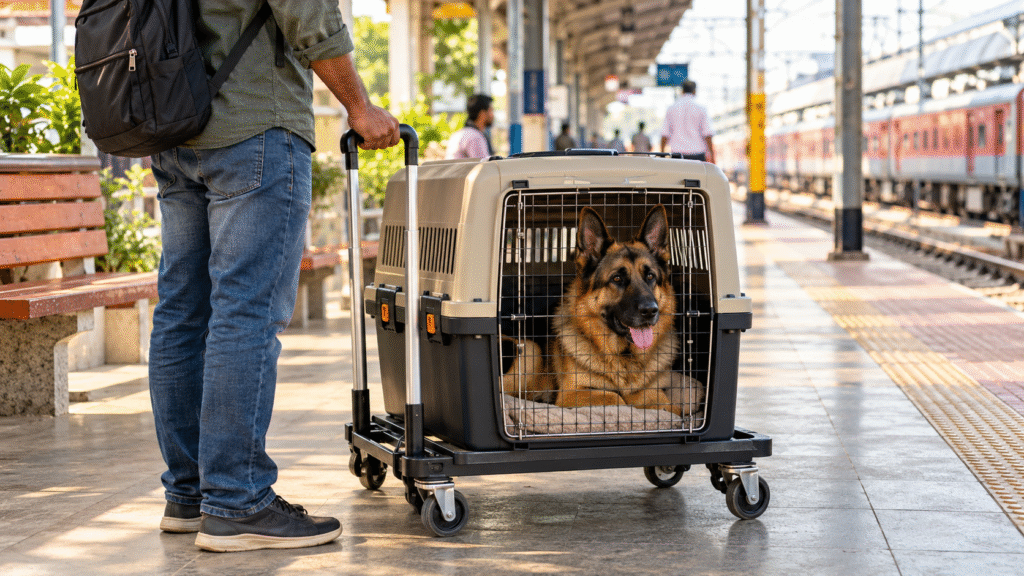
A dog carrier for train travel must be manageable through station entrances, platforms, stairs, and narrow passages. Wheels or a stable trolley attachment help when the combined weight of the dog and carrier is difficult to lift. Strong handles are essential even when wheels are provided.
Choose a carrier with a waterproof or leak-resistant base, washable bedding, and ventilation that remains open when luggage is placed nearby. A top opening makes it easier to check or settle a small dog without fully opening the front door.
Confirm the applicable booking procedure and requirement for your route before purchasing a carrier for a train journey.
Planning a train journey with your pet? Read: Train Travel with Pets in India: Everything You Need to Know
How to Choose a Dog Carrier for Flight
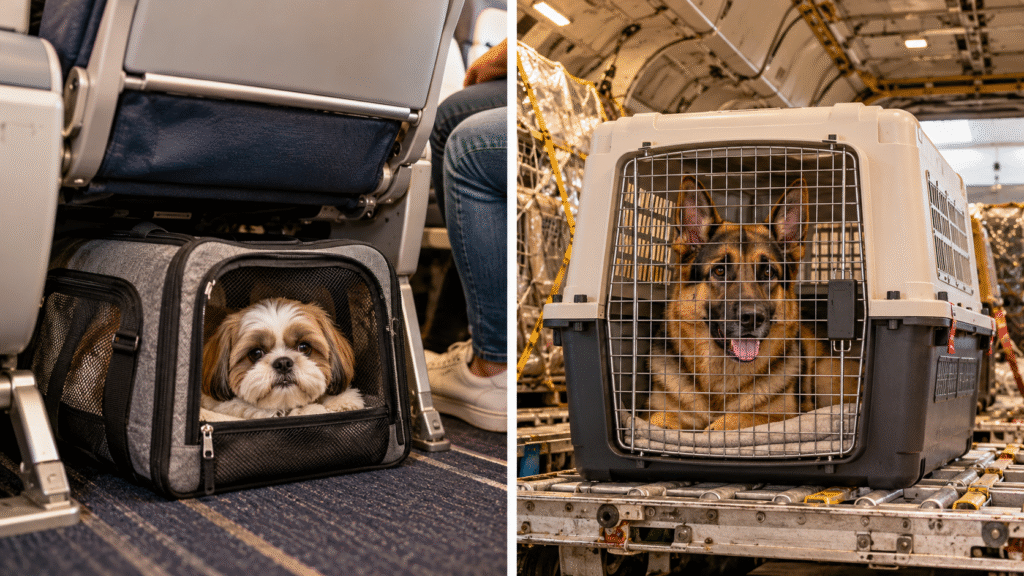
Never buy a dog carrier for flight before choosing the airline and confirming whether the dog will travel in the cabin, aircraft hold, or cargo.
For cabin travel, the combined weight of the dog and carrier and the carrier’s dimensions must fall within the airline’s limits. The carrier must also fit in the required position during the flight. Airline rules differ, and availability can be limited even when the dog and carrier qualify.
For hold or cargo travel, choose a rigid travel kennel that meets the operating airline’s requirements. It needs secure fasteners, adequate ventilation, a leak-proof floor, and enough space for the dog to stand, turn, and lie down naturally.
The phrase “airline-approved dog carrier” is not a universal guarantee. Airlines approve carriers according to their own rules, aircraft, and route requirements. Confirm directly with the airline before travelling.
Related read: Air India and Akasa Air: Which Airline Is Better for Your Pet?
Dog Travel Carrier Buying Checklist
Before buying, confirm that:
- Your dog can stand, turn, and lie down naturally.
- The internal dimensions match your dog’s measurements.
- The carrier supports your dog’s full weight.
- Ventilation remains unobstructed during travel.
- Doors, clips, or zips cannot open accidentally.
- The base is stable, washable, and leak-resistant.
- Handles and straps support the combined weight safely.
- The carrier can be secured correctly in a car.
- The dimensions meet the chosen airline’s current limits.
- Replacement bedding and accessories are available.
- Your dog can practise using it well before the journey.
Related read: How to Crate-Train Your Dog Before Travelling
Frequently Asked Questions
Can one dog travel carrier work for car, train and flight?
One carrier can work for several travel modes only when its size, construction, and installation system meet every applicable requirement. Confirm airline acceptance separately because flight restrictions are the narrowest.
How long before travelling should I buy the carrier?
Buy it several weeks before departure. This gives your dog time to enter it voluntarily, rest inside, and become comfortable with the door closed before facing a long journey.
Should I choose a carrier according to weight or dimensions?
Check both. The carrier must support your dog’s weight, but the dog must also fit comfortably within its internal length, width, and height.
Image Disclaimer: Some images used in this article are AI-generated or digitally created for illustration purposes.