During trips and outdoor travel, pets can face minor cuts, tick bites, stomach upset, heat stress, or motion sickness. A pet first aid kit for travel helps you handle small problems calmly when you are away from your pet’s regular vet. It keeps basic supplies, pet medicines, documents, and emergency contacts in one place so you can act quickly until veterinary help is available.
This guide will help you prepare a travel first-aid kit at home before travelling with your pet. The purpose is to give basic first aid and keep your pet comfortable until you can reach a veterinarian.
Disclaimer: This article is for general pet travel preparation only and does not replace veterinary advice. Do not give medicines, supplements, or treatments to your pet during travel unless your veterinarian has approved them for your pet.
Pet First-Aid Kit for Travel vs Home: What’s the Difference?
You can keep a large and more detailed first-aid box for home. However, for travel choose a compact kit that is easy to carry, quick to open, and arranged so you can find items easily during a stressful moment.
When travelling with pets, your pet’s first-aid kit should be equipped for common travel situations like muddy paws, rough road surfaces, insect bites, small wounds, vomiting, loose motions, motion sickness, heat, long waiting times, and unfamiliar environments. The aim is to carry what is actually useful for travelling.
Why Do You Need A Travel First-Aid kit for Pets
A pet first-aid kit for travel is necessary for almost every journey, especially when your pet will be away from vet and in unfamiliar places for several hours or days. It becomes more important during long road trips, train journeys, flights, monsoon travel, hill station trips, beach holidays, resort stays, farm stays, outdoor stays, or relocation to another city.
I would be extra careful when travelling with a very young pet, elderly, anxious, recovering from illness, or a pet taking regular medication. In these situations, a well-prepared kit can help in managing small problems calmly until you reach a veterinarian.
Start With Your Pet’s Personal Health Needs
Before packing supplies, it is useful to consider your pet’s actual health profile. A Labrador going on a road trip, a Persian cat travelling by train, and a senior dog staying at a resort will not need the exact same kit. It is useful to carry a short note with your pet’s medical details:
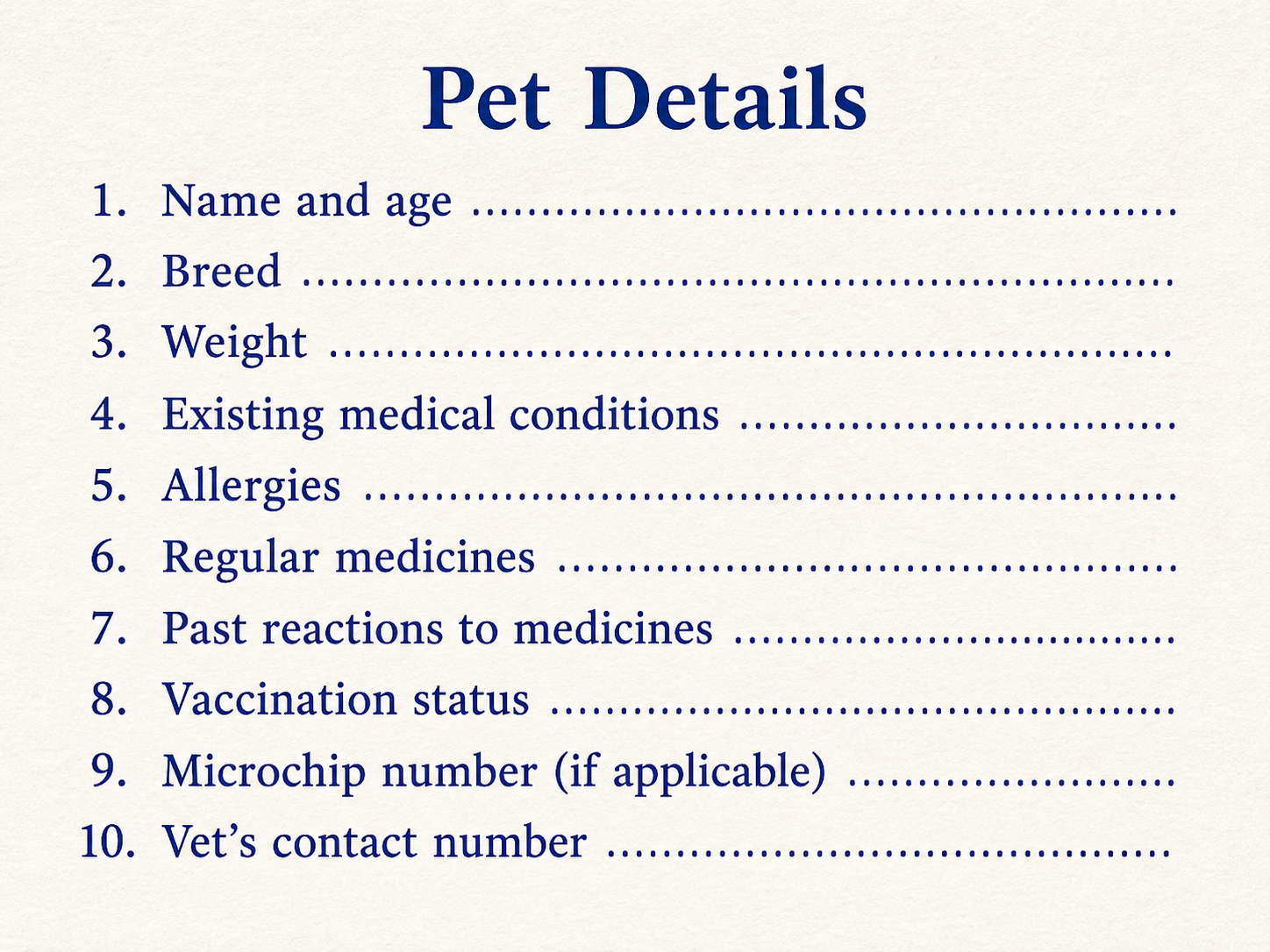
This one-page note can help another veterinarian understand your pet quickly during an emergency.
Pet First-Aid Kit for Travel
1. Basic Items
Your pet travel first-aid kit should include simple wound-care supplies for common issues like small cuts, scratches, paw injuries, and skin irritation. It will help you clean and cover the area until a vet checks it. Include these:
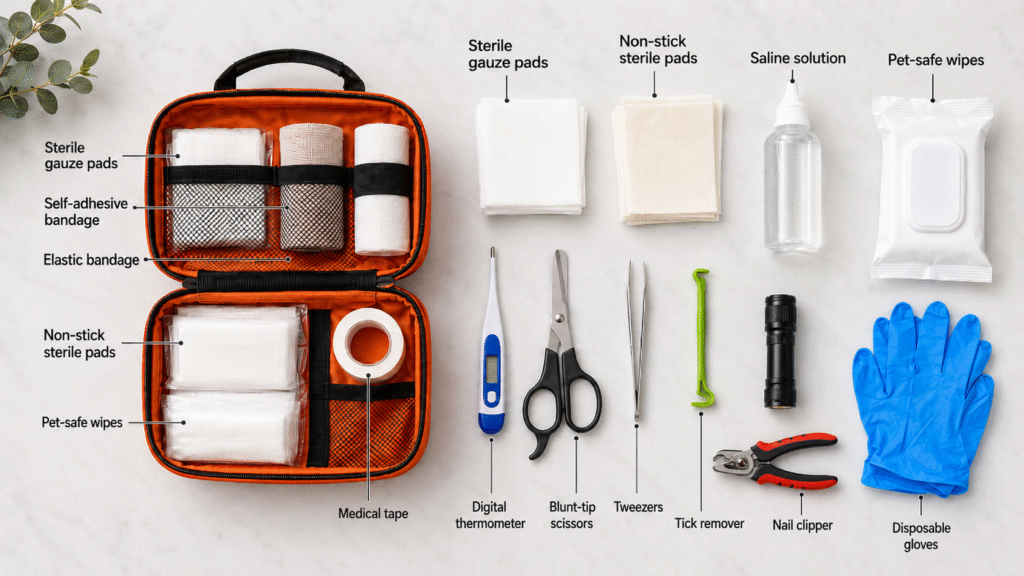
- Sterile Gauze Pads: Carry sterile gauze pads in small, sealed packs. They are useful for covering minor wounds, absorbing blood, or protecting an injured area until a vet checks your pet.
- Non-Stick Sterile Pads: Non-stick pads are useful for wounds because they do not cling to the injured skin as strongly as regular gauze. They are helpful when you need to cover a cut before reaching a clinic.
- Self-Adhesive Bandage: A self-adhesive bandage helps hold gauze or padding in place without using too much tape. It is useful during travel because it stays better during movement, but it should not be wrapped tightly.
- Elastic Bandage: An elastic bandage can give temporary support during minor strains or sprains. Use it carefully and remove it if there is swelling, discomfort, or reduced movement.
- Medical Tape: Carry a small roll of medical tape to secure gauze or bandages. A compact roll is enough for travel.
- Antiseptic Wipes: Veterinary-safe antiseptic wipes help clean small scratches, paws, or minor skin injuries. Choose pet-safe products and avoid harsh human antiseptics unless your vet has approved them.
- Saline Solution: Small sterile saline bottles are useful for gently rinsing minor wounds, dust from paws, or debris near the eyes. Travel-sized squeeze bottles are easier to carry than large bottles.
- Tweezers or Tick Remover: Tweezers can help remove small splinters or thorns. For ticks, a proper tick remover is safer because it helps remove the tick without squeezing it.
- Small Scissors: Blunt-tip scissors are useful for cutting gauze, tape, or bandage material. Keep them covered and packed safely.
- Disposable Gloves: Gloves help protect both you and your pet while cleaning wounds or handling body fluids. Carry a few pairs in sealed packing.
- Digital Thermometer: A small digital thermometer can help you check if your pet has fever during travel. Ask your vet how to use it correctly and what temperature range is normal for your pet.
- Flashlight: A small flashlight helps you check paws, ears, mouth, skin, or wounds in low light. It is useful during night travel, roadside stops, and hotel emergencies.
Use these only for basic cleaning and temporary covering. Do not wrap bandages tightly, and do not apply strong human antiseptics unless your veterinarian has approved them.
2. Tools for Small Travel Emergencies
A few small tools can help during common travel situations without making the kit bulky. Carry:
- Tweezers for small splinters or thorns
- Tick remover for outdoor trips
- Blunt-tip scissors for cutting gauze or tape
- Digital thermometer
- Small flashlight
- Nail clipper, only if you know the proper way to use it.
A tick remover is especially useful for resort stays, gardens, farm stays, hill areas, and outdoor walks. If you find a tick remove it cleanly, don’t crush it, clean the area and check afterwards for redness or swelling.
3. Medicines to Pack Only After Vet Approval
Do not pack human medicines for pets. Many common human painkillers and fever medicines are unsafe for dogs and cats. Ask your veterinarian about pet specific medicines for:
- Motion sickness
- Vomiting
- Loose motions
- Allergic reactions
- Pain or inflammation
- Anxiety during travel
- Existing medical conditions
You have to be extra careful for pets on regular medication. Carry enough medicines for the full trip plus extra for delays. Keep medicines in original packaging to avoid damages from heat and humidity and write dosage instructions on the pack for ease. Carry prescriptions or a vet note when travelling with regular medication.
Before packing medicines or travel supplements, read: Does Your Pet Need a Vet Check Before Travel?
4. Pet First-Aid Kit Items for Heat, Monsoon, and Outdoor Stays in India
Heat, rain, dust, humidity, and outdoor insects can affect pets during travel.
For summer or hot-weather travel, carry oral rehydration if your vet has advised it, a cooling mat or towel and extra water. Keep a watch for heavy panting, weakness, drooling, vomiting, or sluggishness, as these signs need urgent veterinary attention.
For monsoon travel, carry extra towels, antiseptic wipes, paw-cleaning supplies, dryer and a waterproof pouch for documents and medicines. Wet paws and damp fur can irritate the skin if not dried properly.
For outdoor stays, carry tick-removal tools and sprays, gloves, a flashlight, and your vet-approved flea and tick protection.
Documents to Keep Inside the Kit
Pet documents may seem excessive for a first-aid kit, but during an emergency, they can save time and prevent confusion. Keep copies of:
- Your pet’s vaccination records
- Rabies vaccination certificate
- Recent health or fitness certificate, if required for the trip
- Medical history summary
- Current prescriptions
- Pet photos
- Owner contact details
- Microchip details, if applicable
- Emergency vet contacts near your destination
Copies of documents are sufficient for the first-aid kit. Keep originals separately if they are required for flights, trains, hotels, or relocation.
Planning a trip with your pet? Read our guide on documents required for pet travel in India.
Where to Keep the Kit During Travel
For road trips, keep the kit inside the car cabin, not buried under luggage in the boot. You should be able to reach it during a roadside stop.
For train journeys, keep the kit in your personal bag along with your pet’s documents and water. Do not pack emergency items in a bag that is difficult to access.
For flights, check airline rules before packing scissors, liquids, medicines, and grooming tools in cabin baggage. Keep essential documents and prescriptions accessible.
For hotel stays, place the kit in one fixed spot so everyone travelling with you knows where it is.
How to Choose the Right Container
Soft sided pouches are more convenient for travel than hard boxes. Choose a pouch that fits easily in your carry bag and is easy to open and use. A waterproof pouch is a good choice as it works in all seasons and travel conditions and keeps the medicines, bandages, and documents safe. Select a kit with:
- Clear compartments
- A separate medicine section
- Space for documents
- Strong zip or latch
- Bright colour or clear label
- Compact size
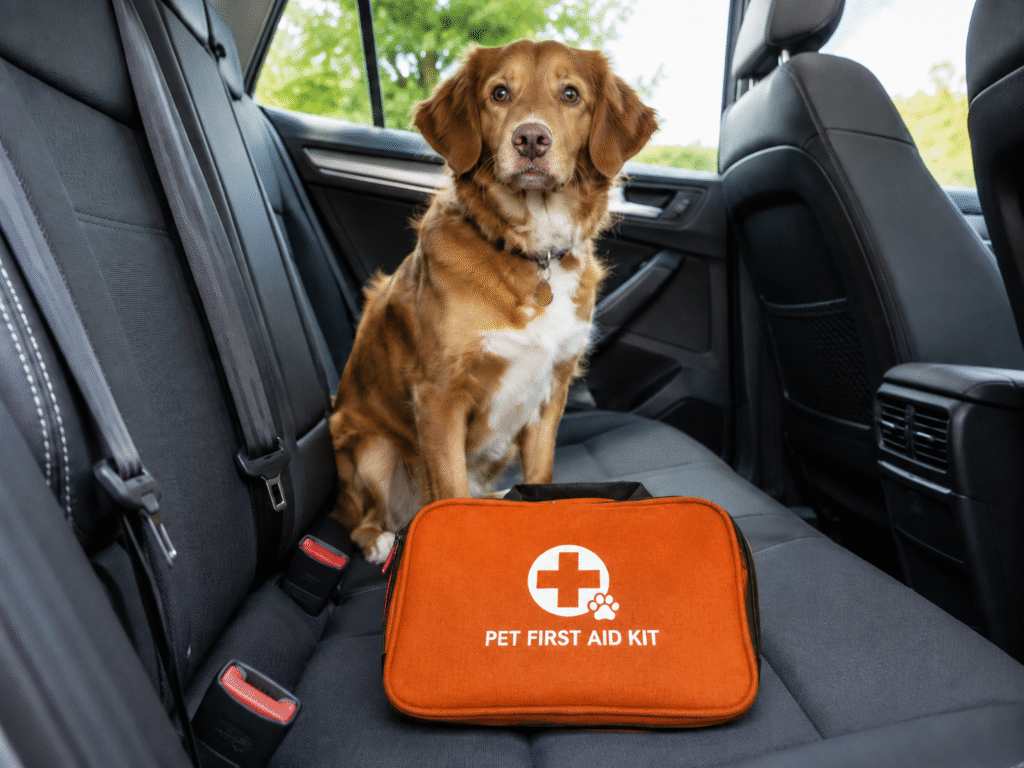
Label it clearly as Pet First Aid Kit so you can find it quickly.
Emergency Contacts to Prepare Before Travel
Save veterinary contacts near your destination before leaving. Save the details in your phone and write clearly on a paper and keep it in the first-aid kit. Do not wait for an emergency to search for a vet. Save these:
- Your regular vet’s number
- One 24-hour veterinary clinic near your destination
- One clinic near your hotel or stay
- One clinic along the road route for long drives
- Pet taxi or local transport contact if available
What Not to Use Without Veterinary Advice
Some products can harm pets if used incorrectly. Keep these out of the kit unless your vet has specifically advised them for your pet:
- Human painkillers
- Human fever medicines
- Human antiseptic creams
- Random antibiotics
- Sedatives
- Anti-anxiety medicines
- Hydrogen peroxide
- Activated charcoal
- Steroid creams
- Essential oils
Unless you are a certified veterinarian, avoid using random lotions and medicines on your pet.
You May Also Like
Pet First Aid Kit for Travel Checklist
▢ Sterile gauze pads
▢ Non-stick sterile pads
▢ Self-adhesive bandage
▢ Elastic bandage
▢ Medical tape
▢ Pet-safe antiseptic wipes
▢ Saline solution
▢ Disposable gloves
▢ Tweezers
▢ Tick remover
▢ Blunt-tip scissors
▢ Digital thermometer
▢ Flashlight
▢ Nail clipper, if needed
▢ Regular medicines
▢ Vet-approved travel medicines
▢ Prescription copies
▢ Vaccination records
▢ Health certificate copy, if required
▢ Medical history summary
▢ Pet photos
▢ ID and microchip details, if applicable
▢ Emergency vet contacts
▢ Waterproof pouch or box
Final Travel Tip
Check the kit before every trip. Replace expired medicines, dried wipes, damaged bandages, and outdated documents. Also update your emergency contacts when travelling to a new city.
A well-packed pet first aid kit for travel gives you one quiet advantage during a stressful moment: you are not starting from panic. You already have the basics ready, and that can make the journey safer for your pet.