If you’ve ever tried to plan a trip with your pet, you’ve probably faced the endless loop of fake “pet-friendly” tags, clueless airline staff, and hotels that answered ‘yes’ to everything until you arrive at the reception desk. Pet travel in India is a logistical and emotional battlefield.
However, it is possible to travel smoothly with pets. But here’s the difference between those who get stuck and those who travel smoothly: the second group of travellers know what to expect and they plan.
This is that plan.
1. Hotels: Pet-Friendly on Paper, Complicated at Check-In
The Truth:
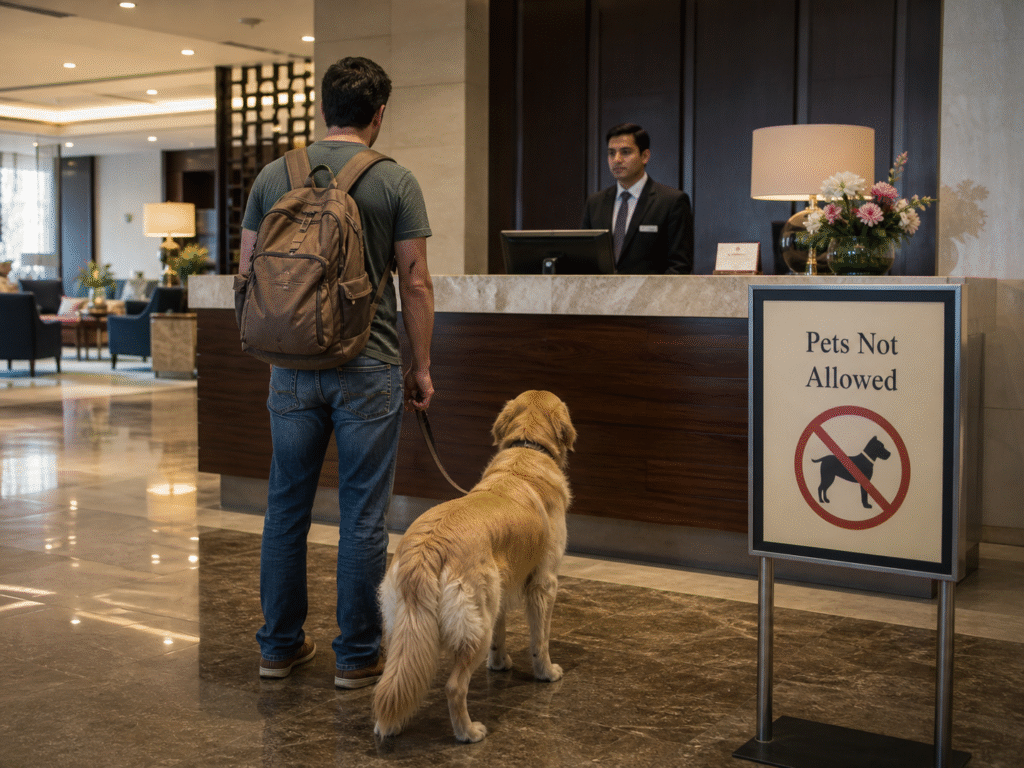
Hotels love the “pet-friendly” label. It makes them look progressive. But in reality of pet travel in India :
- They’ll allow your pet on the property, but not in the rooms.
- Large dogs? “Not allowed.”
- Cats? “We don’t allow cats, sir/madam.”
- Hidden cleaning fees will appear after you’ve checked in.
How to Beat It:
Call them directly before booking; don’t rely on booking platforms. Ask the 4 basic questions:
- Can my pet stay inside the room with me?
- Are there any extra cleaning charges or pet fees? Confirm the exact amount.
- Are pets allowed in common areas?
- Do they provide bedding, bowls, etc.?
Get a WhatsApp Confirmation with their answers in writing. It is non-negotiable.
If you sense hesitation (you can detect the tone or reluctance in their voice over the call), skip them. You don’t want half-baked pet policies.
2. Airlines: Written Policy and Airport Reality Are Not Always the Same
The Truth:
- Only a few airlines like Air India, Akasa Air, and SpiceJet have pet policies.
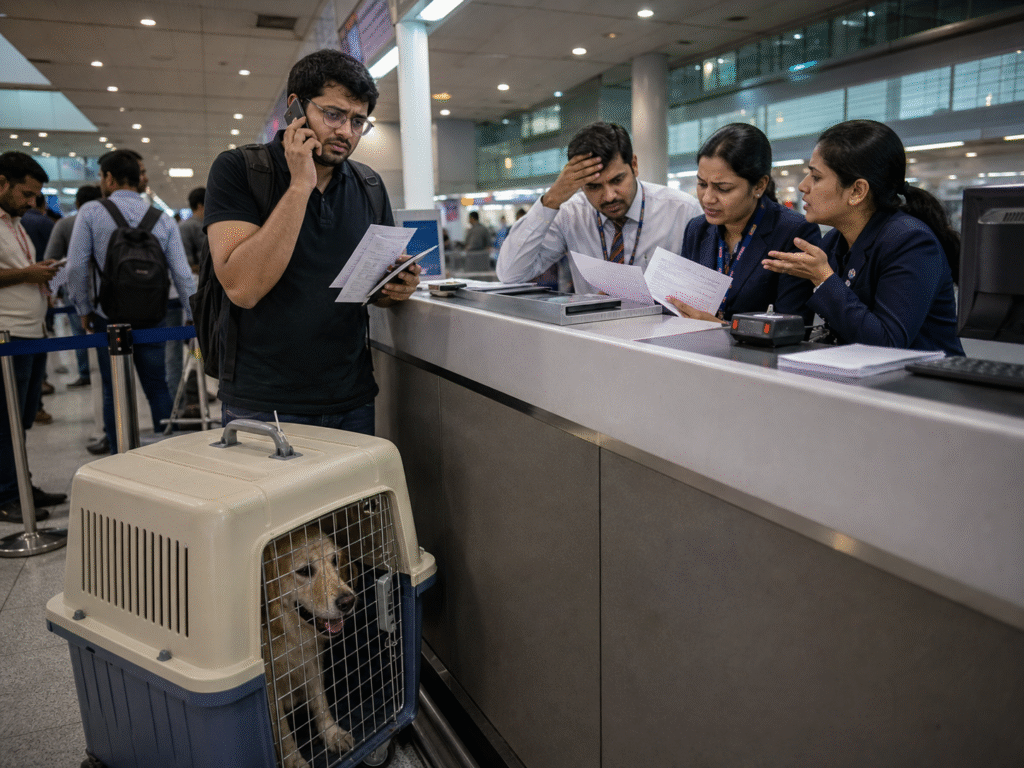
- Online booking is NOT an option. You must call customer service, follow up, and still face surprises at the airport.
- Airport staff are often unaware of their own pet travel procedures.
- Carrier requirements are never clearly communicated until check-in, when it’s too late.
How to Beat It:
- Contact Customer Service: Learn about the official process.
- Confirmation Email: Always ask for a confirmation email with the booking reference.
- 48 Hours Before Flight: Call the airline again, reconfirm details.
- Get the Carrier Right: Look for IATA approved pet carrier.
✈ Only IATA-approved hard-shell crates are accepted.
✈ Soft carriers will be rejected at check-in, no exceptions.
✈ Your pet must be able to stand, turn around, and lie down comfortably inside.
✈ Leak-proof bottom. Pee pads alone don’t count as leak-proof.
✈ Ventilation on minimum 3 sides.
✈ Most local shops don’t stock IATA-approved crates.
✈ Where to buy: Import from Amazon global or specialised pet stores.
- At Check-in: Carry a printed version of their pet policy, your confirmation email, and a calm, firm attitude.
- Backup Plan: Always have a plan in case they refuse; reschedule options, pet-friendly road transport, etc.
3. Train Travel: Yes It’s Possible, No It’s Not Simple
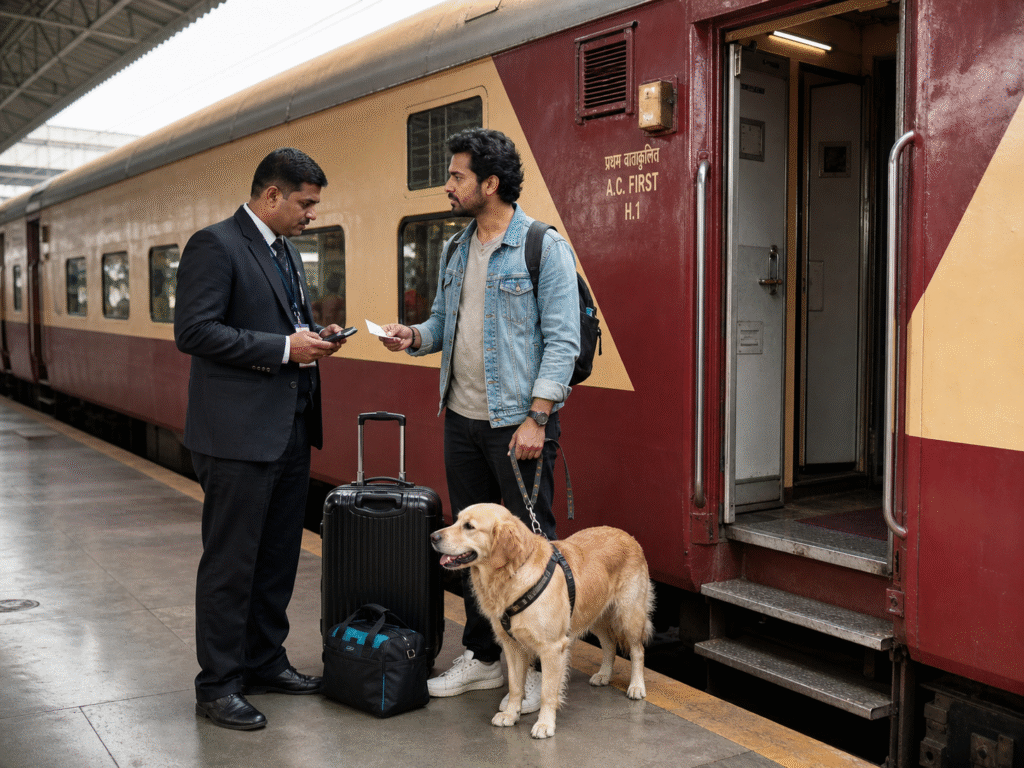
The Truth:
Train travel with pets is possible as Indian Railways, technically allows pets.
- Pets ARE allowed in AC First Class compartments and some AC coupes.
- You have to book the entire coupe/cabin for yourself.
- Pet ticket is charged as luggage (weight-based, much cheaper than flights).
- Staff enforcement is wildly inconsistent, some TTEs don’t even know the rules.
How to Beat It:
- Book AC First Class and reserve the entire cabin for privacy and space.
- Carry a printed copy of Indian Railways’ pet policy. You will need to show it to the TTE.
- Arrive at the station early. Convincing staff takes time and patience.
- Longer routes (8+ hours overnight journeys) work better than short day trips. You will face less scrutiny and fewer passengers noticing.
- Avoid peak travel seasons and weekends, crowded trains mean more complaints from co-passengers.
Reality: This option is best for calm, crate-trained dogs. If your pet panics in confined spaces, skip trains and flights entirely.
4. Cabs & Local Transport: Drivers Decide More Than the App
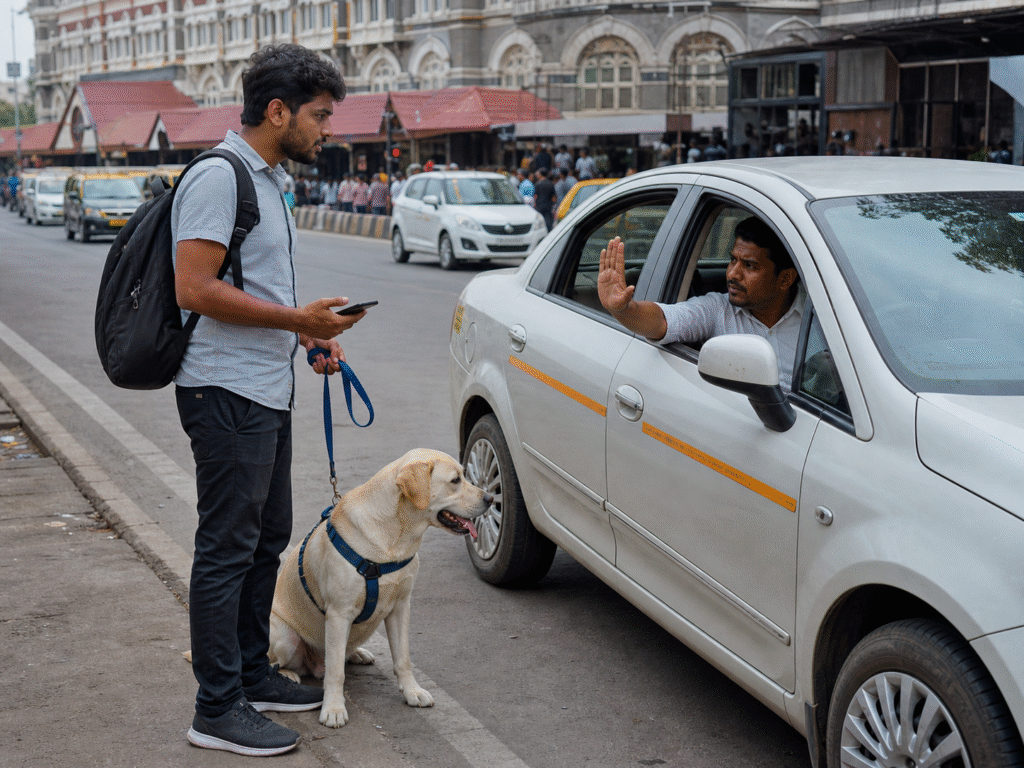
The Truth:
- Ola doesn’t officially offer “pet rides.” Drivers often reject pets. Uber provides separate pet rides at a higher cost, but only in a few cities.
- In smaller cities, you’ll need prior arrangements with individual drivers.
- Auto drivers are hit or miss; many refuse to carry pets openly.
How to Beat It:
- Always call the driver after booking and inform them upfront.
- Ask them: “I’m travelling with my pet (small dog/cat). The pet will be in a carrier and won’t cause trouble. Is it okay for you?”
- If they hesitate or refuse, cancel immediately and rebook. Don’t argue.
- Pet Taxi Services: In metro cities like Delhi, Mumbai, Bangalore, and Pune, local pet taxi services exist. They cost more but are reliable. Book in advance.
- Build Your Own Contact List: Find 2–3 cab drivers who are okay with pets. Save their numbers. Use them every time.
5. Documents You Didn’t Know You Needed for Pet travel in India
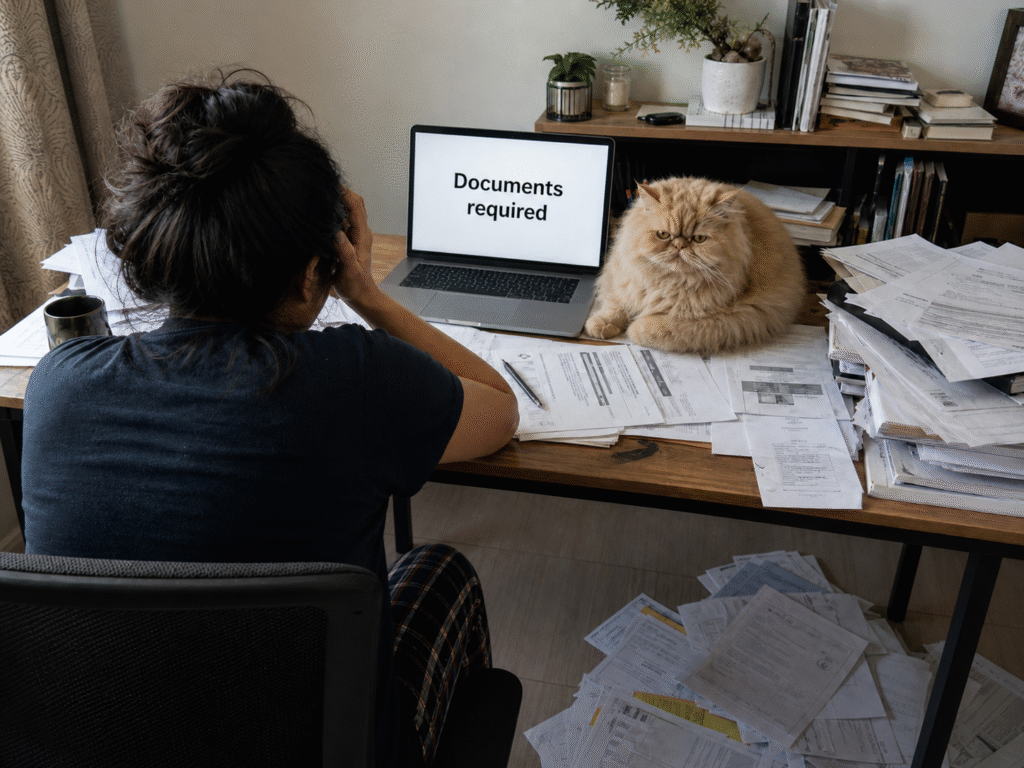
The Truth:
- Airlines, hotels, and even some state borders ask for documents that no one tells you about upfront.
- Most first-time travellers get stuck at the airport because they didn’t know the fitness certificate expires in 10 days.
How to Beat It:
For Domestic Flights:
- Fitness certificate from a registered vet (valid for only 10 days from issue date).
- Anti-rabies vaccination certificate (must be at least 21 days old before travel).
- No Objection Certificate (NOC)- format varies by airline. Ask them to send you the template.
- Carrier dimensions certificate – some airlines demand proof your crate meets size rules.
For Hotels:
- Vaccination card (premium hotels and resorts often request this).
- Pet ID if microchipped (rarely asked but some properties do check).
For Interstate Travel:
- Some state borders require veterinary health certificates for pet travel in India.
- Keep all vaccination records handy for random checks by authorities.
Pro Tip: Get your fitness certificate 3–5 days before travel. Don’t wait until the last day. Vets get backlogged, especially on weekends.
6. Public Spaces: Mostly Not Pet-Ready
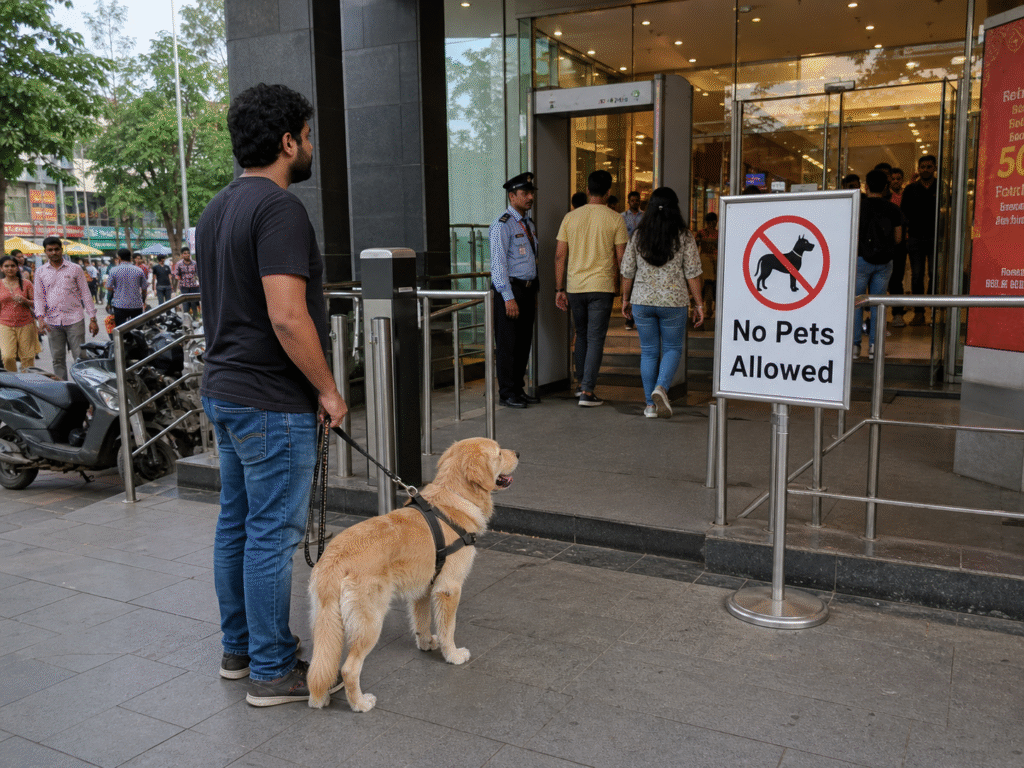
The Truth:
- Parks, malls, and public transport (buses, metros) mostly ban pets outright.
- Pet-friendly cafes often allow pets only in outdoor seating areas or require them to be leashed and tied to a post.
- Even “pet-friendly” cafes have staff who visibly don’t want your pet there.
How to Beat It:
- Research Hyperlocal Options: Use Instagram geotags, Google reviews, and call places directly. Don’t trust listings.
- Ask for Photos of the pet area before visiting. Outdoor seating in summer heat or Monsoon is not the same as outdoor seating in February.
- Portable Pet Essentials: Carry your own water bowl, pet mat, poop bags, and clean-up wipes. Don’t rely on the venue to provide anything.
- Offbeat Locations Work Better: Homestays, farm stays, and boutique properties are far more flexible than corporate hotel chains or popular tourist cafes.
7. The Human Factor: Dealing with Unspoken Hostility
The Truth:
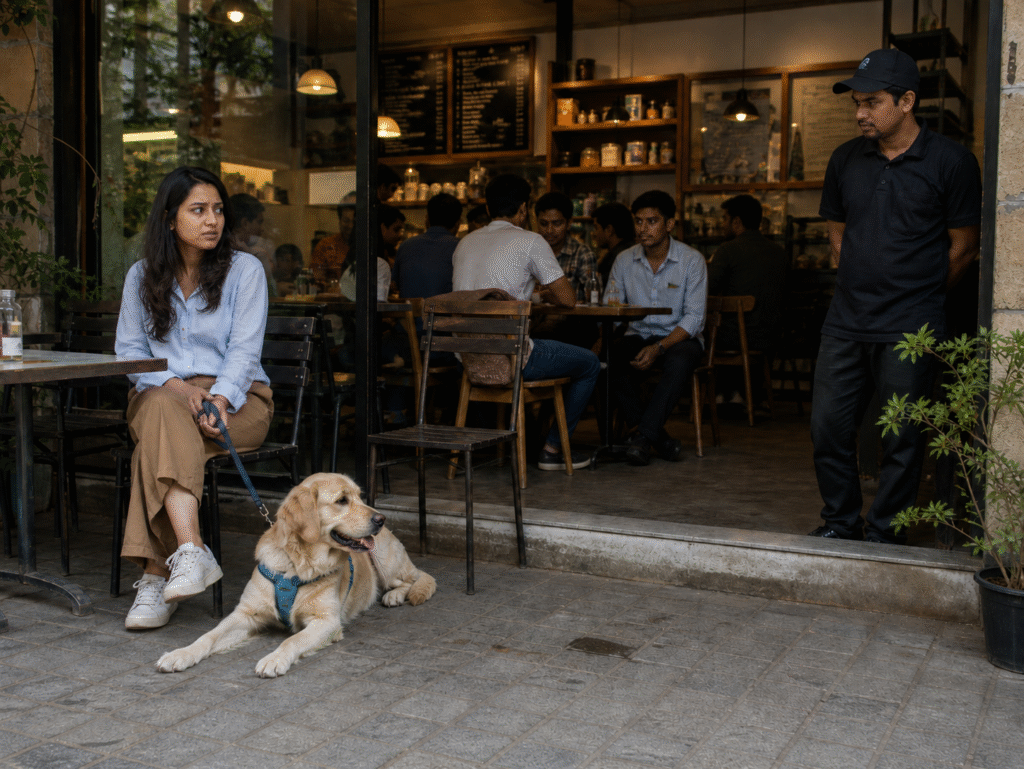
- The biggest hurdle isn’t policies, it’s people’s attitudes.
- Hotel staff, cab drivers, even co-passengers often treat pets as “dirty,” “unhygienic,” or “unwanted.”
- You’ll be asked to keep your pet outside, or hit with passive-aggressive “rules” that were never mentioned during booking.
How to Beat It:
- Stay Calm, Collaborative, and Prepared while travelling with pets.
- Keep few sentences handy: “I’ve confirmed the pet policy with your team earlier. / I have the confirmation here if needed. / I’ve brought my pet’s bedding and sheets. / I’ll make sure the room is left clean. / Please let me know if there’s anything you need from my side.”
- This positions you as a responsible guest, not a defensive one. Staff respond better to collaboration than confrontation.
- Always Carry Proof: WhatsApp screenshots, email confirmations, booking references; have them ready on your phone.
- Bring Your Pet’s Bedding: Use your own sheets and mats to avoid conflicts over furniture. It also reduces the “damage” argument later.
- Don’t Argue, Reframe: If they bring up a rule that wasn’t mentioned before, calmly say: “This wasn’t communicated during booking. I have the written confirmation here. Can we find a solution?”
Reality: You will face bias. It’s exhausting. But preparation and a calm tone get you further than anger.
8. Travel Costs: Often Higher Than Expected
The Truth:
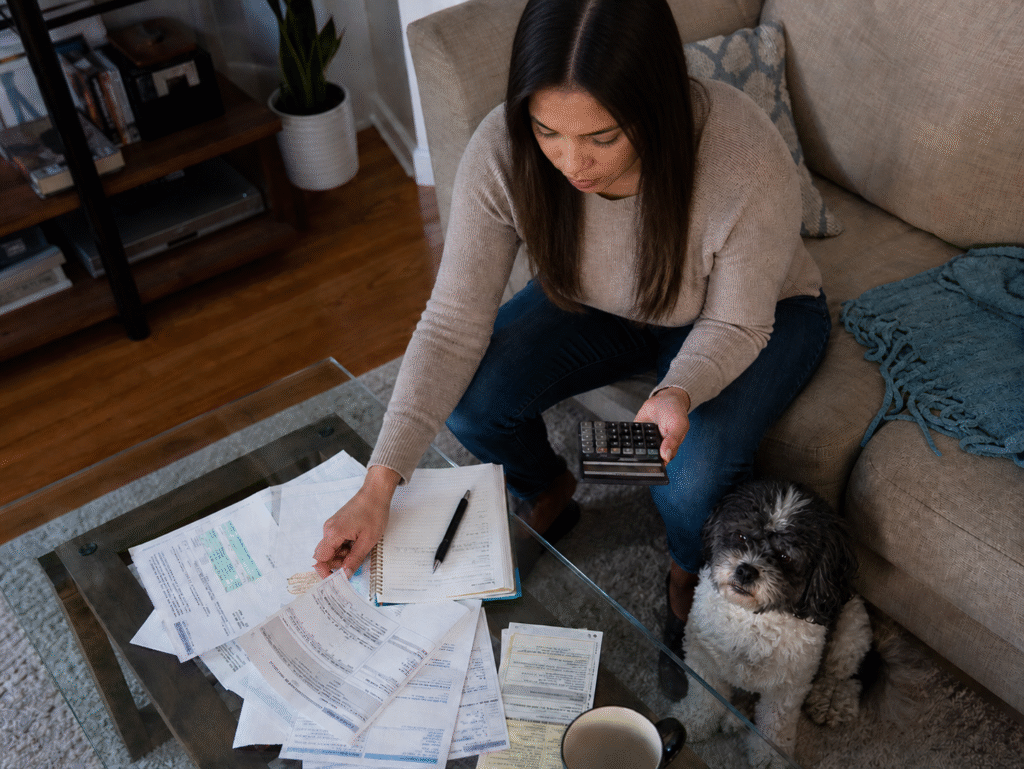
- Pet flight tickets are charged per kg, including the carrier’s weight. A 10 kg dog in a 5 kg crate = ₹15,000+ on some routes.
- Hotels demand extra “deep cleaning” charges that aren’t mentioned on their website.
- Cabs quietly add a “pet surcharge.”
- Vet documentation, emergency supplies, and last-minute pharmacy runs add up fast.
How to Beat It:
- Prepare a Pet Travel Budget before booking anything. Assume the pet travel costs 20–30% more than the solo travel costs.
- Negotiate Fees Upfront: Ask hotels and cabs for the exact pet fee before confirming. Get it in writing.
- Carrier Weight Counts: Buy the lightest IATA-approved crate you can find. Every kg counts for flight charges.
- Carry a DIY Pet Medical Kit: Basic wound care, anti-nausea tablets, allergy meds, paw balm. Avoid last-minute pharmacy hunts in unfamiliar towns.
- Always Ask for Itemised Bills: Hotels love to slip in random “pet cleaning” charges. Question everything.
9. Medical Emergencies: You’re Often On Your Own

The Truth:
- Outside metro cities, finding a 24×7 vet clinic is nearly impossible.
- Emergency support is patchy. Even basic pet pharmacies are rare in smaller towns.
- If your pet has a health crisis at 2 am in a hill station, you’re alone.
How to Beat It:
- Pre-Trip Vet Check: before travelling with pet, ensure all vaccinations are up to date and get a health clearance. Address any existing issues before you leave.
- Carry Emergency Medications: Anti-vomiting tablets, wound disinfectant, bandages, allergy meds, tick removal tools.
- Map the Nearest Vet Clinics in Advance: Use Google Maps to locate vets near your hotel or resort. Save their contact numbers before you even leave home.
- Have Your Regular Vet on Speed Dial: For remote guidance if something goes wrong. A phone consult can save your trip.
- Travel Insurance for Pets: Rare in India, but some international policies cover emergency vet costs abroad. Research options if you’re a frequent traveller.
10. Mistakes That Can Ruin Your Trip
Don’t make these rookie errors:
❌ Trusting online “pet-friendly” tags without calling the property directly.
❌ Booking flights online and assuming your pet is automatically included.
❌ Not calling the cab driver after booking to confirm they’re okay with pets.
❌ Arriving at the airport without a printed copy of the airline’s pet policy.
❌ Skipping the vet checkup before pet travel because “my pet seems fine.”
❌ Not budgeting for pet charges. They are ALWAYS higher than initially quoted.
❌ Leaving your pet unattended in the hotel room. Staff will notice. Complaints will follow.
❌ Assuming small towns and tourist spots have vet clinics. They don’t.
Pre-Trip Checklist: Don’t Leave Home Without These
1.Documents:
- Fitness certificate from registered vet (valid 10 days for flights)
- Anti-rabies vaccination card (minimum 21 days old)
- Airline NOC / booking confirmation email
- Hotel WhatsApp confirmation screenshot
- Vet prescription if your pet is on medication
2.Carrier/Gear:
- IATA-approved hard-shell crate (for flights)
- Leash + backup leash
- Collapsible water bowl
- Pee pads (carry 4–6 for long journeys)
- Pet’s bedding or blanket (familiar scent reduces anxiety)
- Poop bags and cleaning wipes
3. Medical Kit:
- Anti-nausea medication
- Wound disinfectant and bandages
- Allergy tablets
- Tick removal tool
- Any prescription meds your pet is on
4. Emergency Contacts:
- Your regular vet’s phone number saved
- Nearest vet clinic at your destination (address + phone number)
- Pet-friendly cab driver contact (if you have one)
- Airline customer service number
- Hotel front desk direct number
Final Words: It’s Tough, But It’s Doable, If You’re Prepared
Traveling with pets in India is not luxury, it’s about planning and strategy.
Most pet parents struggle because no one warned them about the gap between policy and reality.
You now have the plan:
✔ Confirm everything in writing, WhatsApp screenshots, emails, printed confirmations.
✔ Call, don’t rely on apps, websites, or third-party platforms.
✔ Build your own pet-friendly contact list-drivers, hotels, vets who are always available.
✔ Budget 20–30% more than you would for solo travel.
✔ Prepare for medical emergencies before they happen, not during.
Your Move:
Screenshot the 4 hotel questions from Section 1. Use them on your next booking call. That alone will save you from 80% of the chaos.
It won’t be perfect. Airport staff will still be confused. Cab drivers will still hesitate. Hotel receptionists will still give you that look.
But with this approach, you won’t get blindsided. You’ll know what’s coming. You’ll have backups. You’ll travel prepared.
And that’s the difference between a disaster trip and one where your pet is treated like the family member they are.